


Vibrations from uneven soil and high-torque payloads create a relentless mechanical assault on precision agriculture robotics. While sensors act as the eyes, the chassis serves as the unbreakable skeleton that must support heavy batteries, liquid tanks, and modular tool-heads across chaotic terrain. Engineering for these conditions requires a departure from lightweight consumer electronics toward heavy-duty Agriculture robot chassis fabrication. A failure in the frame during the planting season is a total system loss.
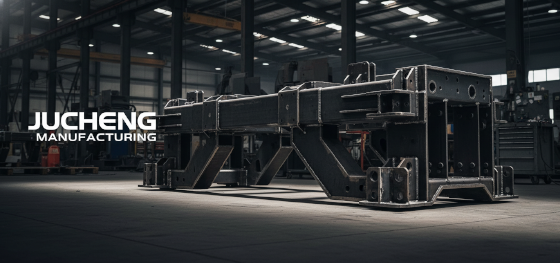
Traditional aluminum frames, while lightweight, often suffer from fatigue cracking when subjected to the constant, low-frequency oscillations of off-road travel. For robots carrying 500kg or more, carbon steel and high-strength alloys become mandatory. Jucheng Precision addresses these structural demands by utilizing heavy-gauge laser cutting and aerospace-grade welding techniques designed for the [2026] farming environment.
Operating out of the Shenzhen precision manufacturing hub, JUCHENG provides the "Bridge to Production" for autonomous vehicle OEMs. We transform complex CAD models into ruggedized steel skeletons that can withstand decades of abuse in the field. This guide breaks down the critical load requirements, fabrication techniques, and anti-corrosion finishes necessary for high-performance agricultural robotics.
Engineering for High-Torque and Resonant Loads
Comparative Data: Material Selection for Robot Chassis
Heavy-Gauge Fabrication: Precision Laser and Weld Integrity
Zinc-Rich Finishes: Preventing Rust in Soil Electrolytes
JUCHENG: The Foundation of Unbreakable Robotics
FAQ: Structural Integrity for Off-Road Hardware
Engineering for High-Torque and Resonant Loads
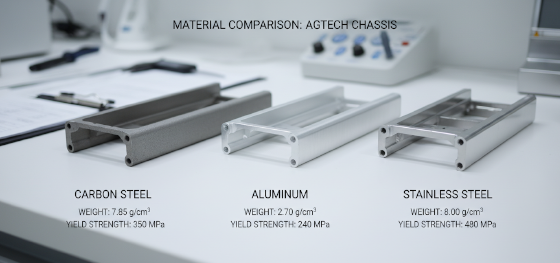
Agricultural robots do not operate on flat planes; they navigate three-dimensional chaotic surfaces where every wheel hit can transmit thousands of newtons of force into the frame. Resonant frequencies are the primary killer of Agriculture robot chassis fabrication projects. If the natural frequency of the chassis matches the vibration of the drivetrain or the terrain, the resulting resonance will cause weld joints to unzip and mounting bolts to shear. JUCHENG utilizes Finite Element Analysis (FEA) to ensure that the primary structural members have a high enough resonant frequency to avoid these destructive cycles.
Torsional rigidity is another critical factor. When a robot traverses a ridge diagonally, the chassis must resist twisting forces that would otherwise misalign sensitive LiDAR and GPS sensors. A "soft" chassis leads to sensor drift, causing the robot to miss rows or collide with obstacles. By utilizing boxed-section steel and strategic gusseting, we achieve a high degree of torsional stiffness without adding excessive mass. This ensures that the robot’s perception system remains accurate regardless of how uneven the soil becomes.
Dynamic loads from active implements—such as harvester arms or weeding tillers—add a secondary layer of complexity. These tools create high-torque reaction forces that must be dissipated through the chassis into the ground. JUCHENG recommends local reinforcement at all tool-attachment points, utilizing 8mm or 10mm steel "hard-points" welded directly into the 6mm primary frame. This localized thickening ensures that the chassis survives the millions of cycles required for a 10-year service life in the field.
Shock absorption is often integrated into the chassis design through flexible mounting plates. While the core skeleton remains rigid, the areas housing delicate electronics often feature dampened sub-frames. JUCHENG’s Agriculture robot chassis fabrication expertise allows us to combine rigid structural members with precision-machined isolation mounts, creating a two-stage defense against the unrelenting impact of the farm environment. This hybrid approach is what separates a laboratory prototype from a commercial-grade machine.
Comparative Data: Material Selection for Robot Chassis
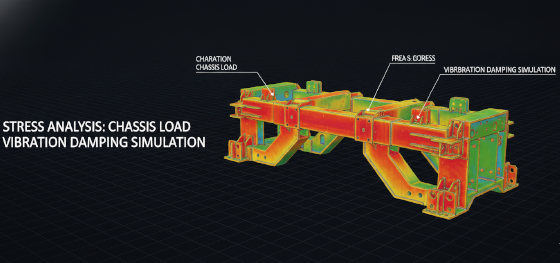
Choosing the right substrate is the first step in successful Agriculture robot chassis fabrication. While high-tech composites like carbon fiber are attractive for weight, their brittle failure modes and high cost make them unsuitable for heavy-duty farming. Jucheng Precision provides technical design reviews to help you balance yield strength, weight, and fabrication cost. The following table compares common materials used in robotic skeletons for the [2026] market.
| Material Grade | Yield Strength (MPa) | Fatigue Resistance | Fabrication Difficulty |
|---|---|---|---|
| A36 Carbon Steel | 250 - 300 | Very High | Low (High Weldability) |
| 6061-T6 Aluminum | 240 - 270 | Moderate | Moderate |
| 304 Stainless Steel | 210 - 250 | High | Moderate (Work Hardens) |
| 4130 Chromoly | 430 - 460 | Exceptional | High (Requires Heat Treat) |
A36 Carbon Steel remains the workhorse of the industry due to its predictable ductile-to-brittle transition and excellent weldability. Unlike aluminum, which has no infinite fatigue life (meaning it will eventually crack regardless of the load), steel can be engineered to last forever if stresses are kept below the endurance limit. For massive, 1000kg+ autonomous vehicles, the slight weight penalty of steel is easily offset by the massive gains in durability and ease of repair in remote rural locations.
4130 Chromoly is used for high-end, high-speed autonomous scouts where weight is more critical. It allows JUCHENG to use thinner wall sections while maintaining higher yield strength than mild steel. However, this material requires specialized welding gas and post-weld stress relief to prevent the heat-affected zone (HAZ) from becoming brittle. JUCHENG’s fabrication department manages these complex thermal cycles to deliver high-performance skeletons that outperform standard industrial builds.
Heavy-Gauge Fabrication: Precision Laser and Weld Integrity
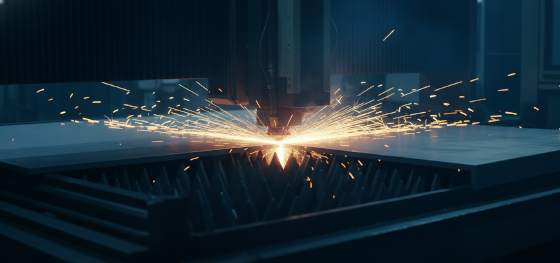
Precision in Agriculture robot chassis fabrication starts with high-power fiber laser cutting. Standard stamping or mechanical shearing can introduce microscopic edge cracks that act as stress risers, leading to premature chassis failure. JUCHENG utilizes 12kW fiber lasers to cut 6mm and 8mm steel plates with sub-millimeter precision. This accuracy ensures that tab-and-slot designs fit perfectly before welding, minimizing the internal stresses caused by "forcing" a frame together during assembly.
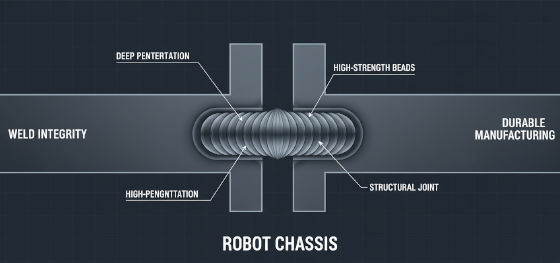
Weld penetration is the difference between a chassis that lasts and one that fails. In the world of precision agriculture robotics, we often deal with thick-to-thin joints where heat management is critical. JUCHENG utilizes pulsed MIG and TIG welding to ensure full-root penetration without burning through the material. Every critical structural joint is inspected for porosity and undercutting, ensuring that the weld is as strong as the base metal itself. For high-volume projects, we utilize robotic welding cells to guarantee 100% consistency across a fleet of 500 or more robots.
Heat-affected zone (HAZ) management is particularly vital when working with high-strength alloys. Excessive heat during welding can "soften" the metal around the joint, effectively negating the strength of the material. JUCHENG employs specialized cooling jigs and staggered weld sequences to distribute heat evenly, preventing dimensional warping and maintaining the mechanical properties of the chassis. This level of technical oversight is essential for maintaining the +/- 0.5mm tolerances required for automated drivetrain alignment.
Secondary CNC machining often follows the welding process. Once a chassis is fully welded, it may experience minor heat-induced movement. JUCHENG’s oversized 5-axis CNC machines allow us to machine critical bearing seats and sensor mounts *after* welding is complete. This ensures that even on a two-meter steel frame, the mounting surfaces for LiDAR and cameras are perfectly coplanar and perpendicular to the ground, providing a stable platform for the robot’s software stack.
Zinc-Rich Finishes: Preventing Rust in Soil Electrolytes
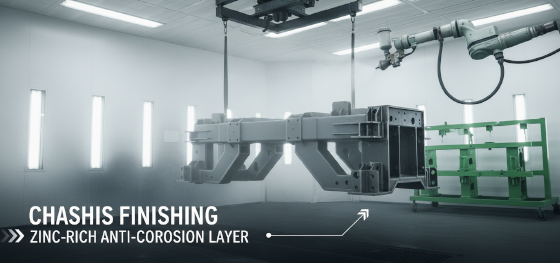
Corrosion in agricultural environments is not just caused by water; it is accelerated by the electrolytic properties of fertilizers and high-salt soil. A standard paint job will be stripped by abrasive corn stalks and gravel within weeks, leading to rapid oxidation of the steel chassis. JUCHENG’s Agriculture robot chassis fabrication standard includes a multi-layer finishing process. We start with a zinc-rich epoxy primer, which provides sacrificial protection—if the coating is scratched, the zinc will corrode before the steel, preventing the rust from spreading beneath the paint.
Powder coating is the preferred topcoat for its extreme impact and abrasion resistance. Unlike liquid paint, powder coating is baked onto the steel, creating a cross-linked polymer shell that is much harder and thicker. JUCHENG utilizes coarse-textured finishes (similar to bed-liner coatings) for the high-impact undercarriage areas of the robot. This coarse texture not only hides scuffs from the field but also provides an extra physical barrier against the "sandblasting" effect of dust and debris during high-speed travel.
Hollow sections of the chassis require internal protection. Rust often starts inside a steel tube where moisture becomes trapped. JUCHENG utilizes internal e-coating or specialized wax-based sealants to ensure that the interior of the skeleton is as protected as the exterior. For robots destined for high-moisture vineyard applications, we often recommend Hot-Dip Galvanizing before powder coating, providing a dual-layer of metallurgical protection that can survive decades of continuous outdoor exposure without a single spot of rust.
Testing the finish involves 1000-hour salt spray tests and cross-hatch adhesion verification. At Jucheng Precision, we understand that the chassis is the most difficult part of a robot to replace. By over-engineering the corrosion protection, we ensure that the robot can be refurbished and upgraded over many seasons, maximizing the return on investment for the end-user. This commitment to longevity is a cornerstone of our manufacturing philosophy in the Shenzhen hub.
JUCHENG: The Foundation of Unbreakable Robotics
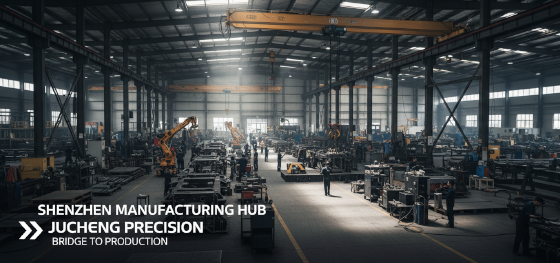
Dominating the AgTech hardware market requires a partner that can scale as fast as the growing season. Jucheng Precision operates with a 24/7 manufacturing mindset in our Shenzhen precision manufacturing hub, delivering massive steel skeletons and precision-machined drivetrains with lead times as fast as 20 business days. We provide the "Bridge to Production" that allows you to move from a single hand-welded prototype to a commercial fleet of 500 robots without compromising on weld quality or dimensional accuracy.
Integrating your design with JUCHENG’s expertise ensures that your robot survives the "First-Trial Season" and moves into mass adoption. We offer comprehensive DFM reviews within 24 hours, identifying potential fatigue points or "weld-traps" in your design before they become costly failures in the field. Whether you are building an autonomous fruit harvester or a heavy-duty soil-tilling bot, Jucheng Precision provides the unbreakable steel foundation that keeps your innovation running through the mud, the sun, and the years.
Our facility is equipped with 150+ CNC machines and dedicated heavy-fabrication cells, allowing us to manage the entire chassis lifecycle from raw plate to powder-coated assembly. We manage the complexity of heavy-gauge fabrication so your engineering team can focus on the AI and autonomy. By combining Shenzhen's speed with industrial-grade material verification, JUCHENG remains the preferred partner for the world's most aggressive AgTech hardware challenges. Contact us today to start your next heavy-duty project.
FAQ: Structural Integrity for Off-Road Hardware
Is aluminum strong enough for a heavy robot chassis?
Only for lightweight scouts. Heavy-duty robots require the fatigue resistance of steel or chromoly.
How do you prevent welds from cracking under vibration?
We use pulsed welding for deep penetration and FEA to avoid resonant frequencies in the frame.
What is the best coating for a robot chassis in wet soil?
A zinc-rich primer followed by a high-impact textured powder coating.
Can JUCHENG machine critical surfaces *after* welding?
Yes. We use oversized 5-axis CNC units to ensure precision alignment of sensor mounts.
What are typical lead times for a production chassis?
Fully fabricated and finished chassis units are typically delivered in 3 to 4 weeks.
Structural failure in AgTech is an absolute hardware killer. Partnering with Jucheng Precision ensures that your skeletons are built with the heavy-gauge steel and specialized laser-welding techniques the industry demands. Reach out to our Shenzhen manufacturing hub today for a complete DFM review and build the unbreakable foundation your autonomous fleet requires.

