


Logistical throughput in the autonomous warehouse is won or lost on the structural integrity of the hardware. For mechanical engineers developing next-generation mobile robots, the primary adversary is not the navigation algorithm—it is the violent physical reality of a 500kg load moving at three meters per second. When an Automated Guided Vehicle (AGV) or Autonomous Mobile Robot (AMR) encounters a floor irregularity or a high-speed collision with a rack, the "Mechanical Handshake" between the components must hold firm. Navigating this requirement for ruggedized stability requires the strategic deployment of high-fidelity AGV and AMR Parts. Jucheng Precision operates as a specialized manufacturing sanctuary in the Shenzhen precision manufacturing hub, providing the technical depth to deliver integrated chassis, enclosures, and sensor mounts that survive the rigors of 24/7 warehouse operation. Within the broader framework of Robotics Automation Manufacturing, we bridge the gap between "prototype mobility" and "industrial-grade sovereignty," ensuring your mobile fleet scales with absolute dimensional certainty.
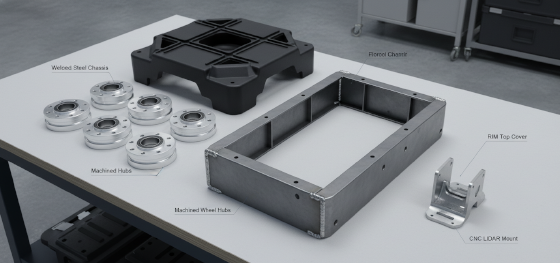
Establishing a resilient logistics supply chain in 2026 demands the rejection of fragmented vendor sourcing. Amateurs spend forty percent of their engineering cycle managing three different suppliers for a single robot—one for the welded steel frame, another for the plastic covers, and a third for the precision motor mounts. Jucheng Precision eliminates this "Logistical Bloat" by providing an integrated multi-process ecosystem. Whether you are developing a low-profile sorter or a heavy-duty pallet mover, our facility provides the material science and metrological rigor required for 2026 market entry. We don't just "supply parts"; we engineer a monolithic hardware foundation that protects your expensive internal electronics and sensors from the chaos of the shipping dock. This guide deconstructs the structural necessity of welded chassis, the impact-defense of RIM skins, and why JUCHENG’s "Integrated Protocol" is the mandatory foundation for anyone developing AGV and AMR Parts for global fulfillment.
Structural Sovereignty: Engineering the Load-Bearing Chassis
Cosmetic Armor: Why RIM is the Hero for AGV Enclosures
Optical Integrity: CNC Machining for LiDAR and Camera Mounts
Turnkey Dynamics: Consolidating the AMR Supply Chain
JUCHENG Protocol: Zero-MOQ Scaling for Logistics Startups
Frequently Asked Questions: AGV and AMR Hardware
Structural Sovereignty: Engineering the Load-Bearing Chassis
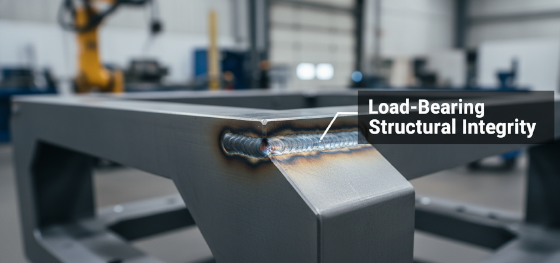
Mechanical survival in the warehouse begins with the structural spine of the robot. For AGV and AMR Parts, the chassis must act as a rigid conduit for torque while supporting a payloads that can exceed a ton. Jucheng Precision utilizes heavy-duty sheet metal fabrication—including precision laser cutting and multi-stage bending—to create skeletal frames that resist torsional warping. We understand that a 1.0mm deviation in the wheel-mount alignment results in a navigation drift that ruins your bot’s efficiency. Our technicians utilize high-strength TIG and MIG welding protocols, followed by CNC post-milling of the mounting faces to ensure 100% perpendicularity for motor hubs and drive axles. By matching the flexural modulus of the steel to the dynamic loads of your specific robot, we deliver a chassis that remains stable through years of constant acceleration and braking cycles. We turn "welded frames" into "certified structural assets," documented for survival in high-mass industrial environments.
Cosmetic Armor: Why RIM is the Hero for AGV Enclosures
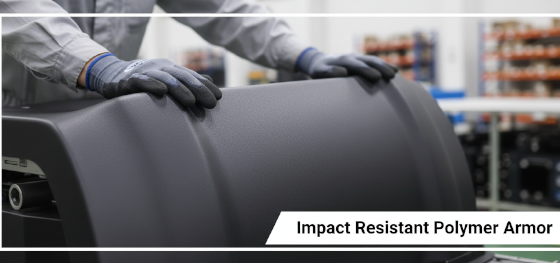
Impact protection and aesthetic authority are the hallmarks of a premium logistics bot. AGV and AMR Parts often include oversized exterior covers that must survive being bumped by forklifts or scraped by industrial shelving. Traditional injection molding for a 1.5-meter cover requires a $100,000 steel mold—a financial anchor for most startups. Jucheng Precision eliminates this "Tooling Ransom" by utilizing Reaction Injection Molding (RIM). Because RIM uses low-pressure liquid chemistry and cost-effective aluminum tools, we deliver oversized enclosures that are 30% lighter and significantly more impact-resistant than standard ABS. We utilize "Structural Foam" RIM to create parts with a dense solid skin and a lightweight core, providing inherent vibration damping for the internal logic boards. Our facility integrates Painting and finishing large plastic parts cleanrooms, ensuring your robot fleet arrives with automotive-grade coatings that resist scratches and hide fingerprints, maintaining your brand’s retail-ready soul through months of abusive warehouse use.
Optical Integrity: CNC Machining for LiDAR and Camera Mounts
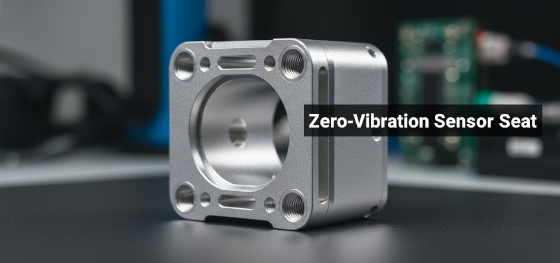
Sensor reliability dictates the safety of human-robot interaction. A LiDAR sensor or a 3D camera is only as accurate as the bracket holding it. In the domain of AGV and AMR Parts, Jucheng Precision provides 5-axis CNC machining to create sensor mounts with sub-micron tolerances. We utilize aerospace-grade 6061-T6 aluminum to prevent "Thermal Expansion Drift"—ensuring that your sensors stay calibrated from the freezing air of a refrigerated warehouse to the scorching heat of a summer dock. We prioritize "Zero-Vibration" geometry, designing mounts with high-stiffness ribs that eliminate the harmonic resonances that blur camera data. Every sensor mount we ship is verified in our QC lab to ensure that the mounting planes are perfectly parallel, protecting your expensive 3D vision systems from the mechanical noise of the drivetrain. We turn "metal brackets" into "optical precision seats," ensuring your bot’s "eyes" never lose their focus.
Turnkey Dynamics: Consolidating the AMR Supply Chain
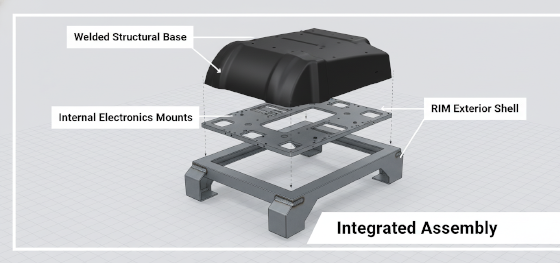
Manufacturing velocity is won through the elimination of assembly bottlenecks. The most strategic advantage of partnering with Jucheng Precision for your AGV and AMR Parts is our "One-Stop Turnkey" mandate. We don't just "mold and ship"; we provide assembly-ready kits. Our facility integrates secondary operations including the installation of brass threaded inserts into RIM panels, the application of EMI/RFI conductive coatings to internal faces, and the final assembly of the chassis with the external skins. By consolidating these disparate processes under a single ISO 9001 certified roof, we reduce your logistical lead times by nearly forty percent. We turn "disjointed procurement" into "synchronized hardware delivery," allowing your engineering team to focus on the software logic while we manage the physical reality of the machine. We provide the manufacturing insurance needed to ensure your bot assembly fits together with digital perfection on the first shot.
JUCHENG Protocol: Zero-MOQ Scaling for Logistics Startups

Engineering excellence at Jucheng Precision is built on the foundation of single-source accountability. We recognize that the logistics sector iterates rapidly; a 200-unit pilot run is often the standard for new AMR startups. Our facility is optimized for this "Low Volume" sweet spot, providing rapid aluminum bridge tooling injection molding that delivers production-grade parts in two weeks. We provide full material lot traceability and CMM inspection reports for every chassis and enclosure batch, ensuring your project meets the strict safety standards of the warehouse industry. Stop gambling your launch on inaccurate 3D prints or fragmented vendors who can't bridge the gap between sheet metal and polymers. Leverage our decade of Robotics Automation Manufacturing mastery to validate rapidly and scale profitably. Contact our technical team today for a free DFM review and see how we can turn your digital logistics intent into a structurally sovereign, physical reality that is documented for success.
Frequently Asked Questions: AGV and AMR Hardware
Question: What materials does JUCHENG recommend for AGV and AMR Parts bumpers?
Answer: We recommend elastomeric RIM polyurethane. It provides a dense solid skin with extreme impact energy absorption, acting as a structural "fuse" that protects internal sensors during collisions.
Question: Can JUCHENG handle the welding of large-format AMR chassis?
Answer: Yes. Our Shenzhen facility features a dedicated metal fabrication wing for laser cutting, CNC bending, and robotic/manual welding of structural steel and aluminum frames up to 2.5 meters in size.
Question: Do you provide EMI shielding for robotic enclosures?
Answer: Absolutely. We apply specialized conductive silver or copper coatings to the interior of our RIM and injection-molded parts to prevent electromagnetic interference from the high-torque drive motors.
Question: What is the lead time for a full set of **AGV and AMR Parts**?
Answer: Utilizing our rapid tooling and in-house CNC capabilities, we can deliver a complete physical robot base (Chassis + Skins + Mounts) in as fast as 14 to 21 days for pilot runs.

