


Precision dictates the survival of automated systems in high-cadence manufacturing. For mechanical engineers developing 6-axis arms or SCARA systems, the primary adversary is not the control logic, but the physical "Backlash" inherent in poorly machined joints. When an industrial arm carries a 50kg payload at high velocity, a 0.05mm deviation in a flange interface translates into a massive positioning error at the end-effector. Navigating this requirement for extreme structural stiffness requires the strategic deployment of high-fidelity industrial robot parts. Jucheng Precision operates as a high-precision manufacturing sanctuary in the Shenzhen precision manufacturing hub, providing the technical depth to deliver actuators, housings, and links that possess the mechanical spine needed for 24/7 industrial operation. We bridge the gap between "prototype motion" and "factory-ready reliability" within the broader framework of Robotics Automation Manufacturing. We don't just "cut metal"; we engineer the rigid foundation of autonomy, ensuring your robot maintains its micron-level repeatability through millions of production cycles.
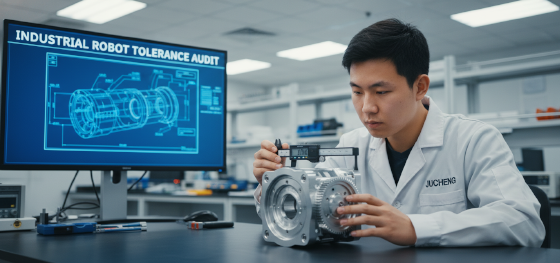
Establishing a reliable robotics supply chain in 2026 demands the rejection of "general purpose" machine shops. Amateurs often struggle with the "Tolerance Stack-up" of robotic assemblies, leading to joints that bind or vibrate uncontrollably. Jucheng Precision eliminates these "Mechanical Nightmares" by enforcing a strict "Bore-and-Bearing" protocol. We utilize 5-axis CNC machining to ensure that bearing seats and mounting faces are perfectly concentric and orthogonal. Whether you are developing a collaborative robot for a surgical suite or a heavy-duty welder for an automotive line, our integrated facility provides the manufacturing insurance needed to secure market sovereignty. This guide deconstructs the physics of joint rigidity, the weight-reduction benefits of die casting, and why JUCHENG’s metrological audit is the mandatory foundation for anyone developing industrial robot parts for the global market.
Precision CNC Machining for Actuator Joints and Flanges
Structural Evolution: Die Casting for Lightweight Arm Links
Metrological Sovereignty: Ensuring Industrial Repeatability
JUCHENG Protocol: Integrated Manufacturing for Autonomy
Frequently Asked Questions: Industrial Robot Hardware
Precision CNC Machining for Actuator Joints and Flanges
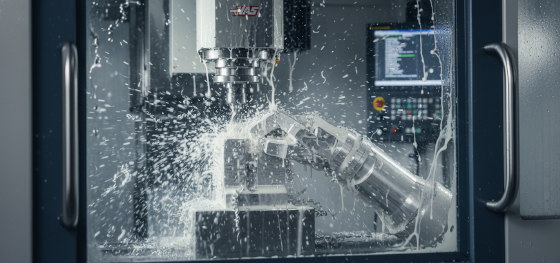
Dimensional sovereignty in robotic movement centers is earned through sub-micron subtractive accuracy. The joints of an industrial robot—specifically the housings for harmonic drives and planetary gear sets—are the most heavily scrutinized industrial robot parts on the BOM. Any thermal deviation during the CNC process can result in a bearing seat that is "too tight" (causing overheating) or "too loose" (causing backlash). Jucheng Precision utilizes our fleet of 25 high-precision 5-axis Haas and Mazak CNC machines to carve these components from aerospace-grade 7075-T6 aluminum or 4140 alloy steel. 5-axis motion allows us to machine complex internal geometries and mounting patterns in a single setup, effectively eliminating the "Fixture Error" that plagues multi-stage 3-axis setups. We maintain +/- 0.01mm tolerances on critical alignment diameters, ensuring your actuators assemble perfectly and provide the crisp, non-vibratory motion required for high-speed pick-and-place operations.
Structural Evolution: Die Casting for Lightweight Arm Links
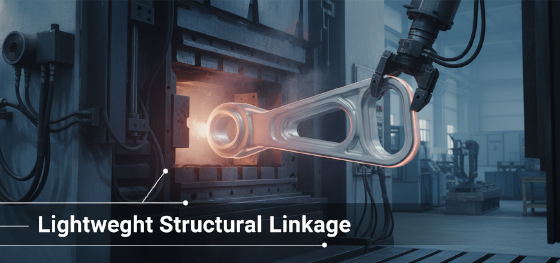
Mechanical leverage dictates the energy efficiency of an industrial robot. While joints require solid CNC precision, the long "Linkages" or arm segments demand a different thermodynamic solution. For high-volume production of industrial robot parts, Jucheng Precision utilizes aluminum and zinc die casting. This formative process allows us to create hollow, rib-reinforced arm structures that offer a 40% weight reduction compared to solid machined equivalents. Reducing the mass of the arm segments lowers the "Inertial Load" on the motors, allowing for faster accelerations and longer service life for the gearboxes. We don't just "cast shapes"; we engineer structural assets with thin walls and dense cores. Our die-casting facility integrates with our CNC bay for final precision-milling of the joint interfaces, providing a hybrid manufacturing pathway that balances structural mass with surgical alignment accuracy.
Metrological Sovereignty: Ensuring Industrial Repeatability
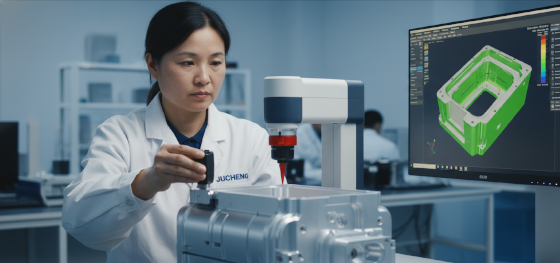
Quality assurance in the robotics sector is an act of relentless verification. An industrial robot parts batch that fits Monday but drifts Tuesday is a catastrophic liability for a factory integrator. Jucheng Precision eliminates "Positioning Drift" by implementing a mandatory CMM (Coordinate Measuring Machine) audit for every Joint and Link batch. We utilize ruby-tipped probes to verify GD&T (Geometric Dimensioning and Tolerancing) parameters—ensuring that parallelism, perpendicularity, and true position are locked in. For high-requirement automotive welding robots, we provide full material lot traceability and dimensional inspection reports that link back to your digital CAD intent. We don't just ship boxes of metal; we deliver documented certainty, ensuring your robot fulfills its "repeatability contract" the moment it is powered on at the customer's site.
JUCHENG Protocol: Integrated Manufacturing for Autonomy
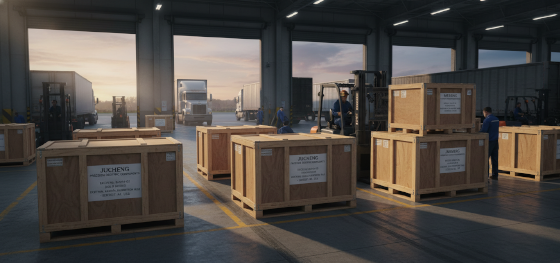
Engineering excellence at Jucheng Precision is built on the foundation of the "One-Stop Robotics" mandate. We recognize that modern robots are complex hybrids: they require a sheet metal chassis for the base, 5-axis CNC joints for movement, and RIM (Reaction Injection Molding) enclosures for aesthetics and impact protection. JUCHENG eliminates the friction of vendor-hopping by housing all these processes under a single ISO 9001 certified roof. When you upload a CAD assembly to our facility, our veteran engineers perform a comprehensive "Integration Audit." We suggest material switch-outs and geometry tweaks that optimize the "Strength-to-Weight" ratio of your industrial robot parts. Stop being ransomed by fragmented suppliers. Leverage our decade of robotics mastery to validate rapidly, scale responsibly, and launch your next automated breakthrough profitably.
Frequently Asked Questions: Industrial Robot Hardware
Question: What is the tightest tolerance JUCHENG can achieve for robotic gearboxes?
Answer: Utilizing our elite 5-axis Haas and Mazak CNC machines, we routinely achieve +/- 0.01mm (0.0004") on critical bearing diameters and alignment bosses for industrial robot parts.
Question: Can you help reduce the weight of a 6-axis arm linkage?
Answer: Yes. We suggest a transition from solid aluminum CNC parts to thin-walled aluminum die castings or high-modulus reaction injection molding materials (SRIM) to slash mass by up to 50% without losing rigidity.
Question: Do you provide surface finishes suitable for high-friction joints?
Answer: JUCHENG offers specialized hard-anodizing and dry-film lubricant coatings that improve the wear resistance of aluminum joint interfaces, essential for long-life industrial robotics.
Manufacturing sovereignty in the autonomous era requires a partner who understands the mechanical soul of movement. Jucheng Precision eliminates the friction of secondary logistics by offering integrated CNC, Die Casting, and Finishing in our Shenzhen-based campus. We provide the manufacturing insurance needed to ensure your Robotics Automation Manufacturing journey is lean, predictable, and retail-ready. Contact our technical team today for a free DFM review and see how we can turn your digital intent into a structurally sovereign, high-precision reality that is documented for success.

