


Flight endurance is the ultimate judge of unmanned hardware success. In the high-velocity landscape of the 2026 low-altitude economy, the transition from hobbyist mockups to industrial-grade airframes represents a violent leap in mechanical requirements. For hardware engineers, the primary adversary is not the flight controller code—it is the physical "Mass Penalty" that drains battery life and reduces payload capacity. If your structural airframe is over-engineered and heavy, the motors must work harder, leading to thermal throttling and reduced safety margins. Navigating this requirement for extreme strength-to-weight ratios requires the strategic deployment of drone/uav parts machining. Jucheng Precision operates as a high-fidelity manufacturing sanctuary in the Shenzhen precision manufacturing hub, providing the technical depth to deliver structural frames, motor mounts, and gimbal housings that possess the mechanical spine needed for high-vibration environments. Within the broader framework of Robotics Automation Manufacturing, we bridge the gap between "prototype flight" and "certified airworthiness," ensuring your UAV fleet scales with absolute dimensional and material certainty.
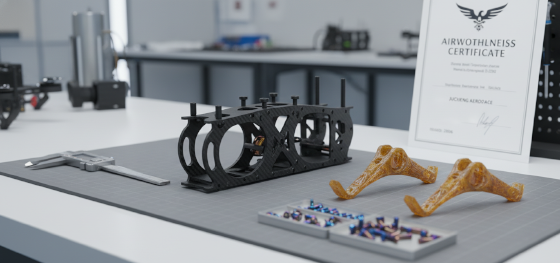
Establishing a resilient UAV supply chain in 2026 demands the rejection of "general purpose" machine shops. Amateurs often struggle with the "Thin-Wall Paradox"—attempting to machine 0.5mm aluminum shells only to have them warp uncontrollably due to internal residual stresses. Jucheng Precision eliminates these "Mechanical Drifts" by enforcing a strict "Stress-Relief" protocol for all airborne components. We utilize 5-axis CNC machining to ensure that motor mounting planes and sensor seats are perfectly orthogonal, minimizing the harmonic noise that ruins IMU data. Whether you are developing a delivery quadcopter or a long-range surveillance fixed-wing, our integrated facility provides the manufacturing insurance needed to secure market sovereignty. This guide deconstructs the necessity of 7075-T6 selection, the physics of thin-wall stability, and why JUCHENG’s metrological audit is the mandatory foundation for anyone developing drone/uav parts machining projects for the global market.
Material Sovereignty: Aluminum 7075 vs. Ultem 9085
Mechanical Velocity: Mastering the 0.5mm Thin-Wall Challenge
Dynamic Stability: Engineering for High-Vibration Damping
Regulatory Shield: Navigating FST Compliance and Safety
JUCHENG Protocol: Zero-Defect Scaling for the Low-Altitude Economy
Frequently Asked Questions: Drone and UAV Parts
Material Sovereignty: Aluminum 7075 vs. Ultem 9085

Selection of the airframe substrate is a high-stakes calculation of stiffness-to-weight ratios. In drone/uav parts machining, the primary standoff is between high-strength alloys and high-performance polymers. Jucheng Precision recommends Aluminum 7075-T6 for structural motor mounts and main spars because its flexural modulus and fatigue resistance far exceed the standard 6061 grade. However, for internal electronic bay enclosures and non-structural airframe components, we often pivot to Ultem 9085 via industrial 3D printing. Ultem provides inherent flame retardancy and a 40% weight reduction compared to aluminum. To assist engineers in early-stage material routing, we provide the following technical comparison:
| Strategic Property | Aluminum 7075-T6 (CNC) | Ultem 9085 (Additive) |
|---|---|---|
| Density (g/cm³) | 2.81 | 1.27 (Mass Winner) |
| Tensile Strength (MPa) | 570 (Strength Winner) | 70 - 90 |
| FST Compliance | Naturally Non-Combustible | Certified FAR 25.853 |
| Surface Finish | Mirror / Anodized | Matte / Porous |
Mechanical Velocity: Mastering the 0.5mm Thin-Wall Challenge

Subtractive precision reaches its limit when machining high-volume internal bays for UAVs. To maximize the internal "Cube Space" for batteries and electronics, designers push aluminum wall thicknesses down to 0.5mm or 0.8mm. This is where drone/uav parts machining becomes a form of surgical art. Standard machining speeds create "Cutter Chatter" and heat buildup that causes the thin aluminum skin to buckle and vibrate. Jucheng Precision utilizes specialized high-speed spindles (up to 30,000 RPM) and proprietary vacuum work-holding fixtures to stabilize the material during the final finishing pass. By utilizing "Peel Milling" strategies, we remove material in a way that minimizes the cutting force, ensuring your airframe remains dimensionally stable and free of stress-induced warping. We turn "raw billets" into "featherweight structural shells," documented for sub-micron accuracy.
Dynamic Stability: Engineering for High-Vibration Damping
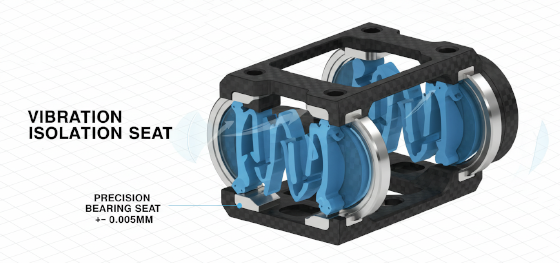
Acoustic and mechanical noise ruins the fidelity of UAV flight sensors and high-definition gimbals. drone/uav parts machining must account for the high-frequency harmonics generated by carbon-fiber propellers spinning at 8,000 RPM. Jucheng Precision toolmakers utilize 5-axis CNC to create precision "Isolator Seats" for rubber-damped camera mounts. We understand that a mounting hole that is 0.02mm too large allows for "Sensor Wobble," which the flight controller attempts to correct, leading to motor overheating and reduced stability. Our machining bays achieve +/- 0.005mm tolerances on critical bearing and sensor interfaces, ensuring your optical systems provide steady, cinematic data even in high-wind conditions. We don't just "cut pockets"; we engineer stable platforms that neutralize the mechanical noise of flight.
Regulatory Shield: Navigating FST Compliance and Safety

Manufacturing integrity in the "Blue UAS" and commercial delivery sectors is built on the foundation of safety certification. Any polymer component used near high-energy battery packs must satisfy FST (Flame, Smoke, and Toxicity) mandates. Jucheng Precision provides drone/uav parts machining services for Injection molding materials that are UL 94 V-0 certified. We provide the full material lot traceability needed for FAA Part 107 airworthiness audits. Whether we are producing carbon-fiber reinforced nylon injection molding for prop-guards or machined PEI for battery isolators, our facility provides the "Paper Trail of Quality" required for global deployment. We turn "experimental hardware" into "certified flight assets," ensuring your hardware journey is lean, predictable, and audit-ready.
JUCHENG Protocol: Zero-Defect Scaling for the Low-Altitude Economy

Engineering excellence at Jucheng Precision is built on the foundation of high-speed iteration for the autonomous era. We recognize that in the UAV sector, a design that takes three months to manufacture is already obsolete. Our facility, housing over 150 CNC machines and elite 3D printing bays, is optimized for the aggressive "Design-Build-Fly" cycles of drone startups. We offer 3-day turnaround times for critical CNC components and provide full CMM dimensional inspection reports for every drone/uav parts machining batch. Stop gambling your flight tests on inaccurate hobbyist vendors. Leverage our decade of aerospace-grade replication mastery to validate rapidly and launch profitably. Contact our technical team today for a free DFM review and see how we can turn your digital UAV intent into a structurally sovereign physical reality.
Frequently Asked Questions: Drone and UAV Parts
Question: What is the most durable material for drone/uav parts machining arm linkages?
Answer: For 2026 designs, we recommend Aluminum 7075-T6 for its extreme fatigue strength and high modulus, or Carbon-Fiber reinforced reaction injection molding materials (SRIM) for oversized delivery drone airframes.
Question: How thin can JUCHENG machine aluminum airframe walls?
Answer: Utilizing our high-speed Haas spindles and specialized fixtures, we can consistently achieve wall thicknesses down to 0.5mm (0.020") with +/- 0.05mm dimensional accuracy.
Question: Do you provide secondary finishes for weatherproofing drones?
Answer: Yes. JUCHENG offers Type II and Type III (Hard) Anodizing for aluminum parts and specialized chemical-resistant 2K coatings for plastic enclosures, ensuring survival in rain and humidity.
Question: Can JUCHENG handle humanoid robot parts for drone ground support equipment?
Answer: Absolutely. Our integrated facility handles 5-axis skeletal frames for ground support bots alongside high-precision flight hardware under one roof.

