


Color in engineering is rarely a matter of mere fashion. While natural Delrin is a staple of industrial workshops, there are specific environments where its creamy-white appearance is a liability. For engineers designing parts for the high-intensity light of the outdoors or the sensitive electrostatic zones of a semiconductor floor, the decision to pivot toward Black Delrin Machining is a strategic one. It represents a move toward enhanced durability, chemical stability, and advanced safety protocols.
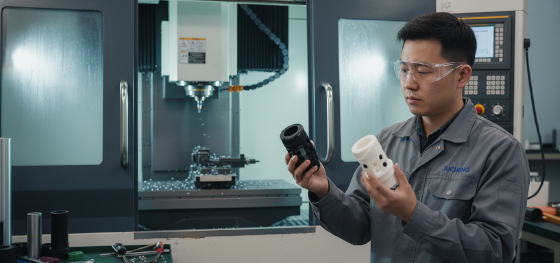
At Jucheng Precision, we recognize that pom delrin acetal cnc machining on black grades requires more than just changing a material slug. It requires an understanding of how the carbon additives change the material's thermal conductivity and how the dark pigment reveals flaws that would be hidden in a natural finish. Whether you are building drone chassis or electronic testing jigs, mastering the nuances of black polyoxymethylene is the key to a professional-grade final product. This guide explores the mechanical and chemical advantages of choosing black over white.
Transitioning to black acetal is an investment in longevity. Beyond the sleek, professional aesthetic, these grades offer functional benefits that natural polymers simply cannot match. From UV protection to anti-static properties, let us examine why black is the preferred choice for high-end technical components.
content:
UV Stability: The Role of Carbon Black
Static Dissipative Solutions: ESD Grades for Electronics
Machining Integrity: Managing Stress Whitening
Functional Applications: From Drones to Semiconductor Jigs
UV Stability: The Role of Carbon Black

The primary enemy of polymers in an outdoor environment is photodegradation. Ultraviolet radiation from the sun carries enough energy to break the molecular bonds of standard polyoxymethylene. In natural (white) Delrin, this degradation manifests as "chalking," where the surface becomes powdery, brittle, and eventually cracks. If you are building a solar panel mount or a marine-grade sensor housing, this environmental failure is unacceptable. Black Delrin Machining addresses this through the integration of carbon black—a fine-grain pigment that serves as a highly effective UV stabilizer.
Carbon black acts as an energy sponge. It absorbs the UV photons and converts them into harmless heat before they can attack the internal polymer chains. This protection extends the service life of the part by years, maintaining its tensile strength and impact resistance in direct sunlight. Furthermore, black acetal is less prone to the yellowing that plagues white plastics exposed to environmental pollutants. At Jucheng Precision, we source high-purity black acetal with uniform pigment dispersion to ensure that the UV protection is consistent throughout the part’s volume, not just on the surface. This ensures that even if the part is later scratched or re-machined, the exposed core remains shielded from solar-induced embrittlement. For the designer, this means you are building a product that survives the elements, not just the assembly room.
Static Dissipative Solutions: ESD Grades for Electronics
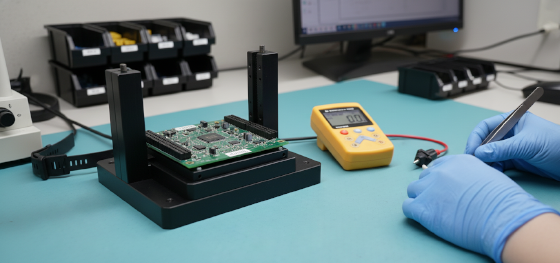
In the world of semiconductor manufacturing and electronic assembly, a single static spark is a catastrophic event. Standard plastics are insulators; they hold onto static charges until they find a path to ground, often through a sensitive circuit board. Black Delrin Machining is frequently the gateway to ESD-safe (Electrostatic Discharge) solutions. Many black acetal grades are specifically formulated with conductive carbon fibers or stainless steel filaments to become "static dissipative." These grades offer a surface resistivity typically between 10^6 and 10^9 ohms, allowing static charges to bleed off slowly and safely.
Because these conductive additives are black, the resulting material is almost always black. However, machining these ESD grades requires extreme technical caution. The carbon fiber reinforcement makes the material significantly more abrasive than standard POM-C. At Jucheng Precision, we use specialized tool-path strategies to manage this abrasiveness, preventing the fibers from pulling out and leaving a rough, "furry" surface. We understand that in an ESD environment, cleanliness is as important as conductivity. A part that sheds carbon particles is just as dangerous as one that carries a static charge. Our pom delrin acetal cnc machining process for ESD grades includes rigorous post-process ultrasonic cleaning to ensure that your electronics-handling jigs and fixtures are both safe and pristine. By choosing the correct black grade, we help you eliminate the risk of ESD-induced failures in your most sensitive production lines.
Machining Integrity: Managing Stress Whitening
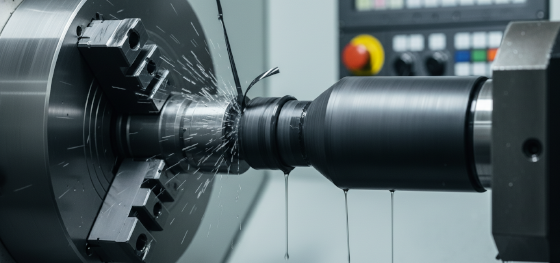
The biggest aesthetic challenge in Black Delrin Machining is a phenomenon known as stress whitening. If you take a sharp tool and make a heavy cut, the localized pressure can cause the polymer to micro-fracture or stretch at the shear point. In white Delrin, this is invisible. In black Delrin, these stressed areas turn a chalky white or grey. This results in parts that look "scuffed" or poorly made, even if the dimensions are perfect. To achieve a deep, consistent ebony finish, the machinist must treat the material with a level of delicacy usually reserved for optical plastics.
Jucheng Precision solves this through the "Zero-Stress Mandate." We exclusively utilize razor-sharp, polished carbide tooling with high positive rake angles. This ensures that the material is sliced cleanly rather than being crushed by the tool tip. We also manage the feed rates with extreme care; a feed that is too aggressive will create "heat zones" that trap moisture and lead to surface blooming. We utilize high-pressure air-cooling to keep the cutting edge at room temperature, preventing the thermal expansion that leads to internal stress. Furthermore, we pay close attention to workholding. If a part is clamped too tightly in a vice, it will develop white pressure marks. We design custom soft-jaws that distribute the clamping force evenly across the surface. Our goal is to deliver black acetal parts that look as if they were cast in ink—flawless, uniform, and free of the manufacturing scars that plague standard job shops.
Functional Applications: From Drones to Semiconductor Jigs
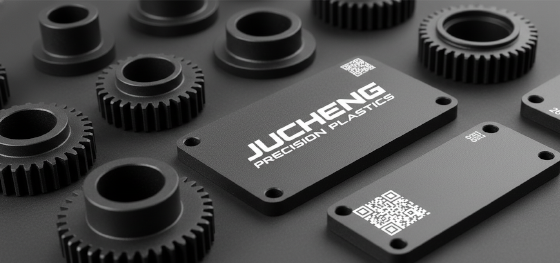
Where does black acetal earn its keep? The list of industries is growing as engineers move toward functional aesthetics. In the drone and robotics sectors, black Delrin is used for structural frames and prop mounts. It provides the necessary impact resistance and stiffness while maintaining a low-profile, non-reflective finish that is essential for optical sensors and cameras. In the automotive performance world, black Delrin is the standard for shift knobs and bushings because it handles the heat of the cabin and the friction of the gear-linkage without showing the "grease marks" that would ruin a white part.
Beyond raw performance, black Delrin offers an exceptional substrate for secondary operations. It provides the highest contrast for laser marking and engraving. If you need permanent, high-definition logos, serial numbers, or UDI codes on your plastic components, pom delrin acetal cnc machining followed by a CO2 or Fiber laser pass yields a bright white mark against the dark background that is virtually indestructible. At Jucheng Precision, we integrate this marking directly into our production workflow. Whether you are building components for subsea exploration or precision jigs for a cleanroom assembly line, our expertise in black acetal ensures your parts are both technically superior and visually striking. We bridge the gap between heavy-duty engineering and professional branding, providing parts that reflect the quality of your own designs. Contact us today to see how our specialized finishing and machining protocols can clarify your black plastic project.

