


Achieving a premium, modern aesthetic on high-end consumer appliances, home audio faceplates, and luxury electronic enclosures is a primary goal in custom sheet metal fabrication. Specifying brushed aluminum sheet metal provides your components with an exceptionally clean, directional satin finish that diffuses light beautifully while hiding minor handling scuffs. This mechanical texturing process uses progressive abrasive belts to apply a highly uniform grain, transforming a plain mill-finished plate into an upscale architectural element.
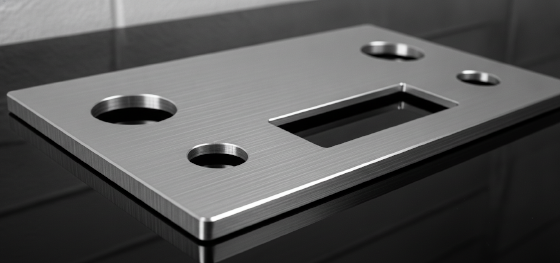
Wasting resources on standard raw sheets that easily show fingerprints, scratch during assembly, or look industrial is a major setback for high-end product rollouts. If your fabrication partner fails to run consistent abrasive grits or neglects directional alignment, the final parts will display uneven wavy patterns and look cheap. Transitioning to a high-precision brushed finish entirely eliminates these cosmetic risks.
Let's explore the physical mechanics of the abrasive brushing process, analyze its primary applications across consumer and IT hardware industries, and review how clear electro-chemical coatings lock in the brushed texture permanently.
What is the Brushing Process?
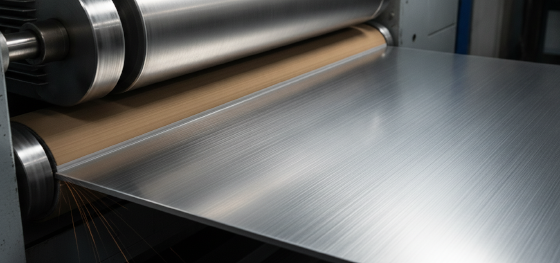
How do abrasive belts create a highly consistent, directional satin grain on metal?
The process utilizes automated sanding belts or specialized non-woven nylon wheels to physically scratch the aluminum surface along a single, linear axis.
To achieve a flawless, high-end appearance, our finishing department executes the brushing process using progressive grits (typically 120-grit to 320-grit) based on the target cosmetic requirement. We utilize industrial-grade Scotch-Brite abrasive wheels or silicon carbide sanding belts to apply a uniform, directional grain. The belt pressure, feed speed, and oscillation must be monitored continuously; uneven pressure will create deep gouges, while inconsistent feed speeds can burn or warp thin-gauge sheets.
Typical Applications: Home Appliances, Audio Systems, and IT Racks
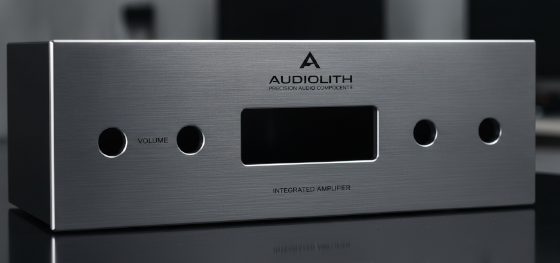
Where is brushed aluminum specified to maximize physical value and aesthetics?
It is highly utilized for front panels of home appliances, luxury audio faceplates, and high-end IT rack bezels where visual premium and fingerprint resistance are key.
Because brushed finishes diffuse reflective glare, they are heavily specified for consumer hardware interfaces. Modern home appliances (such as designer coffee makers and refrigerator doors), premium audio amplifier faceplates, and custom server rack bezels leverage brushed aluminum to communicate elite build quality. The textured surface also makes the metal far more forgiving to daily human touch, easily hiding minor oils and scuffs that would ruin a mirror-polished plate.
| Abrasive Media | Grit Range / Type | Visual Texture | Primary Application |
|---|---|---|---|
| Silicon Carbide Belt | 120 to 180 Grit | Thick, deep, prominent parallel lines | Heavy-duty rack rails, industrial brackets |
| Aluminum Oxide Belt | 240 to 320 Grit | Fine, delicate, tight satin-matte grain | Luxury audio panels, high-end appliance faces |
| Scotch-Brite Wheel | Non-Woven Medium / Fine | Soft, feather-like, non-reflective satin | Consumer electronic bezels, custom handles |
Protecting the Brushed Finish with Clear Anodizing
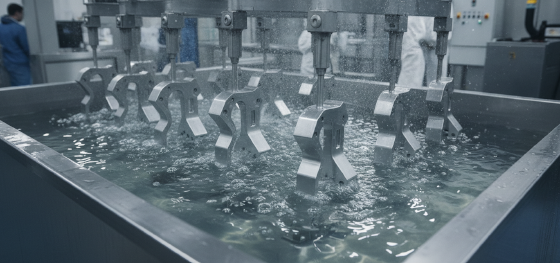
Why must brushed aluminum undergo electro-chemical sealing immediately after processing?
Raw brushed aluminum is highly prone to surface oxidation, fingerprints, and chemical corrosion because the fresh scratches expose active bare metal.
To restore the full anti-corrosion and wear properties of your components, incorporating this electrochemical sheet metal surface treatment into your turnkey sheet metal fabrication cycle is critical. After the abrasive belts have applied the linear grain, the exposed bare metal must be sealed. We execute high-purity clear anodizing (Type II sulfuric acid anodizing) to grow an integrated, transparent oxide layer over the brushed texture.
This clear anodizing process locks in the brushed grain permanently, establishing a highly durable, non-conductive surface that prevents fingerprints and resists corrosion. Jucheng Precision manages both mechanical brushing and clean-room anodizing under one roof, ensuring that your parts are processed with zero handling scratches or airborne dust contamination.
Precision Bending and Brushing at Jucheng Precision
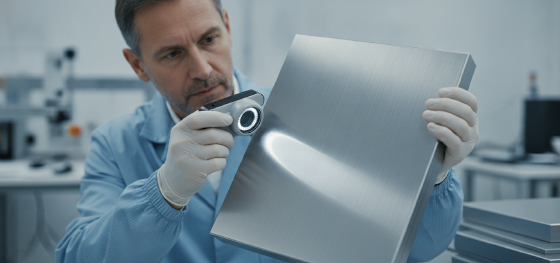
How does Jucheng Precision manage consistent linear grains on folded parts?
We utilize high-end automatic belt-brushing lines and multi-axis benders managed by certified operators, checking all alignments before we apply the grain.
Our advanced mechanical and chemical pre-treatment cells are fully integrated into our 8000-square-meter facility. This unified workflow allows us to cut, bend, brush, and anodize your parts under one roof, eliminating the need to ship semi-finished parts to third-party anodizing shops. It completely prevents transit scratches and eliminates the finger-pointing common when using multiple suppliers.
We process a wide range of materials, including lightweight aluminum, high-yield stainless steel, and easily formable carbon steel during high-precision sheet metal fabrication cycles. Our technical department provides a 24-hour free DFM analysis to check your CAD models, checking tolerances and hinge clearances before production. Supported by our no MOQ policy and rapid delivery guarantee, we manage your project from initial flat pattern cutting to final, high-durability anodizing and assembly.
FAQ: Critical Questions About Brushed Aluminum Sheet Metal
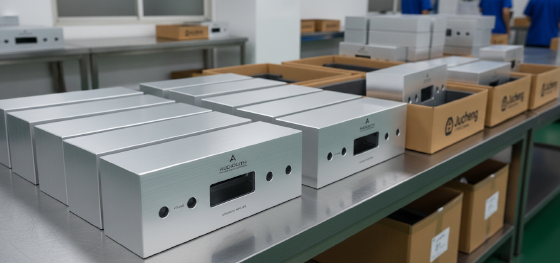
Our engineering team has compiled professional solutions to the most common quality challenges faced during aluminum brushing runs:
How does Jucheng Precision prevent bending cracks on pre-brushed aluminum sheets?
Alloys like aluminum 6061-T6 are highly prone to micro-cracking when folded, especially if the bend line runs parallel to the brushed grain direction. To prevent cracking, our CNC programmers nest the flat patterns so that all major bend lines run perpendicular or diagonal to the grain, and maintain a generous minimum bend radius.What is the difference between brushing and bead blasting for aluminum finishes?
Brushing utilizes linear, sharp-edged abrasive belts to cut continuous directional scratch lines, creating a classic satin-grain look. Conversely, bead blasting utilizes spherical glass beads under high pressure to gently peen the surface, removing minor tool marks and leaving a highly uniform, non-directional matte finish.Does mechanical brushing affect the dimensional thickness tolerances of thin-gauge sheets?
Yes. Aggressive brushing with coarse grits can remove up to 0.03mm of parent metal. When designing ultra-thin-gauge custom parts with tight tolerances, our engineers pre-calculate these material removal depths during our flat pattern CAD unfolding phase to ensure the finished parts remain within tolerance.How does Jucheng Precision prevent surface contamination during the brushing process?
We keep our non-ferrous brushing area strictly segregated from our carbon steel processing bays to prevent airborne iron dust cross-contamination. If steel particles embed in the soft aluminum during brushing, they will initiate galvanic corrosion. Our finishing team utilizes certified aluminum-only abrasive belts, performs thorough alkaline cleaning, and runs automated clear anodizing to ensure every finished component maintains its flawless corrosion resistance.

