


Selecting the ultimate surface treatment to isolate a lightweight casing from abrasive wear and environmental oxidation is a critical milestone in custom sheet metal fabrication. Specifying anodized aluminum sheet metal provides your custom brackets, electronic enclosures, and medical chassis with an exceptionally hard, scratch-resistant surface finish that far outperforms standard raw alloys. This electrochemical conversion process artificially grows the metal's natural oxide barrier, creating an integrated, non-conductive layer that accepts vibrant dyes while delivering premium wear resistance.
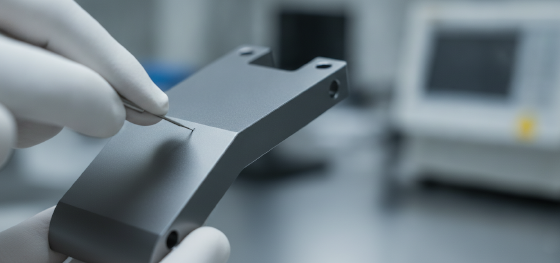
Using raw aluminum in high-vibration or high-humidity environments often leads to severe surface scratching, galvanic corrosion, and electrical short-circuits. Standard raw metal is soft and highly prone to galling under friction. Transitioning to an anodized chemical barrier completely resolves these physical limits, transforming a soft metal surface into a rugged, insulated layer with outstanding durability.
Let's examine how the electrochemical anodizing bath restructures the outer aluminum layer, analyze the critical performance differences between standard and hardcoat anodizing, and review the abrasive pre-treatment steps required to ensure a flawless satin-matte finish.
How Anodizing Enhances Aluminum

What is the physical mechanism of electrochemical anodizing on aluminum?
The process relies on electrostatic attraction to hold dry powder onto grounded metal, followed by high-temperature baking to melt and chemically crosslink the polymers into a continuous coat.
The process utilizes specialized spray guns to impart a positive electrostatic charge onto dry polymer powder particles. These particles typically consist of thermosetting polymers such as epoxy, polyester, or polyurethane. Because the grounded steel plate attracts the charged cloud, the electrostatic charge ensures that the dry powder clings uniformly across all vertical flanges, sharp corners, and deep recesses.
To achieve a perfect finish, the standard powder coating workflow must follow a strict, multi-stage sequence on the production floor:
Surface Preparation: The bare metal undergoes alkaline degreasing and chemical etching to remove mill oils.
Electrostatic Application: Grounded parts are sprayed with positively charged polymer powders in a clean-room booth.
Thermal Curing: Coated parts are transferred to curing ovens heated to 180 to 200 degrees Celsius.
Crosslinking Reaction: Intense thermal energy melts the dry powder, causing the polymers to flow together and lock.
Standard Anodizing vs. Hard Coat Anodizing

When should a product designer specify Type III hardcoat over standard Type II anodizing?
Choose Type II for decorative, thin-film colors and moderate wear resistance; select Type III hardcoat for extreme mechanical wear, high dielectric insulation, and maximum surface hardness.
To extract maximum utility, designing with anodized aluminum sheet metal requires a deep understanding of the differences between the two primary chemical specifications. Standard Type II anodizing utilizes sulfuric acid baths at room temperature, building a decorative oxide layer of 5 to 25 microns. This thin-film coating is ideal for consumer electronics enclosures requiring strict dimensional tolerances and vibrant, aesthetic colors.
Conversely, Type III hardcoat anodizing is processed in near-freezing acid baths (0 to 5 degrees Celsius) utilizing significantly higher current densities. This cold process builds a highly dense oxide layer of 50 microns or more. Hardcoat anodizing is the standard choice for heavy-duty industrial gears, aerospace sliders, and military-grade enclosures, providing an exceptionally hard surface (up to 65 HRC equivalent) that resists severe continuous friction and sand abrasion.
Pre-finishing for Anodizing: Brushing and Bead Blasting
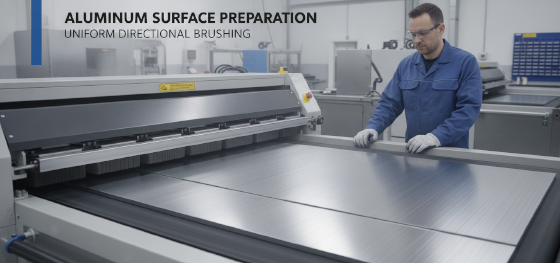
Why are mechanical pre-treatments essential before anodizing aluminum parts?
Anodizing thickens the natural surface layer but cannot hide or erase scratches or extrusion lines; physical pre-treatments are required to create a uniform, flat surface texture.
An electro-chemical bath actually amplifies existing surface defects. If a raw aluminum panel displays minor tool marks, scratches, or extrusion lines, these flaws will look even more prominent after anodizing. To achieve a flawless cosmetic finish, we execute rigorous mechanical pre-treatments before submerging the parts.
For premium consumer appliances, we perform progressive mechanical brushing to apply a uniform, directional satin grit. For advanced electronics casings requiring a premium, matte texture, we execute glass bead blasting. This abrasive impact removes all handling scratches and CNC tool lines, creating a perfectly uniform, non-reflective micro-texture that accepts colored dyes beautifully.
ISO 13485 Compliant Medical Anodizing at Jucheng Precision

How does Jucheng Precision ensure compliance for medical-grade anodized components?
We operate specialized, clean-room electrochemical lines with precise chemical and temperature controls, validating every batch under strict medical standards.
Integrating this electrochemical sheet metal surface treatment into your turnkey fabrication flow is the single most effective way to eliminate logistical bottlenecks and double-handling shipping bills. Jucheng Precision houses these advanced anodizing lines inside our 8000-square-meter facility, ensuring that your parts are cut, folded, and completely finished under one roof with extreme quality control.
Our medical finishing bays are fully certified to meet ISO 13485 regulations. This ensures that surgical brackets, analyzer housings, and drug-delivery panels are processed without cross-contamination. We execute complete chemical passivation and ultra-pure water sealing, delivering non-toxic, biocompatible components that can survive hundreds of autoclaving cycles and aggressive hospital disinfectants throughout our precision sheet metal fabrication cycles.
FAQ: Critical Questions About Anodized Aluminum Sheet Metal
Our engineering team has compiled professional solutions to the most common quality challenges faced during anodizing runs:
What causes micro-fissuring in hardcoat anodized parts, and how do we prevent it?
Micro-fissuring refers to microscopic surface cracks that develop under thermal stress, typically caused by the different thermal expansion rates of aluminum and its oxide layer. During high-temperature baking or aggressive environment changes, the oxide layer expands slower than the parent metal, causing cracks. We minimize this by optimizing our curing ramps and managing bath temperatures precisely.How do you protect mounting holes and ground pins from being anodized?
Anodized layers are non-conductive, meaning they will block electrical grounding path connections inside your enclosures. To protect critical grounding areas and internal threads from being insulated, we utilize high-temperature masking caps, silicone plugs, or apply peelable liquid masks before anodizing. These masks are removed post-bath, delivering clean, bare metal ground points.Can welded aluminum assemblies be anodized successfully?
Yes, but the weld area will display minor color variations. The heat of welding alters the local metallurgical grain structure of the aluminum, and utilizing a different alloy filler rod (such as 4043) will result in different oxide growth and dye absorption rates compared to the parent metal (such as 5052). We prevent extreme color mismatches by utilizing compatible 5356 filler wires.How does Jucheng Precision guarantee the coating durability on custom anodized aluminum sheet metal orders?
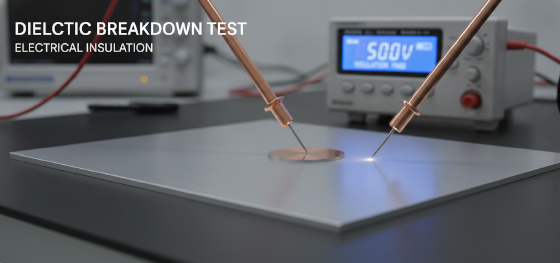
We execute rigorous quality control gates across our finishing line, utilizing advanced coating thickness gauges to verify oxide layers and executing standard dye stain tests (ASTM B136) to confirm complete sealing. Our technicians conduct ASTM D149 dielectric breakdown testing, ensuring that every finished component meets your strict medical and electrical safety requirements.

