


Structural sovereignty defines the threshold of high-payload autonomous manipulation. In the uncompromising environment of machine tending, heavy-casting handling, and robotic welding, the "Hand" of the robot must function as an unyielding extension of the arm’s torque. While additive manufacturing has revolutionized lightweight grippers, the physics of high-impact industrial automation often demand the absolute modulus of metal. If your gripper fingers flex by even 0.5mm under the strain of a 20kg payload, the resulting "Moment Arm" shift can cause parts to slip, sensors to misread, and expensive harmonic drives to overheat. Navigating this requirement for zero-deflection performance requires the strategic deployment of CNC machining robotic grippers. Jucheng Precision operates as a high-fidelity subtractive sanctuary in the Shenzhen precision manufacturing hub, providing the 5-axis CNC depth needed to deliver jaws and flanges that possess the structural spine required for 24/7 industrial service. Within the broader framework of custom robotic end-of-arm tooling, we bridge the gap between "concept grip" and "heavy-duty sovereignty," ensuring your automation cells scale with absolute dimensional certainty.
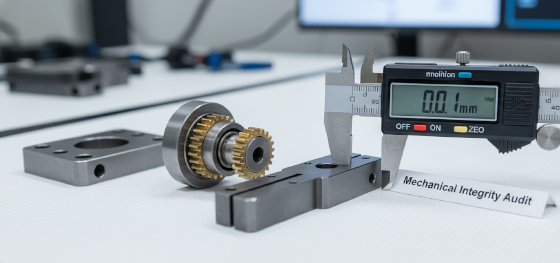
Establishing a resilient industrial supply chain in 2026 demands the rejection of standard "job-shop" tolerance logic. Amateurs often approach a parallel robotic finger like a basic bracket, unaware that the cumulative error of multiple 3-axis setups ruins the geometric parallelism required for consistent picking. Jucheng Precision eliminates these "Grip Failures" by enforcing a strict "Monolithic Machining" protocol. We utilize aerospace-grade aluminum and hardened tool steels to ensure your effectors don't just look the part—they survive the violent realities of the factory floor. This guide deconstructs the choice between metals and polymers, the physics of sub-micron parallelism, and why JUCHENG’s 5-axis facility is the mandatory foundation for anyone developing CNC machining robotic grippers for the global market.
Metal vs. Plastic: When to choose Aluminum or Tool Steel?
Precision Parallelism: Why +/- 0.01mm tolerances are mandatory?
Surface Sovereignty: Hard anodizing for repetitive friction
The JUCHENG Angle: 5-Axis CNC for ultra-rigid aircraft-grade aluminum
Frequently Asked Questions: CNC Machined Grippers
Metal vs. Plastic: When to choose Aluminum or Tool Steel?
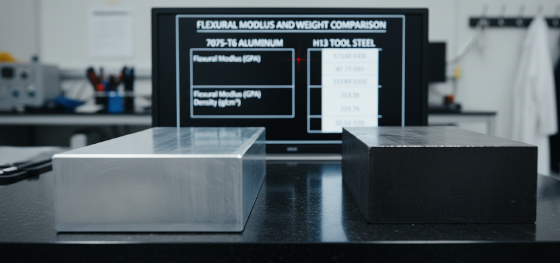
Material density and flexural modulus dictate the success of high-torque automation. In the debate over CNC machining robotic grippers, engineers must evaluate the "Stiffness-to-Weight" ratio against the service environment. For the majority of industrial pick-and-place tasks, Aluminum 7075-T6 is the undisputed king. It offers a yield strength (500 MPa) that rivals many mild steels but at 33% of the mass, keeping the robot's dynamic inertia low. However, when the robot is tending a high-heat forge or handling abrasive sand-castings, we pivot to H13 or D2 Tool Steel. These materials provide the "Thermal and Abrasive Armor" needed to survive where aluminum would soften or erode. Jucheng Precision helps you navigate this matrix, ensuring you don't over-specify expensive steel when a lightweight aluminum jaw would deliver faster cycle times and less motor strain.
Precision Parallelism: Why +/- 0.01mm tolerances are mandatory?
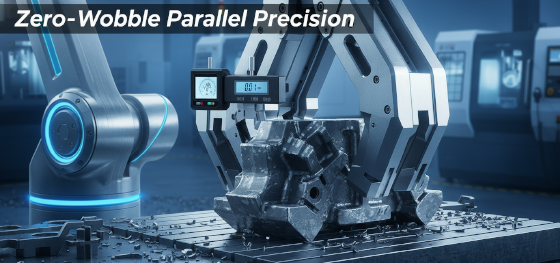
Mechanical repeatability in a parallel gripper is a hostage to subtractive accuracy. If the two opposing fingers of a gripper are not perfectly parallel to within +/- 0.01mm, the part will "walk" during the grip cycle. This seemingly minor shift causes the part's center of gravity to move, resulting in a misaligned placement that stalls the entire assembly line. CNC machining robotic grippers at Jucheng Precision focuses heavily on the "True Position" of the mounting bores. We utilize specialized diamond-tipped cutters to achieve a surface finish of Ra 0.4 µm, ensuring the metal-on-metal interface between the gripper base and the jaw is perfectly flat. This level of precision eliminates the need for expensive manual shimming during installation, ensuring your custom robotic end-of-arm tooling provides the surgical accuracy required for sub-millimeter component assembly.
Surface Sovereignty: Hard anodizing for repetitive friction
Operational survival requires more than just internal strength; it demands surface energy management. Aluminum, while rigid, is relatively soft and prone to "Galling" and "Scuffing" after thousands of cycles. For CNC machining robotic grippers, Jucheng Precision implements a mandatory Type III Hard Coat Anodizing protocol. This electrochemical process transforms the outer microns of the aluminum into a ceramic-hard layer of aluminum oxide. This "Sapphire Armor" provides a surface hardness of 60-70 HRC, allowing your gripper fingers to slide against steel parts for millions of cycles without wearing down. For steel components, we offer black oxide or gas nitriding to provide a similar anti-friction barrier. We don't just "cut parts"; we engineer environmental defense systems that ensure your robotic effector maintains its "Day One" tolerances through years of high-vibration factory use.
The JUCHENG Angle: 5-Axis CNC for ultra-rigid aircraft-grade aluminum
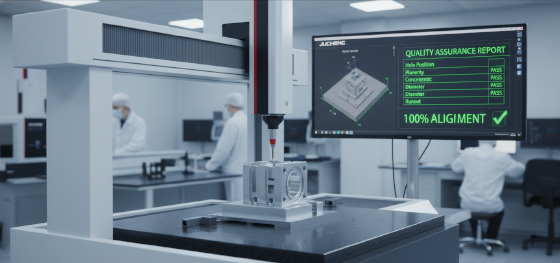
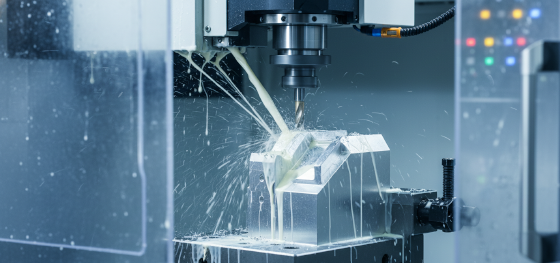
Manufacturing excellence at Jucheng Precision is built on the foundation of the "Single-Setup" mandate. We recognize that complex robotic jaws often feature angled mounting facets and internal air channels that intersect in 3D space. Attempting to machine these on a standard 3-axis mill involves multiple re-fixturing cycles, each introducing a "Metrological Drift." JUCHENG eliminates this risk by utilizing elite 5-axis Haas and Mazak CNC centers. We machine your entire gripper assembly in a single setup, ensuring that every mounting hole is perfectly orthogonal to the primary datum. This surgical consistency is why our CNC machining robotic grippers are chosen by global automotive Tier-1 suppliers. We provide the material lot traceability and CMM inspection reports for every batch, providing the "Paper Trail of Quality" required for industrial-tier contracts. Stop gambling your project's ROI on vendors who can't bridge the gap between metal and motion. Leverage our decade of subtractive mastery to validate rapidly and launch with an uncompromising grip.
Frequently Asked Questions: CNC Machined Grippers
Question: How much weight can I save by using 7075 aluminum instead of stainless steel for grippers?
Answer: Aluminum 7075 offers a 60% mass reduction compared to 316 stainless steel while maintaining nearly 90% of the yield strength, making it the superior choice for high-speed robotic effectors.
Question: What is the tightest tolerance JUCHENG can hold for a robotic finger joint?
Answer: Utilizing our precision 5-axis fleet, we routinely achieve +/- 0.005mm (0.0002") on critical bearing seats and +/- 0.01mm on overall jaw parallelism for CNC machining robotic grippers.
Question: Do you provide custom soft-jaws to prevent marking delicate parts?
Answer: Yes. We often machine the primary gripper linkage from aluminum and then utilize **overmolded gripper fingers** with soft TPE or Silicone (Shore 50A) to provide a non-marring, high-friction interface for delicate glass or plastic components.

