


Designing heavy metal blocks destroys your commercial tooling budget instantly. Engineers accustomed to plastic injection frequently create massive structural chunks that cool incredibly slowly on the factory floor. Pouring molten alloy into these poorly optimized geometries guarantees terrible internal gas porosity and horrifying surface sink marks. Following a strict die casting design guide forces hardware teams to respect thermodynamic flow limits long before committing to expensive steel molds.

Shrinkage defects ruin thousands of production batches globally. When extreme heat leaves the injected metal, overly thick sections contract aggressively, violently pulling the exterior skin inward and creating ugly visible depressions. Mastering optimal die casting wall thickness completely neutralizes this physical deformation, guaranteeing perfectly flat surfaces ready for cosmetic powder coating.
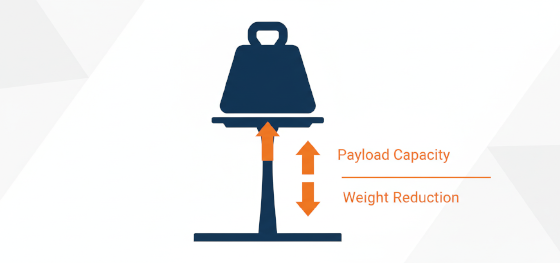
Trimming excess weight directly increases your ultimate profit margins. Let's explore exactly why uniform geometry prevents catastrophic cooling failures, analyze the specific injection limits for different industrial alloys, and discover how to reinforce thin panels securely.
content:
The Golden Rule: Maintaining Uniformity Everywhere
Material Limits: Aluminum, Zinc, and Magnesium
Structural Reinforcement: Avoiding Heavy Blocks
Turnkey Hub: Pushing the Injection Limits Safely
FAQ: Honest Answers About Shrinkage and Flow
The Golden Rule: Maintaining Uniformity Everywhere
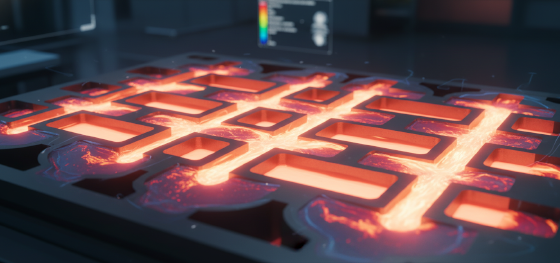
Why do sudden changes in metal mass cause severe structural cracks?
Molten metal flowing from a massive, thick reservoir directly into a paper-thin channel freezes completely unevenly, triggering intense thermal shock that physically rips the molecular lattice apart exactly where those two drastic shapes intersect.
Balancing your entire CAD model ensures rapid, predictable thermodynamic extraction. Tooling experts demand highly consistent cross-sections so the chilled internal water lines can drop the entire component's core temperature simultaneously.
Ignoring this balance forces the heavy sections to continue shrinking long after the thin walls have frozen solid. This unequal contraction twists the hardware violently, destroying your meticulous assembly tolerances before the part even leaves the hydraulic press.
Material Limits: Aluminum, Zinc, and Magnesium
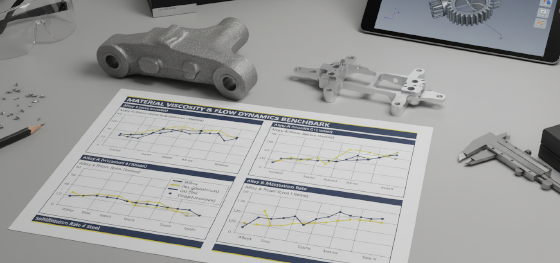
Different liquid alloys possess vastly divergent flow viscosities under extreme hydraulic pressure. Zinc flows flawlessly like water, allowing hardware development teams to push geometric limits aggressively when designing micro-precision optical housings.
Specifying heavy automotive aluminum requires leaving slightly more physical space for the sluggish metal to travel safely without freezing. The data matrix below defines the absolute commercial boundaries for modern industrial alloys.
| Industrial Alloy Type | Absolute Minimum Limit | Recommended Commercial Baseline |
|---|---|---|
| Zinc Alloys (Zamak) | 0.5 mm (0.020 inches) | 1.0 mm to 1.5 mm |
| Magnesium Alloys | 0.6 mm (0.025 inches) | 1.2 mm to 2.0 mm |
| Aluminum Alloys (A380/ADC12) | 1.0 mm (0.040 inches) | 1.5 mm to 2.5 mm |
Pushing below these minimum thresholds causes the molten alloy to freeze instantly mid-flow. This catastrophic physical defect, known universally as a cold shut, leaves a fragile, ugly seam across the part that will instantly snap under minimal physical stress.
Structural Reinforcement: Avoiding Heavy Blocks
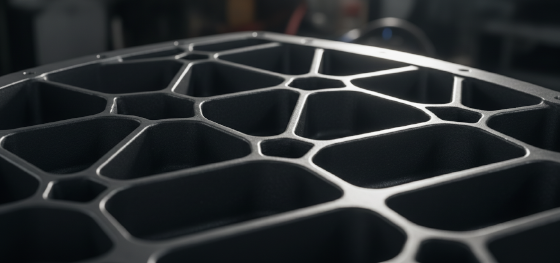
How do engineers strengthen paper-thin metallic shells without adding massive weight?
Carving deep, intersecting support networks directly behind the aesthetic faceplate delivers military-grade rigidity; relying heavily on properly engineered die casting ribs and fillets provides ultimate crash protection while keeping the primary structure incredibly thin.
Hollowing out thick mounting bosses prevents dangerous thermal traps from forming. Integrating strategic gussets distributes severe mechanical torque flawlessly across the entire housing instead of concentrating destructive force on a single weak joint.
Smoothing out every internal intersection remains absolutely mandatory. Sharp ninety-degree corners concentrate brutal stress, causing the cooling metal to tear violently. Generous rounded corners encourage the liquid alloy to flow seamlessly, drastically reducing your factory scrap rate.
Turnkey Hub: Pushing the Injection Limits Safely
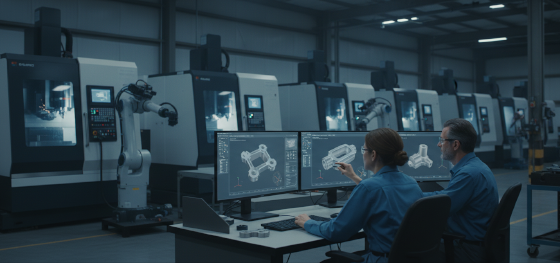
Manufacturing razor-thin aerospace brackets requires immense hydraulic tonnage and absolute process control. Low-tier brokers simply crank up the injection speed to force metal into tight gaps, wrapping massive amounts of atmospheric air into the final commercial component.
Operating our massive turnkey precision hub, JC Rapid controls the flow dynamics mathematically. Our senior tooling engineers ruthlessly review your specific die casting wall thickness requirements during our complimentary DFM audit to guarantee zero-defect injections.
Stop losing money on heavy, poorly optimized metal blocks. Send your complex CAD models to our technical team today, identify the critical payload limits, and secure flawlessly balanced commercial hardware.
FAQ: Honest Answers About Shrinkage and Flow
Can varying thickness cause the final metal part to warp aggressively after ejection?
Absolutely. Uneven cooling means one side of the metal shrinks faster than the other, physically twisting the entire component completely out of its original dimensional tolerance limit.
Do thicker metal walls provide better electromagnetic interference shielding for electronics?
Surprisingly no. Even a highly optimized, paper-thin magnesium shell acts as an impenetrable Faraday cage, completely blocking disruptive radio frequencies without requiring heavy internal mass.
Does increasing the chassis size improve cosmetic powder coating adhesion later?
Massive walls actually increase the terrifying risk of trapped outgassing blisters ruining your paint. Thinner, highly uniform sections cure perfectly in the baking ovens without violently expelling trapped air.
Will the factory inform me if my 3D design features impossible geometric extremes?
Professional contract manufacturers will halt production immediately. We refuse to cut expensive tool steel until our flow simulation software mathematically validates your entire geometric structure.

