


Mounting heavy camera gimbals or agricultural liquid tanks onto flimsy plastic frames guarantees a catastrophic crash. High-torque brushless motors spinning at maximum RPM generate brutal physical forces that simply rip weak materials apart mid-flight. Engineering teams desperate to lower their payload weight often mistakenly rely on basic 3D printed polymers for their main structural cores. Deploying dedicated Drone chassis CNC machining permanently eliminates this deadly harmonic vibration threat. Carving your main load-bearing components out of solid aerospace-grade metal delivers an unyielding foundation that refuses to flex or twist under extreme aerial stress.
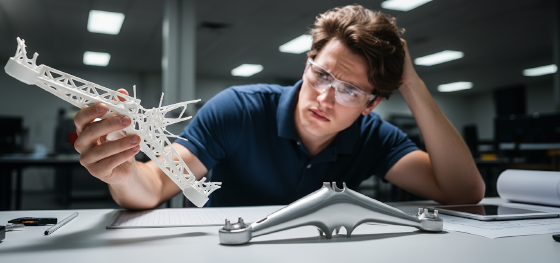
Executing flawless Custom Drone and UAV Parts Manufacturing requires abandoning hobbyist methodologies completely. Procurement directors must recognize that every single micro-vibration in the chassis translates directly into blurry camera footage and massive flight instability. Operating our advanced Shenzhen precision hub, Jucheng Precision specifically targets and neutralizes these exact structural weaknesses.
Shaving grams off your total takeoff weight while simultaneously boosting impact resistance demands incredibly sophisticated milling strategies. Let's explore why subtractive metal manufacturing destroys plastic alternatives, how complex machine axes hollow out unnecessary weight, and which specific metallic grades dominate the skies.
content:
Rigidity Battle: Why CNC Machining Beats Plastics?
Complex Geometry: The Role of 5-Axis Milling
Technical Data: Top Materials for Flight Hardware
Surface Defenses: Hard Anodizing and Aesthetics
FAQ: Honest Answers About Weight Reduction and Costs
Rigidity Battle: Why CNC Machining Beats Plastics?

Why do heavy-lift commercial flight controllers constantly reject polymer frames?
Polymers lack the absolute tensile stiffness required to absorb harmonic resonance, meaning high-speed motor vibrations will travel directly into the central gyroscope, completely blinding the flight stabilization software.
Flight dynamics rely entirely on microscopic sensor readings. If the physical arms connecting the motors to the main body twist even a fraction of a degree during aggressive maneuvering, the entire system loses synchronization. Carving solid metal blocks guarantees absolute torsional rigidity, locking the motors perfectly parallel to the flight controller.
Heat dissipation acts as the secondary killer of cheap plastic frames. Massive industrial motors generate blistering thermal energy during long mapping missions. Metal mounting brackets serve as massive natural heatsinks, actively pulling destructive heat away from the copper coils to prevent mid-air engine burnouts.
Complex Geometry: The Role of 5-Axis Milling
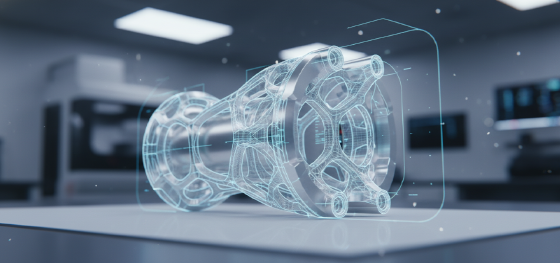
How do factories remove massive amounts of weight without destroying the structural integrity?
By employing advanced topological optimization software and executing the toolpaths on 5-axis machines, allowing cutters to hollow out deep, complex pockets from every angle without ever un-clamping the part.
Clamping a part multiple times across different machines destroys microscopic assembly tolerances. Every time a technician physically moves the raw metal block to a new vise, human error introduces tiny deviations. If your motor mounting holes are off by half a millimeter, your propellers will fight each other instantly.
Running advanced 5-axis mills allows the cutting tool to dance completely around the metal block in one single setup. Engineers aggressively hollow out thick aluminum plates, leaving behind incredibly thin, spider-web-like reinforcement ribs that maximize strength while shedding every possible gram of dead weight.
Technical Data: Top Materials for Flight Hardware
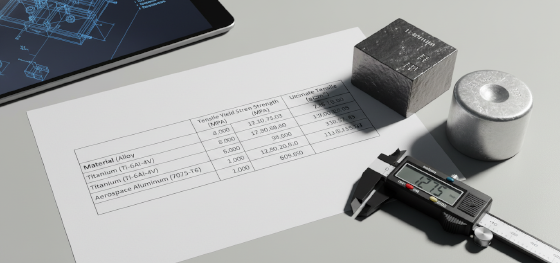
Evaluating metallurgical properties dictates the ultimate payload capacity of your fleet. The benchmark data below proves exactly when hardware teams must upgrade their baseline aluminum to survive extreme industrial environments.
| Aerospace Material | Key Flight Advantage | Best Application |
|---|---|---|
| Aluminum 6061-T6 | Excellent baseline strength, highly machinable, very cost-effective. | Main body plates, basic camera gimbals. |
| Aluminum 7075-T6 | Military-grade tensile strength, nearly double the yield of 6061. | High-torque motor mounts, heavy payload brackets. |
| Titanium (Ti-6Al-4V) | Immune to saltwater corrosion, unbreakable impact resistance. | Deep-sea ROV frames, extreme heavy-lift joints. |
| Magnesium (AZ31B) | Lightest structural metal available, superior vibration damping. | Ultra-light racing frames, sensitive sensor housings. |
Specifying 7075 aluminum solves ninety percent of all structural challenges faced by commercial manufacturers. However, when building equipment destined to fly over ocean oil rigs, upgrading critical exposed joints to Titanium completely eliminates the terrifying threat of catastrophic galvanic corrosion.
Surface Defenses: Hard Anodizing and Aesthetics

Why must raw machined aluminum be immediately sealed before assembly?
Bare metal severely oxidizes and pits when exposed to morning dew or coastal humidity; submerging the parts into chemical anodizing baths creates an impenetrable, non-conductive oxide armor.
Submerging raw aluminum into Type III hard anodizing tanks fundamentally alters the surface chemistry. This military-grade treatment provides extreme scratch resistance, ensuring your expensive hardware survives rough landings in dirt and gravel without sustaining deep structural gouges.
Before committing to massive commercial production runs, verifying your exact component fits together perfectly is mandatory. We highly recommend testing your clearances and payload balance by requesting a rapid UAV frame prototype from our dedicated Shenzhen engineering bay. Send your CAD models today, and let us mill the ultimate flight-ready foundation.
FAQ: Honest Answers About Weight Reduction and Costs

Does hollowing out the metal frame significantly weaken its crash resistance?
If done blindly, yes. We utilize advanced topological analysis to remove metal exclusively from zero-stress zones, preserving absolute structural integrity exactly where the load paths travel.
Why is machining titanium exponentially more expensive than aluminum?
Titanium is incredibly hard and dissipates heat poorly during cutting, which rapidly destroys expensive CNC drill bits and requires the machines to run at significantly slower speeds.
Can I use magnesium for waterproof maritime drone frames?
It is heavily discouraged. Magnesium reacts violently to saltwater and corrodes rapidly. You must utilize marine-grade 316L stainless steel or heavily anodized aluminum for oceanic deployments.
Will the black anodized coating fade after long flights in direct sunlight?
Standard cosmetic anodizing can fade slightly over years of UV exposure. We specify heavy-duty UV-resistant dyes and hard-coat sealing to guarantee your fleet maintains a stealthy aesthetic permanently.

