


Skipping physical validation before freezing your CAD model guarantees disastrous flight dynamics. Hardware founders often rush into mass production tooling to save time, only to discover their expensive camera gimbal physically collides with the landing gear during high-speed maneuvers. Manufacturing a dedicated UAV frame prototype entirely neutralizes this expensive engineering risk. Holding a physical model allows your assembly team to route delicate wiring harnesses and confirm component clearances before wasting thousands of dollars on permanent steel injection molds.
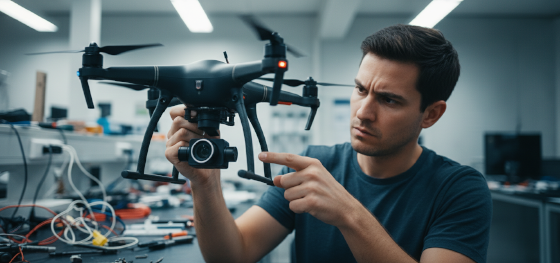
Securing venture capital funding requires proving your aircraft actually leaves the ground safely. Investors refuse to write massive checks based strictly on theoretical computer simulations. Operating our dedicated Shenzhen rapid manufacturing hub, Jucheng Precision delivers flight-ready physical iterations in days, allowing you to prove your payload capacity to stakeholders immediately.
Balancing aerodynamics against manufacturing reality separates successful fleets from grounded failures. Let's dissect how executing rapid physical iterations prevents catastrophic center-of-gravity errors, compare the best fabrication methods, and explore exactly why integrating Custom Drone and UAV Parts Manufacturing accelerates your time to market.
content:
Flight Physics: Preventing Aerodynamic Disasters
Fabrication Choices: Printing vs CNC Milling
Testing Matrix: Validating Structural Integrity
JUCHENG Hub: Shenzhen's Rapid Iteration Arsenal
FAQ: Honest Answers About Weight Simulation and Iterations
Flight Physics: Preventing Aerodynamic Disasters

Why do software flight simulations fail to predict real-world crashes?
Computer models cannot perfectly replicate chaotic crosswinds or the exact physical wire routing that drastically alters the critical center of gravity during actual outdoor flight tests.
Guessing your aerodynamic stability leads to terrifying test flights. If the center of mass sits even slightly too far forward, the rear motors must constantly overwork to keep the aircraft level. This massive power drain burns out the electronic speed controllers and drastically reduces your maximum battery range.
Testing a physical UAV frame prototype allows your team to manually swap heavy LiDAR sensors and batteries in the field. Shifting these components physically ensures you find the absolute perfect fulcrum point, making physical validation absolutely mandatory before finalizing the commercial blueprint.
Fabrication Choices: Printing vs CNC Milling

How do engineers choose between 3D printing and milling for early flight testing?
Engineers utilize selective laser sintering (SLS) for cheap, rapid aerodynamic verification, then immediately switch to subtractive milling when they need to validate the ultimate structural yield strength.
Testing pure aerodynamic shapes requires incredible factory speed. Industrial nylon 3D printing produces complex, impact-resistant geometries overnight without requiring any expensive tooling or complicated work-holding setups. Your team can literally crash the drone, tweak the CAD file, and print a modified replacement by the next morning.
Transitioning to functional load testing requires actual metal. When your design requires absolute rigidity to support heavy commercial payloads, we shift your files into the CNC bay. Executing precise Drone chassis CNC machining delivers the exact tensile strength and harmonic vibration resistance your final commercial product will possess.
Testing Matrix: Validating Structural Integrity

Comparing testing methodologies ensures hardware teams collect the exact data needed to freeze their designs confidently. The matrix below outlines how different fabrication techniques support specific engineering validation goals.
| Fabrication Method | Primary Engineering Testing Goal | Typical Turnaround Time |
|---|---|---|
| SLS Nylon 3D Printing | Aerodynamic drag testing and wire routing interference checks. | 2 to 4 Days (Extremely Fast) |
| SLA Resin 3D Printing | Visual aesthetics and high-fidelity investor presentations. | 1 to 3 Days |
| 5-Axis CNC Milling | Extreme payload load testing and harmonic vibration analysis. | 5 to 10 Days |
Sending a fragile resin model into a high-speed outdoor flight test guarantees it will shatter upon landing. Understanding these material limits prevents your testing team from collecting useless data. You must align the fabrication method directly with the specific physical stress you intend to apply during the field trial.
JUCHENG Hub: Shenzhen's Rapid Iteration Arsenal

Why should startups execute their rapid iterations inside a massive Shenzhen facility?
Because transitioning from a plastic test model to massive global metal production happens seamlessly under one roof, completely eliminating the dangerous delays of switching suppliers.
Bouncing between a local 3D print shop and an overseas CNC factory destroys your momentum. If the print shop ignores the strict manufacturing limits of CNC milling, you will design a chassis that physically cannot be mass-produced later. Our engineers validate your test models for eventual mass production from day one.
Stop gambling your product launch on unverified computer simulations. Send your experimental CAD files to our engineering team today for a rapid DFM audit. We identify the fastest fabrication pathway, eliminate fatal design flaws, and deliver a testable UAV frame prototype at unbeatable commercial speeds.
FAQ: Honest Answers About Weight Simulation and Iterations

Can I use a 3D printed nylon chassis for my final commercial product?
Generally no. While industrial nylon is incredibly tough, it lacks the extreme stiffness required to completely eliminate harmonic motor vibrations, making metal mandatory for commercial heavy-lift fleets.
Does the weight of the plastic test model match the final metal version exactly?
No, printed plastics weigh significantly less than aerospace aluminum. Engineers must tape lead weights to the plastic test model to accurately simulate the final metallic flight dynamics.
How fast can you modify a design after a failed flight test?
Operating our rapid prototyping bay allows us to process your updated CAD files immediately, often initiating a new industrial print or CNC cycle within hours of receiving the changes.
Do you offer assembly services for these complex structural test units?
Yes. We can press-fit threaded brass inserts into the plastics and fully assemble the structural skeletal components before shipping them directly to your testing facility.

