


Nature solved a critical engineering problem millions of years ago. How do you create a structure that is both incredibly strong and incredibly light? The answer is in your own bones.
Bone is not a single material. It is a composite. It is a soft protein matrix reinforced with hard mineral fibers. This combination creates a material that is far superior to either of its components alone.
In the world of modern manufacturing, we use the same principle. We create our own "engineered bones." This is the world of frp plastic material, or Fiber-Reinforced Plastics. It is one of the most powerful and exciting families of types of plastics.
content:
The Problem: The Tyranny of Weight
The Solution: A Team of Two Materials
The Star Player: Carbon Fiber (CFRP)
The Workhorse: Glass Fiber (GFRP)
The Manufacturing Challenge
Is FRP Right for Your Project?
The Problem: The Tyranny of Weight
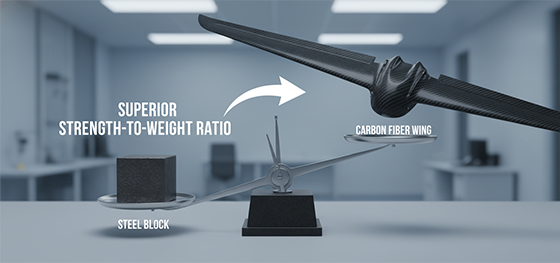
For many high-performance applications, weight is the ultimate enemy. In aerospace, every kilogram you save is worth thousands of dollars in fuel over an aircraft's lifetime. In motorsports, a lighter car is a faster car. In a drone, a lighter frame means a longer flight time.
The problem is that traditional materials force a trade-off. Metals like steel are very strong, but they are very heavy. Plastics are very light, but they are not strong or stiff enough for many structural jobs.
How do you break this trade-off? How do you get the strength of metal at the weight of plastic? You need a new category of material.
The Solution: A Team of Two Materials
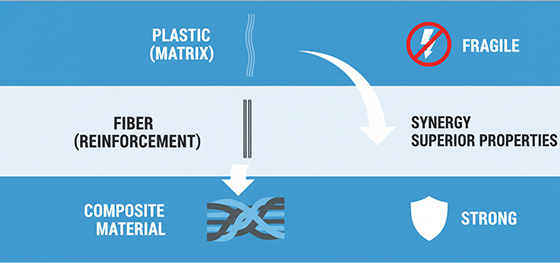
The answer is frp plastic material. It is a composite material, which means it is a team of at least two different materials working together.
The first member of the team is the "matrix." This is a type of polymer, like epoxy resin. By itself, the matrix is not very strong. It gives the composite its overall shape and protects the fibers.
The second, and most important, member is the "reinforcement." This is a bundle of very strong, stiff fibers. These fibers are the "bones" of the composite. They are the source of all its strength and stiffness.
When you combine the two, you get a synergy. The matrix holds the strong fibers in place and distributes the load among them. The fibers provide the incredible strength and stiffness. The result is a hybrid material that is far stronger and stiffer than the matrix alone, but far lighter than a solid metal.
The Star Player: Carbon Fiber (CFRP)
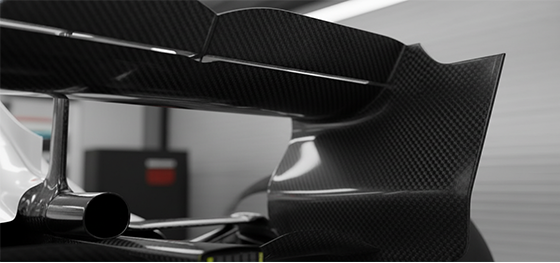
The most famous type of FRP is Carbon Fiber Reinforced Plastic, or CFRP. The reinforcement here is, as the name suggests, fibers of pure carbon.
Carbon fiber has one of the highest strength-to-weight ratios of any known material. It is incredibly strong and unbelievably light. This makes it the star player for the most demanding applications.
You see it in Formula 1 race cars, where every component is optimized for minimum weight and maximum stiffness. You see it in high-end drones, where a lightweight frame is critical for flight time and agility. And you see it in the aerospace industry, for everything from airplane wings to satellite bodies. It also has a beautiful, high-tech woven appearance that is highly desirable.
The Workhorse: Glass Fiber (GFRP)
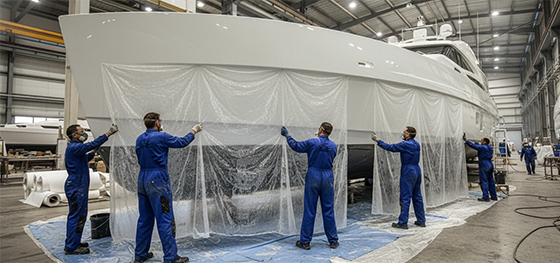
If carbon fiber is the star player, then glass fiber is the reliable workhorse. Glass Fiber Reinforced Plastic, or GFRP (often just called fiberglass), uses fibers made of glass.
Glass fibers are not as strong or as light as carbon fibers. But they are still very strong. And, most importantly, they are much, much cheaper.
This makes GFRP the perfect choice for applications that need high strength and light weight, but where cost is also a major factor. It is used to make boat hulls, car body panels, wind turbine blades, and many other large, structural components. It provides a huge performance increase over non-reinforced plastic, but at a much more accessible price point than carbon fiber.
The Manufacturing Challenge
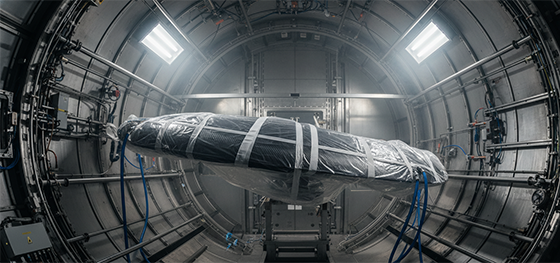
Working with frp plastic material is very different from injection molding or CNC machining. The parts are typically built up by hand, layer by layer.
Sheets of the fiber fabric are placed into a mold. They are then saturated with the liquid resin matrix. This process is called "layup." The quality of the final part depends heavily on the skill of the technician. They must ensure there are no air bubbles and that the fibers are oriented in the correct direction for maximum strength.
For the highest performance parts, the layup is then cured under high pressure and temperature inside a machine called an autoclave. This squeezes out any excess resin and creates a very dense, strong, and lightweight part.
After curing, FRP parts often need secondary machining. For example, precise holes for mounting need to be drilled. Machining composites is also a specialist skill. It requires very sharp, diamond-coated tools.
Is FRP Right for Your Project?

Is an FRP material the right choice for you?
If your number one design goal is to reduce weight while maintaining high strength and stiffness, then the answer is yes. Nothing can beat the strength-to-weight ratio of a composite material.
However, you must also consider the cost. FRP parts are significantly more expensive to produce than parts made from standard plastics or metals. The materials are more expensive, and the process is very labor-intensive.
This is a trade-off that every engineer must make. A good manufacturing partner like JUCHENG can help. We have experience with these advanced materials. We can help you decide if the incredible performance benefits of FRP are the right investment for your high-performance project.

