


For a designer, the many types of plastics are a palette of creative possibilities. But for a manufacturer, they are a workshop full of partners. Each one has a different personality.
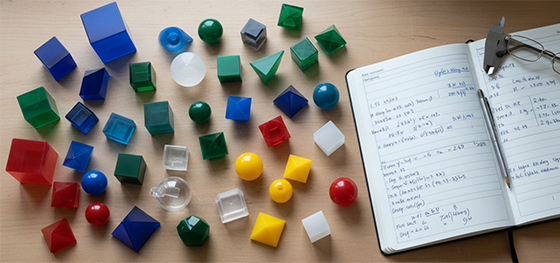
Some are friendly, forgiving, and easy to work with. Others are stubborn, demanding, and require our most advanced tools and deepest expertise. They are all useful. But only if you understand their character.
This guide is not a chemistry lesson. It is an introduction to these partners from our perspective on the factory floor. It is a look at how we, as manufacturers, see the world of plastics.
content:
The Everyday Workhorses
ABS: The Great All-Rounder
PE, HDPE, PET: The Commodity Champions
The High-Performance Challengers
PEEK and PPS: The Tough Competitors
PEI, PFA: The Chemical and Thermal Warriors
The Unique Specialists
Your Partner in Plastic
The Everyday Workhorses
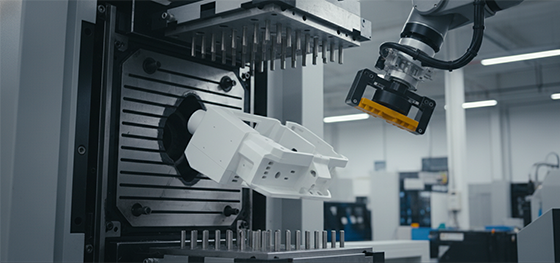
This group of plastics are the ones we work with every single day. They are popular for a reason. They are cost-effective, reliable, and generally easy to manufacture. They are the backbone of the consumer products world.
ABS: The Great All-Rounder
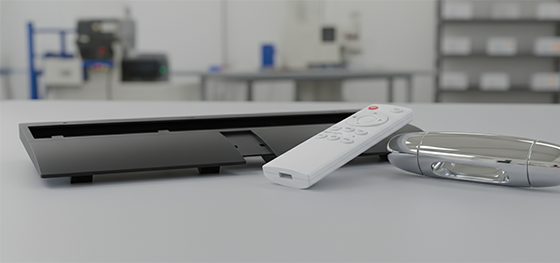
If we had to choose one "best friend" in the workshop, it would be abs plastic material. Its personality is balanced and agreeable.
It is strong enough for most enclosures and housings. It has good impact resistance. It is easy to inject into molds, and it is also easy to CNC machine. It also takes finishes very well. You can paint it, plate it, and get a beautiful, high-gloss surface.
From Lego bricks to keyboard cases to car dashboards, ABS is everywhere. Its only real weaknesses are poor UV resistance (it can yellow in the sun) and a lack of chemical resistance. But for most indoor products, it is a fantastic, reliable choice.
PE, HDPE, PET: The Commodity Champions
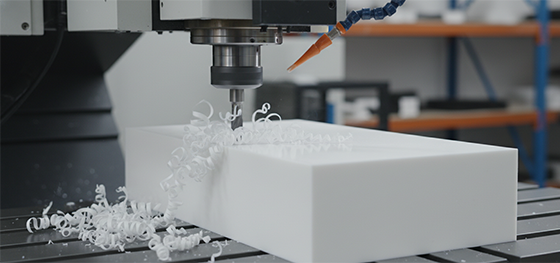
This group of plastics are the champions of high-volume, low-cost production.
The family of Polyethylene, which includes plastic pe material and hdpe plastic material (High-Density Polyethylene), has a "waxy" and "slippery" personality. This makes it very easy to machine. Cutting tools glide through it. It also has excellent chemical resistance. This is why it is used for bottles, containers, and industrial pipes.
pet plastic material (Polyethylene terephthalate) is the clear, lightweight, and shatter-proof material used to make water and soda bottles. It is also very strong and has good dimensional stability, making it a good choice for some mechanical parts.
The High-Performance Challengers
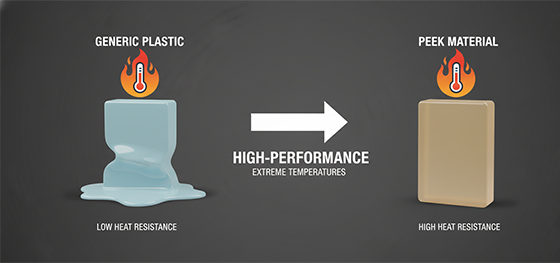
Now we move to the demanding materials. These are the "super plastics." They offer incredible performance. But they are expensive and have very difficult personalities. They demand our best machines and most experienced engineers.
PEEK and PPS: The Tough Competitors
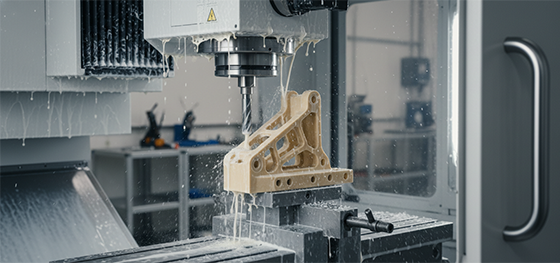
At the top of the performance pyramid are materials like peek plastic material (Polyether Ether Ketone) and pps plastic material (Polyphenylene Sulfide).
Their personality is uncompromising. They are incredibly strong. They can withstand very high temperatures, sometimes over 250°C. They are resistant to almost all chemicals. This makes them strong enough to replace metal in some aerospace, automotive, and medical applications.
But they are extremely difficult to work with. They are very abrasive and wear down cutting tools quickly. They are sensitive to heat during machining and can build up internal stresses if not handled perfectly. Machining PEEK is a true test of a manufacturer's skill.
PEI, PFA: The Chemical and Thermal Warriors
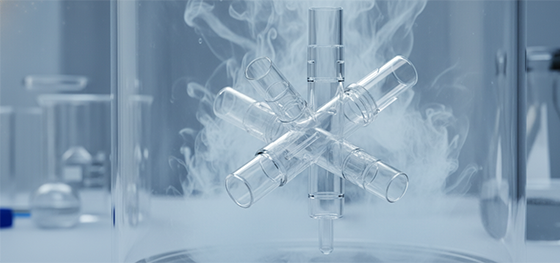
Similar to PEEK, plastics like pei plastic material (Polyetherimide, often known as Ultem) and pfa plastic material (Perfluoroalkoxy) are also high-performance warriors.
PEI is known for its high strength and ability to perform in high-heat and high-pressure environments. It is often used for reusable medical instruments because it can survive repeated sterilization in an autoclave.
PFA is a type of fluoropolymer, in the same family as Teflon. Its superpower is extreme chemical resistance. It is used for valves, pumps, and liners that have to handle the most corrosive acids and solvents.
The Unique Specialists
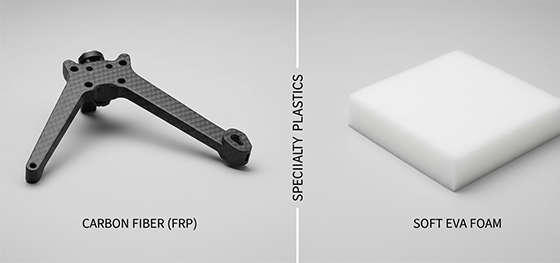
Finally, there are the specialists. These materials have very unique properties for specific jobs.
frp plastic material (Fiber-Reinforced Plastic) is not just a plastic. It is a composite. It is a plastic (like epoxy) that has been reinforced with strong fibers, like carbon or glass fiber. This creates a material that is incredibly strong and stiff, but also extremely lightweight. It is used for drone bodies and high-performance car parts.
eva material plastic (Ethylene Vinyl Acetate) has a completely different personality. It is soft, flexible, and rubbery. It is known for its excellent impact absorption. It is used to make soft foam inserts, padding, and the cushioned soles of athletic shoes.
Your Partner in Plastic
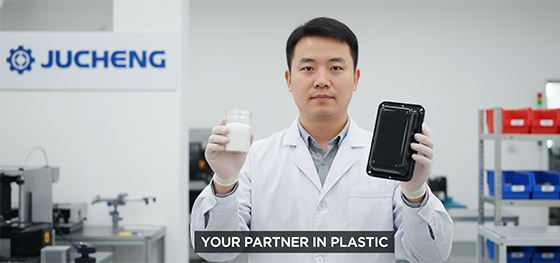
As you can see, the world of plastics is diverse and complex. Choosing the right material is a critical design decision. But it is only half the battle.
You also need a manufacturing partner who understands the unique personality of each of these materials. A partner who has the right tools and the right experience to turn that material into a perfect part.
At JUCHENG, we are fluent in the language of all these plastics. We are here to help you choose the right partner for your project, and then to expertly craft it into the high-quality component your product deserves.

