


Mechanical integrity remains the ultimate gatekeeper for hardware innovation. While visual models serve to secure aesthetic approval from non-technical stakeholders, the true engineering burden lies in validating how a part survives a six-foot drop onto concrete, a 100-degree thermal soak, or five hundred repeated snap-fit cycles. Relying on fragile additive resins for these critical audits is a strategic mistake that often leads to false negatives, ruined test rigs, and delayed production schedules. Professional Functional Prototypes Vacuum Casting provides the necessary physical spine for rigorous engineering validation. By utilizing specialized polyurethane resins that simulate the molecular behavior of production-grade thermoplastics, this branch of vacuum casting prototyping delivers isotropic parts that possess the ductility, heat resistance, and impact strength required for real-world environmental testing. Jucheng Precision operates as a high-fidelity materials laboratory, ensuring your physical test data is 100% predictive of final injection-molded performance. This guide explores the mechanical nuances of functional replication, stripping away the mystery of polymer physics to ensure your design is armored for the laboratory and the field.
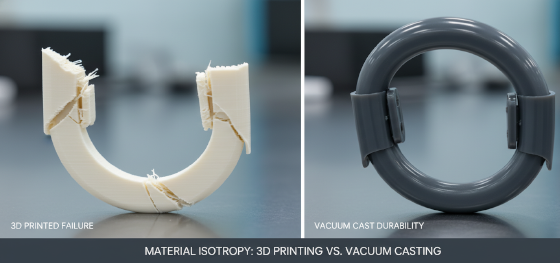
Simulating the "Final Bill of Materials" in the prototype phase de-risks the entire hardware lifecycle. If your design calls for the high-impact resistance of Polycarbonate or the living-hinge capabilities of Polypropylene, we don't offer generic plastic surrogates. We engineer a chemical cocktail that mimics those exact flexural moduli and tensile strengths. Every prototype we ship acts as a technical contract—a promise that the geometry you’ve designed can withstand the physical forces of its intended environment. From the internal ribs of a medical diagnostic housing to the ruggedized exterior of an automotive sensor, our functional casting process provides the structural truth that 3D printing attempts to approximate but often fails to deliver.
Mechanical Sovereignty: The Rigor of Functional Validation
Molecular Mimicry: Simulating the Production Bill of Materials
Overmolding Dynamics: Engineering the Tactile Interface
Metrology and Assembly: Verifying the Digital Intent
Mechanical Sovereignty: The Rigor of Functional Validation
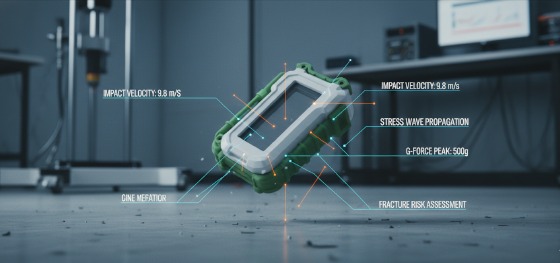
Failure in the testing lab is an opportunity; failure in the market is a catastrophe. Functional Prototypes Vacuum Casting is the primary defense against the latter. Modern electronic enclosures, medical diagnostic tools, and automotive interior components must survive harsh environmental cycles that would instantly shatter standard SLA or FDM materials. The fundamental weakness of additive manufacturing is anisotropy—the fact that parts are significantly weaker in the Z-axis due to layer adhesion limits. Vacuum cast polyurethanes are isotropic, meaning they possess uniform molecular strength in all three axes. This physical integrity is what allows our automotive and medical clients to perform real-world environmental audits without the fear of brittle failure. We utilize specific impact-modified resins like Hei-Cast 8150 to allow engineers to conduct destructive drop testing with confidence. If the snap-fit survives in our cast material, it will almost certainly survive in production ABS. Furthermore, our ability to cast parts with high Heat Deflection Temperatures (HDT > 110°C) enables engineers to perform thermal soak tests in climate chambers, verifying that internal mounting brackets won't warp or creep under the scorching heat of a sun-soaked cabin or an active engine bay. This level of validation is impossible with 3D prints that begin to soften at 50°C, providing the structural certainty required to freeze the design and authorize expensive hard tooling.
Molecular Mimicry: Simulating the Production Bill of Materials
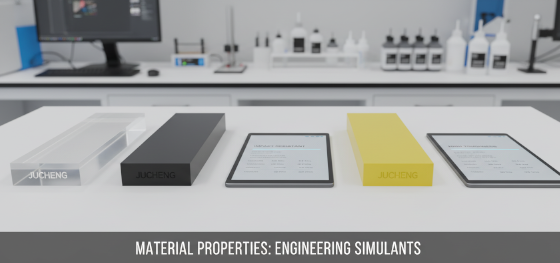
Choosing the correct chemical surrogate is the most critical decision in functional replication. Engineers often struggle with the "ABS-like" or "PC-like" marketing labels provided by additive vendors, only to find the material properties are wildly inconsistent once the part is subjected to a torque wrench or a tensile tester. Jucheng Precision eliminates this ambiguity through data-driven resin selection and precise oven-curing cycles. For designs requiring the crystalline clarity and toughness of Polycarbonate, we deploy specialized clear urethanes from the Axson PX series that undergo a rigorous multi-stage vacuum degassing process to eliminate light-refracting micro-bubbles. For mechanical assemblies requiring the low-friction and high-fatigue resistance of POM (Acetal) or Polypropylene, we utilize high-ductility resins with significant elongation-at-break percentages, often exceeding 35%. This "Molecular Mimicry" ensures that your living hinges won't white-stress and your assembly screw-bosses won't strip during the first installation. By aligning the prototype's Shore D hardness, tensile strength (up to 85 MPa), and flexural modulus with your production intent, we provide a functional surrogate that is technically indistinguishable from final hardware. We bridge the gap between "concept" and "compliance," allowing your team to submit parts for UL flammability testing or CE safety certification with 100% confidence in the material substrate.
Overmolding Dynamics: Engineering the Tactile Interface
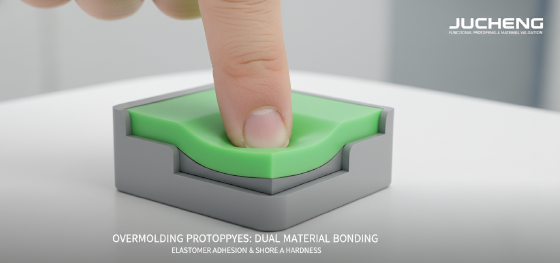
Ergonomic interaction often requires the marriage of disparate material durometers within a single monolithic part. A handheld surgical tool or a ruggedized power tool grip often features a rigid internal chassis overmolded with a soft-touch elastomeric skin to provide grip and vibration damping. Replicating this experience in a prototype is a significant technical hurdle that simple assembly or gluing cannot resolve. Functional Prototypes Vacuum Casting excels in simulating multi-shot injection molding through a sophisticated "two-hit" casting process. We first cast the rigid "Side A" component using a high-modulus resin. While the polymer chemistry is still semi-active and the surface energy is optimized, we place this core into a second, larger silicone mold and pour the flexible elastomer—ranging from a gel-like Shore 30A to a tire-tough 90A—around the substrate. This creates a chemical cross-link at the interface that is far superior to any adhesive bond. Engineers can then perform rigorous "peel tests" and ergonomic user audits, knowing the overmolding won't delaminate during intense use or exposure to cleaning chemicals. This capability is vital for verifying waterproof seals (IP67/68), vibration-damping gaskets, and tactile button membranes, providing a prototype that handles like a finished consumer product rather than a taped-together mockup.
Metrology and Assembly: Verifying the Digital Intent
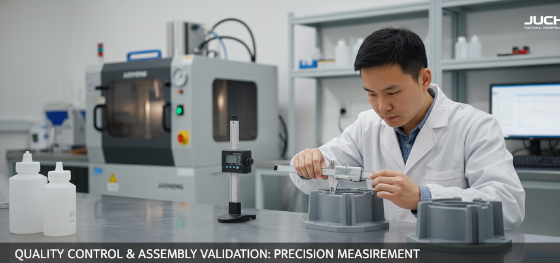
Engineering success at Jucheng Precision is built on the foundation of relentless metrological verification. We don't just execute your CAD files; we interrogate them for functional risk through our complimentary DFM (Design for Manufacturing) protocol. Our veteran engineers analyze your snap-fit clearances, rib thicknesses, and material transitions to identify potential failure points before the first silicone mold is poured. We understand that in the vacuum casting prototyping world, a 0.1mm deviation in a seal groove can be the difference between a successful hydrostatic test and a leaking manifold that destroys internal electronics. We utilize Coordinate Measuring Machines (CMM), digital height gauges, and custom assembly jigs to audit every batch of functional parts. This ensures the shrinkage compensation applied during the master pattern phase has resulted in an assembly that fits perfectly with off-the-shelf components like PCBs, batteries, and sensors. By partnering with JUCHENG, you secure more than just a vendor; you gain a technical ally dedicated to ensuring your prototypes survive the most brutal validation protocols. We provide full material lot traceability and dimensional inspection reports for every batch, offering the documentation required for medical and aerospace audits. Stop gambling your R&D budget on fragile, inaccurate 3D prints. Leverage our decades of chemical replication expertise to validate your most ambitious hardware designs with 100% engineering confidence. Contact our technical team today for a free DFM review and see how we can arm your next design for the rigors of the real world.

