


Hardware innovation speed defines market sovereignty. In the volatile space between initial digital CAD design and full-scale mass production, engineers often encounter a manufacturing "dead zone." Solitary 3D prints are insufficient for functional stress testing, while multi-cavity steel injection molds require an investment of $25,000 and six weeks of lead time. Navigating this gap requires strategic deployment of vacuum casting prototyping. This technology utilizes a highly precise master pattern and a flexible silicone tool to replicate production-grade plastic parts with surgical fidelity. Jucheng Precision recognizes that a prototype is more than a model; it is a technical contract of performance. By utilizing specialized polyurethane resins, we deliver components that possess the exact mechanical spine and aesthetic soul of your final production intent. Whether you are validating complex internal snap-fits or presenting a retail-ready enclosure to investors, our integrated casting facility provides the engineering "sweet spot" for quantities between 10 and 50 units.
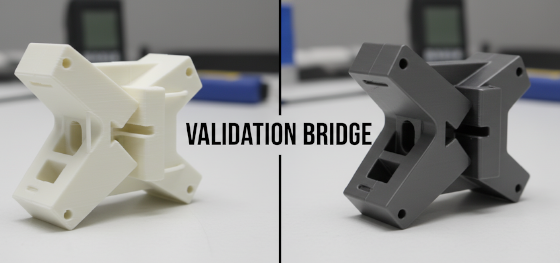
Eliminating design uncertainty before authorizing hard tooling prevents the six-figure "re-tooling" disasters that kill ambitious hardware startups. Vacuum casting operates on the logic of liquid conformity, allowing engineers to hold a physical object that behaves like a molded part long before the steel mold is ever quenched. This phase is not merely about form; it is about the chemistry of cross-linked polymers. Jucheng Precision engineers partner with you to select the exact urethane resin—from ultra-rigid ABS simulants to crystal-clear optical grades—to ensure your physical test data is 100% predictive of mass production behavior. The following analysis explores how professional replication transforms engineering risks into market-ready assets across the entire product development lifecycle.
Navigating the Manufacturing Dead Zone
Visual Fidelity: Securing Boardroom Approval
Functional Validation: Surviving the Stress Test
Pre-production Strategy: De-risking the Launch
Automotive Engineering: Iterating with IATF Compliance
Medical Device Engineering: Safety and Ergonomics
Consumer Technology: Accelerating Rapid Deployment
Material Versatility: The Science of Molecular Mimicry
Navigating the Manufacturing Dead Zone
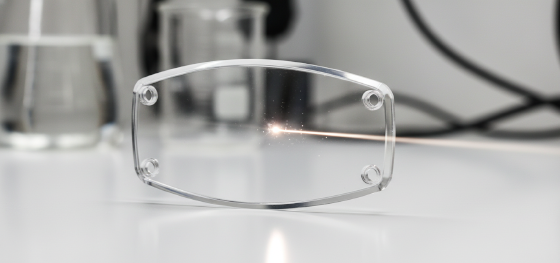
Bridging the gap between a "works-like" prototype and a "looks-like" product remains the most dangerous hurdle in hardware engineering. Additive manufacturing dominates early exploration of geometry, but it suffers from inherent porosity and anisotropic Z-axis weakness. When your project enters the validation phase, relying on a fragile 3D print to simulate a ruggedized enclosure is a financial liability. Professional vacuum casting prototyping solves this by introducing isotropic material properties. Because the resin is poured as a liquid into a silicone cavity, it cures into a monolithic structure with uniform strength in every vector. This physical integrity is what allows our automotive and medical clients to perform real-world environmental audits without the fear of brittle failure. By deploying a silicone-based workflow, JUCHENG provides a low-risk environment to test high-risk designs, ensuring that what you see in the lab is what you get on the assembly line. We effectively remove the "3D printing tax" of manual labor sanding while providing a material spine that printed resins simply cannot match.
Visual Fidelity: Securing Boardroom Approval
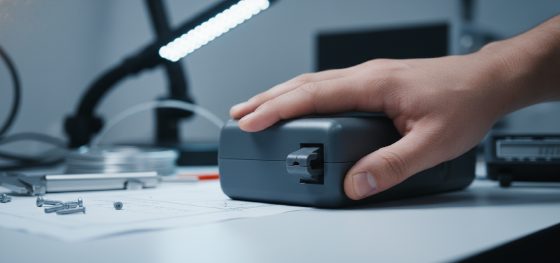
Stakeholder confidence hinges on the tactile and visual authority of the prototype. Presenting a heavily sanded 3D print to an investor panel or a focus group often leads to negative feedback regarding "cheapness" or "unfinished quality." Achieving the necessary aesthetic gravitas requires Visual Prototypes Vacuum Casting. Unlike layer-based systems, casting replicates the exact surface energy and texture of the master pattern. If your design requires a VDI 3400 automotive leather grain or an SPI A2 high-gloss mirror finish, Jucheng Precision applies these textures directly to the CNC-machined master. The silicone mold then "memorizes" this DNA, producing fifty identical copies that are indistinguishable from injection-molded hardware. We match Pantone and RAL colors directly in the liquid resin, ensuring that the color is integral to the part and won't chip like topical paint. This provides a retail-ready feel that secures project funding and market interest. By using clear resins with high refractive indices, we can even simulate optical lenses and light pipes that possess the crystalline clarity of PMMA, vital for luxury consumer and medical electronics displays.
Functional Validation: Surviving the Stress Test
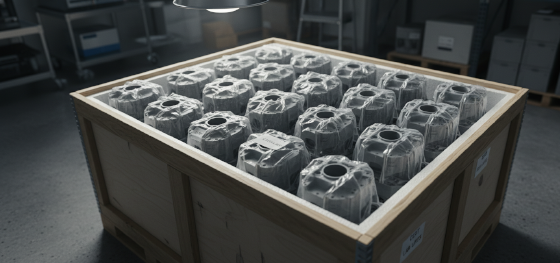
Validating a snap-fit assembly or a living hinge requires material ductility that most additive resins simply cannot provide. Mechanical engineers frequently experience "snap failure" of 3D prints during initial assembly, which provides zero useful data on the actual design intent. Functional Prototypes Vacuum Casting eliminates this bottleneck by utilizing high-performance polyurethanes that mimic specific production thermoplastics. Whether you need the impact resistance of ABS, the heat deflection of Polycarbonate, or the chemical resistance of Polypropylene, our material library provides a technical surrogate. We can even execute functional overmolding in the prototype phase, casting a soft-touch Shore 40A rubber grip directly over a rigid internal chassis. This allows for ergonomic audits and drop-testing that yield data your engineers can actually trust, preventing expensive design changes later in the production cycle when costs are exponentially higher. Our resins are formulated to maintain their flexural modulus even under repeated stress, allowing your team to perform hundreds of assembly/disassembly cycles to ensure the user interface is flawless.
Pre-production Strategy: De-risking the Launch
Revenue generation often stalls during the long lead times of mold fabrication. Waiting eight weeks for a steel tool to arrive is an eternity in competitive consumer markets. Deploying Pre-production Prototypes Vacuum Casting acts as an agile bridge. This phase typically involves 20 to 100 units utilized to fulfill early pre-orders, satisfy regulatory bodies like the FDA or CE, and conduct final field beta testing. Discovering a geometric interference issue in a hundred cast parts is a minor inconvenience; discovering it after the toolmaker has hardened the steel is a financial catastrophe. JUCHENG acts as your strategic partner during this transition, supplying your initial market inventory while our internal tooling department simultaneously machines your production molds. This concurrent manufacturing approach compresses your time-to-market and provides a "safety net" for your most ambitious launch timelines. For medical device startups, this bridge allows for early-stage clinical trials to proceed while the production-scale supply chain is still being finalized, saving months of regulatory downtime.
Automotive Engineering: Iterating with IATF Compliance
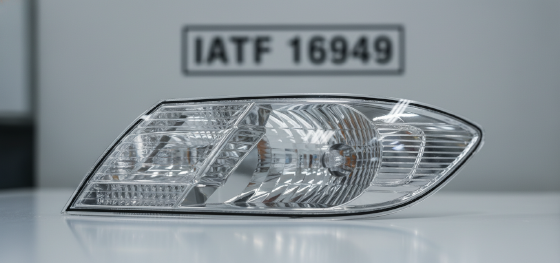
Designing high-integrity transportation components requires navigating the most stringent validation phases in modern manufacturing. Automotive OEMs and Tier-1 suppliers utilize Automotive Vacuum Casting Prototypes to bridge the gap between initial styling clay models and final Production Part Approval Process (PPAP) runs. Interior trim components—such as dashboards, air vents, and center consoles—must simulate the exact haptic feedback of injection-molded plastics. Jucheng Precision leverages our IATF 16949 compliant workflow to ensure that every textured surface and soft-touch button behaves exactly like the production intent. We utilize specialized UV-stabilized resins to produce crystal-clear light guides and headlight lenses that possess the optical transmission of PMMA or Polycarbonate. This capability allows lighting engineers to verify beam patterns and photometric data using physical hardware that won't yellow or warp during thermal soak tests. By deploying casting for under-the-hood components using high-heat deflection polyurethanes (HDT > 120°C), we empower engine-bay teams to test fluid dynamics and heat management weeks before the first steel tool is even quenched.
Medical Device Engineering: Safety and Ergonomics
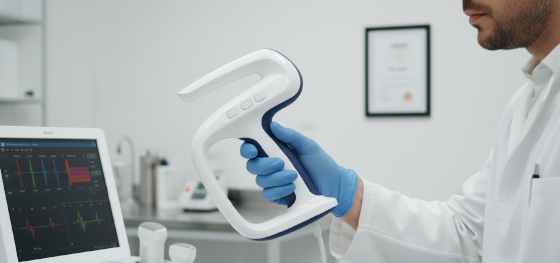
Precision diagnostic hardware demands a level of surface cleanliness and dimensional repeatability that rudimentary prototyping methods simply cannot achieve. Medical Device Vacuum Casting Prototypes serve as the primary vehicle for clinical trial units and ergonomic user-experience (UX) audits. Doctors and surgical staff require physical instruments that feel balanced, possess non-slip grips, and resist aggressive chemical sterilization agents. Jucheng Precision operates under strict ISO 13485 quality management systems, providing the material traceability required for medical hardware certification. We cast complex diagnostic housings that consolidate multiple internal mounting brackets into a single, water-tight polyurethane structure. This consolidation reduces assembly time and eliminates potential failure points during drop testing. Whether you are developing a wearable glucose monitor requiring skin-safe elastomers or a large-format MRI enclosure, our casting process delivers the structural spine and biological compliance necessary for regulatory approval. We turn medical concepts into life-saving realities through controlled chemical replication. Our facility ensures zero cross-contamination and provides full material lot traceability for every cast batch.
Consumer Technology: Accelerating Rapid Deployment
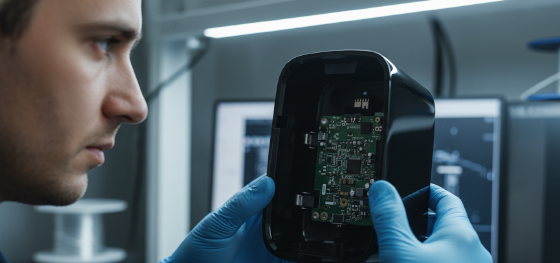
Consumer technology lifecycles operate on a brutal cadence where a three-week delay can result in total market irrelevance. Manufacturers of smart home devices, high-fidelity audio equipment, and wearables rely on consumer electronics vacuum casting parts to compress their development cycles. Achieving the "Piano Black" high-gloss finish or the specific matte "Pearl" texture required for a premium smartphone accessory is a core strength of JUCHENG. We specialize in thin-walled enclosure casting, maintaining structural rigidity even at 1.0mm wall thicknesses to accommodate dense internal PCB assemblies and battery packs. Our ability to overmold soft Shore A elastomers directly onto rigid chassis allows for the creation of water-resistant seals and ergonomic grips in a single, monolithic prototype. This avoids the use of weak adhesives that often fail during beta testing. By delivering retail-quality units in less than ten days, we enable electronics brands to conduct simultaneous global marketing shoots and internal thermal validation, ensuring the product launch hits the market with maximum momentum and zero geometric defects. From routers with complex internal cooling fins to noise-canceling headphone shells, our parts arrive retail-ready.
Material Versatility: The Science of Molecular Mimicry
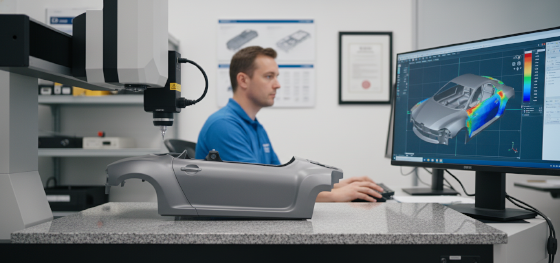
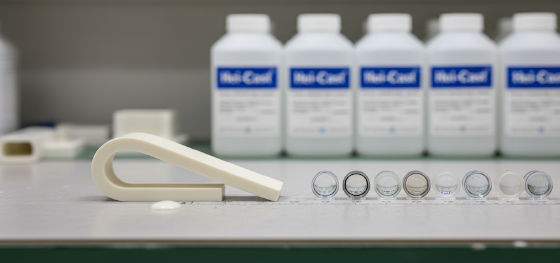
Selecting the correct resin chemistry dictates whether a prototype provides actionable engineering data or mere visual feedback. Polyurethane replication survives as the premier bridge to production because it offers "Molecular Mimicry"—the ability to simulate the tensile modulus, flexural strength, and heat deflection temperature (HDT) of production-grade thermoplastics. Jucheng Precision manages an extensive library of specialized two-part resins sourced from industry leaders like Hei-Cast and Axson. We don't simply offer "hard plastic"; we offer engineered simulants that mirror the structural spine of ABS, the impact resistance of Polypropylene (PP), or the rigid durability of Glass-Filled Nylon. For engineers requiring specific tactile feedback, our elastomeric resins cover the entire Shore A spectrum, allowing us to cast gaskets, seals, and overmolds ranging from soft gel-like 30A to tire-tough 90A. We also supply flame-retardant (UL94 V-0) resins for power-supply housings. This chemical flexibility ensures that your project yields hardware that can survive a 100°C engine-bay soak or a high-velocity drop test onto concrete. Our engineers work with you to analyze your production BOM and select the polyurethane cocktail that most accurately predicts the behavior of your final mass-produced part.
JUCHENG Workflow: Surgical Precision in Casting
Manufacturing excellence relies on the seamless integration of digital precision and manual craftsmanship. The JUCHENG workflow begins with the creation of a "Golden Master." We utilize our fleet of 150+ CNC machines or high-resolution SLA printers to fabricate a master pattern with sub-micron surface accuracy. This original is meticulously hand-polished by our model makers to your exact cosmetic specification. Next, we encapsulate this master in premium RTV-2 silicone inside our high-capacity vacuum chambers. Once the silicone cures and is surgically cut, the "negative" cavity is born. The final casting phase happens under strict negative atmospheric pressure, drawing the degassed liquid resin into every microscopic detail of the tool. Every part is then moved to stabilized heating ovens for a controlled post-cure cycle, locking in the mechanical properties. This rigorous protocol ensures that your tenth part is dimensionally identical to your fiftieth, providing the manufacturing sovereignty required for high-stakes hardware launches. Finally, we audit every batch using CMM inspection and spectrometer material validation, guaranteeing that your prototype is not just a model, but a certified engineering asset. Stop compromising with fragile prints or waiting months for steel molds. Leverage our decade of chemical replication expertise to validate rapidly and launch profitably.

