


Navigating the raw metallurgical states of carbon steel stock is a critical step in cost-effective product development. Conducting a thorough hot rolled vs cold rolled steel sheet metal trade-off analysis helps engineering teams select the perfect alloy class to optimize cost, dimensional precision, and finish quality. While hot-processed plates exhibit a dark, rough layer of mill scale, while cold-worked sheets deliver the pristine surfaces and close tolerances necessary for high-end enclosures.

Choosing the incorrect steel grade can easily result in costly rework on the shop floor. Utilizing rough hot-rolled plates for close-tolerance electronic chassis will lead to unpredictable bend dimensions and poor paint adhesion, whereas using expensive cold-finished plates for heavy structural brackets can unnecessarily inflate your manufacturing budget. Sourcing the optimal steel state ensures your hardware maintains structural integrity throughout its lifecycle.
Let's compare the chemical processing of these absolute carbon steel pillars, examine how mill tolerances dictate assembly consistency, and review how to choose the most economical material state for your custom enclosures.
content:
The Manufacturing Process: Mill Tolerances and Cooling
Surface Finish and Dimensional Accuracy
Which One is Better for Custom Enclosures?
Cost-Effective Steel Fabrication Services at JUCHENG
FAQ: Critical Questions About Hot Rolled vs Cold Rolled Steel Sheet Metal
The Manufacturing Process: Mill Tolerances and Cooling
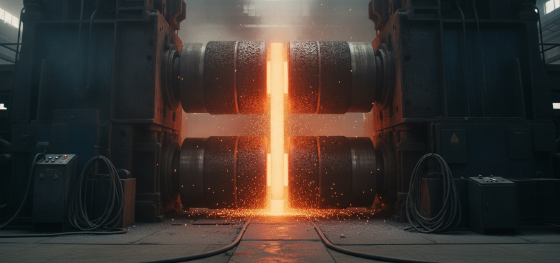
What defines the difference in mill processing between hot and cold rolled steel?
Hot rolling is executed at temperatures exceeding 1700 degrees Fahrenheit, while cold rolling compresses pickling plates further at room temperature to refine the grain structure.
Understanding the processing limits of these carbon steel classes is essential to managing product tolerances. To fabricate hot rolled steel, the steel mill heats metal slabs above their recrystallization temperature. This makes the steel highly malleable, allowing it to be rolled into thick plates. However, as the hot steel cools at room temperature, it shrinks unevenly, resulting in wider dimensional tolerances.
Conversely, cold rolled steel is processed at room temperature through heavy reduction rolls. Because the steel is compressed below its recrystallization limits, the grain boundaries are elongated along the direction of travel, creating a highly dense metallurgical matrix. This cold reduction yields incredibly tight thickness tolerances, typically within ±0.05mm, which is far more precise than hot-processed coils.
Surface Finish and Dimensional Accuracy
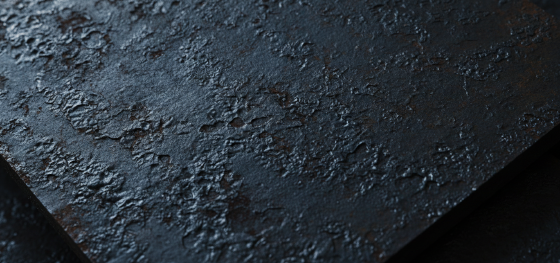
How do surface finishes differ between hot rolled and cold rolled steel?
Hot rolled steel features a rough, scale-covered surface, while cold rolled steel features an exceptionally smooth, oily surface that is free of oxide scale.
When evaluating hot rolled vs cold rolled steel sheet metal for high-precision brackets, understanding their surface metallurgy is vital. As hot steel cools, it reacts with oxygen to build a dark blue-grey oxide coating. This dark, flaky mill scale is a major barrier for secondary operations like welding and powder coating, requiring extensive sandblasting or acid pickling washes to remove completely.
Cold rolled steel is completely free of mill scale. The cold reduction rolls compress the pickled steel, polishing the surface to an exceptionally smooth finish. This high dimensional accuracy and clean, scale-free surface make cold-finished alloys the perfect foundation for high-end cosmetic powder coatings, ensuring excellent paint adhesion and a flawless matte look.
Which One is Better for Custom Enclosures?
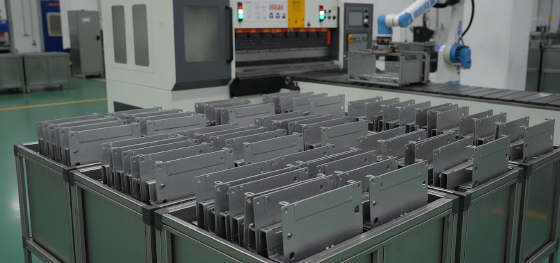
Why is cold rolled steel specified for server racks and computer brackets?
It provides the precise flatness, high stiffness-to-thickness ratio, and structural consistency required to support heavy server motherboards and rail systems.
High-density IT hardware must survive continuous structural loads without sagging or flexing. For standard electronic casings, brackets, and cabinets, SPCC (cold rolled commercial quality) is the undisputed industry workhorse. It features high fatigue strength and excellent formability, allowing for tight, reliable bends without cracking.
In contrast, SPHC (hot rolled steel) is highly utilized in thick structural brackets, automotive suspension mounts, and agricultural frames where raw cosmetic surfaces are secondary to high load capacity. While hot-rolled steel is highly cost-effective for thick gauges, its wide dimensional tolerances make it highly impractical for close-tolerance enclosures requiring seamless slide alignments.
Cost-Effective Steel Fabrication Services at JUCHENG
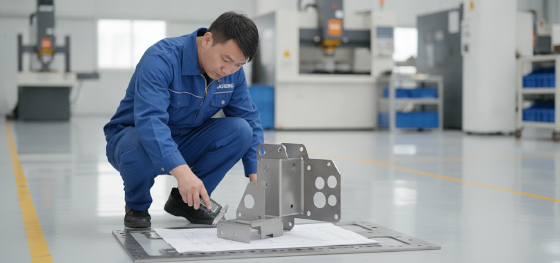
How does JUCHENG help you select and fabricate the ideal carbon steel alloy?
We operate high-power fiber laser cutters and high-tonnage press brakes managed by skilled operators, utilizing precise die clearances to prevent cracking on both metals.
Selecting this versatile sheet metal material ensures that your completed hardware maintains its target structural integrity under its specific operating conditions. JUCHENG integrates advanced shearing, punching, and forming systems into our full-service production lines. This allows us to transition your 3D models into fully finished, durable carbon steel hardware with extreme dimensional accuracy.
We operate an IATF 16949 and ISO 13485 certified environment, utilizing over 150 high-performance manufacturing machines to execute complex stamping and forming runs. Our engineering team provides a 24-hour free DFM analysis to check your CAD models, checking bend tolerances and clearances before production. Supported by our no MOQ policy and rapid delivery guarantee, we manage your project from initial flat pattern cutting to final packaging and assembly.
FAQ: Critical Questions About Hot Rolled vs. Cold Rolled Steel Sheet Metal
Why does cold rolled steel exhibit high springback compared to hot rolled steel?
Cold rolled steel is hardened during the cold reduction process at the mill, which significantly increases its yield strength and elastic limits. This high yield strength means the metal resists permanent deformation, exhibiting extreme angular springback that our press brake operators must compensate for during bending.
Is SPHC hot rolled steel less formable than SPCC cold rolled steel?
Hot rolled steel is generally more ductile and has a lower yield strength than cold-worked steel because it has not been hardened at room temperature. However, SPHC has wider thickness variations, which can cause inconsistent bending angles when processed on automated press brakes, whereas SPCC cold rolled steel delivers highly consistent bends.
How does JUCHENG remove mill scale from hot rolled steel parts before powder coating?
We utilize mechanical sandblasting or automated chemical pickling washes to remove mill scale completely. This ensures a clean metallurgical surface that is free of oxide flake, providing a pristine foundation for our electrostatic powder coatings to bond securely, preventing atmospheric moisture ingress.
How does JUCHENG prevent thickness variations in hot rolled vs cold rolled steel sheet metal orders?
We continuously calibrate our fiber lasers and CNC press brake back gauges to compensate for minor thickness variations in raw steel sheets. Our team utilizes advanced 3D unfolding software to calculate exact material elongation parameters, and conducts full coordinate measuring machine (CMM) dimensional checks on completed assemblies before final packaging.

