


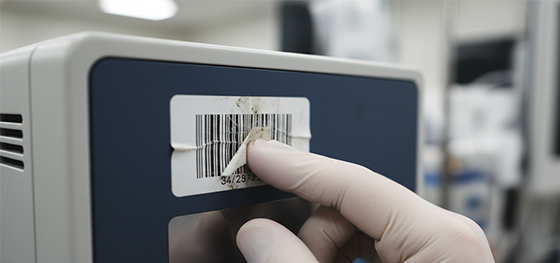
Watching an expensive piece of medical equipment fail an FDA compliance audit simply because a fifty-cent barcode sticker peeled off is incredibly frustrating. Procurement teams spend hundreds of thousands of dollars developing beautiful, high-tech enclosures, only to ruin the final aesthetic with cheap adhesive labels that smear and fade. In harsh industrial and healthcare environments, devices get wiped down with bleach, alcohol, and aggressive solvents every single day. Normal ink simply cannot survive this constant chemical attack. Upgrading to laser marked RIM parts solves this exact traceability nightmare permanently.
Hardware engineers know that a missing serial number on a deployed autonomous robot can completely ruin fleet tracking and warranty claims. Moving the branding and identification process directly into the polymer surface is the smartest logistical move you can make. Right here in our Shenzhen precision manufacturing hub, Jucheng Precision handles the entire molding, painting, and permanent etching process under one roof.
Delivering true permanent traceability requires more than just buying a cheap laser machine. It requires deeply understanding how focused light reacts with custom polyurethane paints and hardeners. Let's look at why [2026] hardware standards are rapidly abandoning stickers, and how engineering your reaction injection molding parts with baked-in data saves your brand reputation in the field.
content:
The Sticker Trap: Why Do Adhesive Labels Fail on Hardware?
Molecular Burns: How Does Laser Etching Actually Work on Polyurethane?
FDA Compliance: Securing Permanent Traceability for Medical Gear
Massive Scale: Can You Laser Mark a Two-Meter Robot Shell?
Technical Data: Comparing Branding Durability Across Methods
JUCHENG Hub: Stop Shipping Parts to Third-Party Etchers
The Sticker Trap: Why Do Adhesive Labels Fail on Hardware?

What causes industrial labels to peel off expensive equipment?
Constant exposure to cleaning solvents breaks down the chemical adhesive backing, while UV light degrades the surface ink, causing the label to curl, fade, and eventually fall off entirely.
Nobody wants to spend $20,000 on a sleek diagnostic cart only to have it look like a cheap toy because the warning labels are peeling at the corners. Industrial environments are brutal on adhesives. Heat cycles from internal motherboards constantly expand and contract the plastic housing, which slowly breaks the glue bond over time.
When a user aggressively scrubs a dirty control panel, they inevitably catch the edge of the sticker with their rag. Once that corner lifts, dirt gets trapped underneath, and the label is permanently ruined. This looks incredibly unprofessional and immediately signals poor manufacturing quality to your high-end B2B clients.
Molecular Burns: How Does Laser Etching Actually Work on Polyurethane?
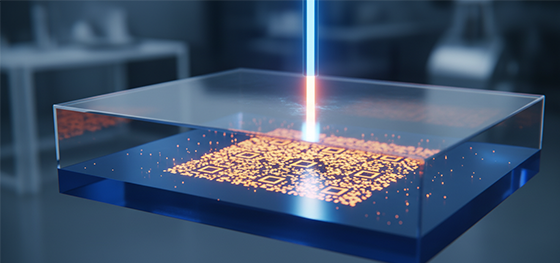
Does the laser actually cut a deep, dirty groove into the plastic cover?
No. High-frequency fiber lasers alter the molecular pigmentation of the surface paint layer, creating a high-contrast visual mark without physically cutting deeply into the structural plastic underneath.
Cutting deep physical grooves into a medical device is a terrible idea because those trenches will immediately fill with bacteria and dirt. We use advanced laser systems that interact specifically with the titanium dioxide or carbon additives inside our custom paint mixtures.
This precise thermal reaction causes the painted surface to change color—usually shifting to a crisp white or dark black—while leaving the area perfectly smooth to the touch. You get a flawlessly clean, razor-sharp logo or QR code that cannot be scraped off with a fingernail or a harsh wire brush.
FDA Compliance: Securing Permanent Traceability for Medical Gear
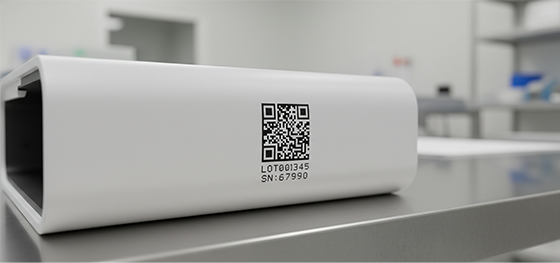
Why is permanent part marking critical for medical hardware startups?
Regulatory bodies like the FDA strictly require Unique Device Identification (UDI) codes that must remain completely legible for the entire expected lifespan of the medical equipment.
Losing a serial number on a consumer gadget is annoying, but losing it on a surgical robot is a severe compliance violation. If there is a product recall and your equipment cannot be identified because the ink washed off, your company is facing massive liability issues.
Custom laser marked RIM parts provide absolute legal peace of mind. We program our etching machines to automatically serialize every single panel that comes off our production line. This guarantees that your regulatory team has perfect, indestructible traceability data securely locked onto every machine you ship globally.
Massive Scale: Can You Laser Mark a Two-Meter Robot Shell?
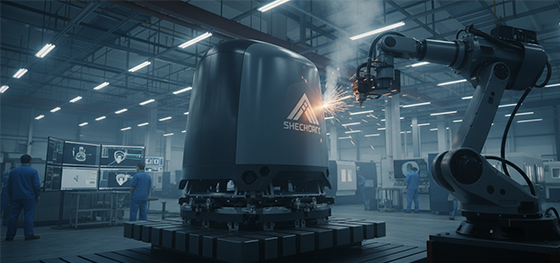
How do you accurately engrave a logo onto a heavily curved, oversized part?
By utilizing robotic laser arms and advanced 3D focal tracking software, Jucheng Precision can maintain perfect beam focus across massive, undulating surfaces without distorting the graphics.
Most standard contract manufacturers only have small, desktop-sized laser boxes. If you hand them a two-meter tractor hood, they literally cannot fit it inside their machine. This forces hardware teams to compromise and stick a label on their beautiful giant enclosures.
We built our facility to handle massive formats. Our gantry-mounted laser heads can sweep across huge robotic fenders, burning perfectly straight company logos and complex ventilation graphics directly onto complex curves. This high-end capability elevates your hardware from looking like a prototype to looking like a billion-dollar commercial product.
Technical Data: Comparing Branding Durability Across Methods

Choosing the right marking method shouldn't be an afterthought left to the marketing department. It is a critical engineering decision that affects the lifespan of the chassis. The table below proves why thermal etching absolutely destroys traditional methods in durability testing.
| Durability Metric | JUCHENG Laser Marking | Industrial Silk Screen | Adhesive Vinyl Labels |
|---|---|---|---|
| Chemical Resistance | Perfect (Immune to solvents) | Moderate (Fades with alcohol) | Poor (Adhesive dissolves) |
| Abrasion Survival | Extremely High | Moderate (Can be scratched off) | Poor (Tears easily) |
| Dynamic Serialization | Yes (Unique QR per part) | No (Requires new mesh screen) | Yes (Printed dynamically) |
| Aesthetic Quality | Premium (Integrated into surface) | Good (Sits on top of surface) | Cheap (Visible raised edges) |
Relying on silk screens is fine for large, static logos, but it fails completely when you need every single machine to have a unique barcode. Laser technology merges the flexibility of a digital printer with the extreme toughness of physical engraving, giving you the best of both worlds.
JUCHENG Hub: Stop Shipping Parts to Third-Party Etchers
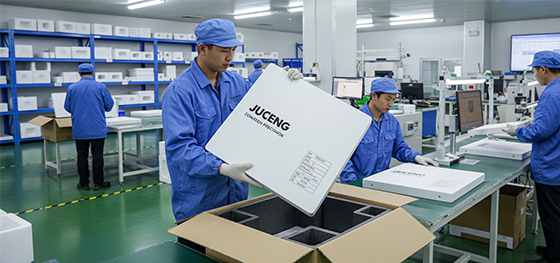
Why is using a single supplier for molding, painting, and marking so important?
It eliminates the high shipping costs, terrible lead times, and finger-pointing that happens when a separate paint shop ruins a perfectly molded chassis during the etching process.
Shipping massive empty plastic shells around the world just to get a logo burned onto them is a logistical nightmare. Every time a part changes hands, the risk of scratches and damage multiplies. Jucheng Precision keeps everything contained securely inside our Shenzhen facility.
We pour the liquid polyurethane, we bake on the automotive-grade paint in our cleanrooms, and we execute the final laser detailing right next door. Stop dealing with messy supply chains. Send your CAD models to our engineering team today, and let us deliver flawless, fully serialized components that are ready to bolt directly onto your assembly line.

