


Nothing kills a production schedule faster than two expensive hardware halves that refuse to bolt together. Dealing with warped plastic covers and misaligned screw holes drives assembly teams absolutely crazy. When you are building a $50,000 diagnostic machine, you cannot rely on operators forcing panels into place with hidden zip-ties or excessive glue. Sourcing precision reaction injection molded components completely eliminates this assembly floor nightmare. By shifting the complex geometry directly into the mold, we help hardware teams stop fighting bad fits and start shipping faster.

Engineers often fall into the trap of designing a massive product out of fifteen different sheet metal brackets just to hold everything together. This explodes your Bill of Materials (BOM) and guarantees a headache during final integration. Moving to unified reaction injection molding parts allows you to consolidate all those messy internal frames into one or two solid pieces. Operating directly from our Shenzhen precision manufacturing hub, Jucheng Precision focuses heavily on this type of smart component integration.
Current [2026] hardware trends demand that suppliers deliver more than just a hollow shell. You need a turnkey chassis that arrives with the metal threads already embedded and the mating surfaces perfectly flat. Let's break down exactly how custom reaction injection molded components solve the brutal reality of tolerance stack-up, and why wrapping metal directly inside polyurethane is the ultimate shortcut for modern B2B manufacturing.
content:
The Assembly Nightmare: Why Do Multi-Part Housings Fail?
Metal Insert Encapsulation: Ditching the Glue and Screws
Technical Data: Tolerance Limits for Multi-Part Hardware
BOM Consolidation: Designing Fewer, Smarter Components
JUCHENG Hub: Your Contract Manufacturing Engine in Shenzhen
FAQ: Honest Answers About Inserts, Tolerances, and Fits
The Assembly Nightmare: Why Do Multi-Part Housings Fail?
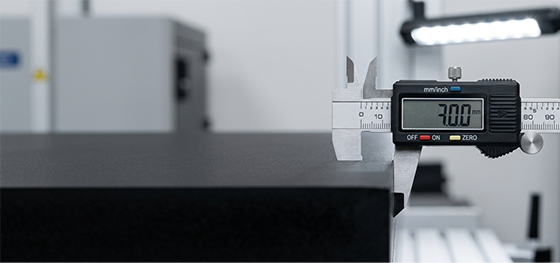
What causes the ugly gaps between large plastic enclosure panels?
Molded-in residual stress causes high-pressure thermoplastic parts to slowly warp after they leave the factory, ruining the dimensional alignment required for a flush fit.
Tolerance stack-up is the silent killer of great industrial design. If your front bezel is slightly bowed, and your rear chassis is slightly twisted, trying to mate them together results in a terrible user experience. You end up with uneven panel gaps that instantly make a high-end medical device look cheap and poorly engineered.
Polyurethane behaves entirely differently. Because the liquid resin cures under very low pressure, the material relaxes into its final shape without fighting itself. This stress-free environment means that a two-meter side panel will remain perfectly flat months after it is produced. We routinely deliver complex halves that snap together with absolute zero-play precision right out of the shipping crate.
Metal Insert Encapsulation: Ditching the Glue and Screws
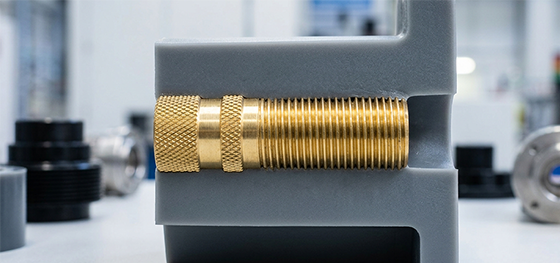
How do you secure heavy internal motors inside a plastic shell safely?
By permanently encapsulating heavy-duty threaded brass inserts and steel reinforcing bars directly into the polyurethane matrix during the liquid molding phase.
Manually gluing inserts into a finished plastic part is a massive waste of expensive labor. It also introduces human error; if a worker uses too little epoxy, that insert will pull out the first time the machine vibrates. Jucheng Precision completely removes this risk by molding the metal right inside the polymer walls.
Securing an entire internal steel cage inside the plastic gives you the ultimate hybrid component. You get the incredible load-bearing strength of metal exactly where the heavy batteries sit, covered seamlessly by the sleek, organic curves of custom polyurethane. This method guarantees that your internal mounting points never strip or snap under heavy torque.
Technical Data: Tolerance Limits for Multi-Part Hardware

Hardware teams need reliable numbers, not just promises. When you are planning a complex assembly, knowing the exact behavioral limits of the material saves weeks of redesign. The table below illustrates why smart engineers choose low-pressure polymers for mating components.
| Assembly Metric | JUCHENG Complex RIM Parts | Standard Injection Molded ABS | Fabricated Sheet Metal |
|---|---|---|---|
| Post-Molding Warpage | Extremely Low (Stress-free) | High on large panels | N/A (Prone to bending) |
| Insert Pull-Out Strength | Maximum (Encapsulated) | Moderate (Heat-staked) | Welded nuts |
| Variable Wall Thickness | Yes (Up to 15mm variations) | No (Causes sink marks) | No |
| BOM Consolidation | Excellent (Combines features) | Moderate | Poor (Requires many pieces) |
Ditching the constant worry about sink marks gives you total design freedom. You can position a massive 12mm thick structural boss directly behind a beautifully smooth 3mm aesthetic face plate. The front will look like flawless glass, while the back does all the heavy lifting for your motherboard mounts.
BOM Consolidation: Designing Fewer, Smarter Components

How does consolidating parts lower your overall manufacturing costs?
By reducing ten individual metal brackets into one unified plastic molding, you instantly eliminate the hidden costs of managing multiple suppliers, tracking inventory, and paying for assembly labor.
Procurement teams love reaction injection molded components because they actively shrink the supply chain. Instead of chasing down separate vendors for the chassis, the standoffs, and the cosmetic covers, you get everything handled in a single purchase order.
Every time an operator on your floor has to pick up a screwdriver to attach a sub-bracket, you are losing margin. We help you design parts that simply interlock or require fewer fasteners overall. This lean hardware approach is exactly how aggressive robotics startups are outmaneuvering older, slower corporate giants.
JUCHENG Hub: Your Contract Manufacturing Engine in Shenzhen

Why trust Jucheng Precision with your most complex multi-part assemblies?
Because we utilize over 150 advanced CNC machines to post-machine the critical mating edges of your molded parts, guaranteeing a zero-gap fitment that raw molding alone cannot achieve.
Getting a complex chassis right requires more than just pouring chemicals into a mold. After the polyurethane cures, we lock the parts into our 5-axis Mazak units in Shenzhen to finish-machine the most critical bearing seats and sensor mounts. This hybrid approach gives you the speed of molding combined with the absolute precision of CNC.
Stop accepting sloppy tolerances from suppliers who do not understand how real hardware goes together. Reach out to our engineering team today, let us review your complex CAD assemblies, and we will show you exactly how to streamline your entire build process.
FAQ: Honest Answers About Inserts, Tolerances, and Fits

Can you encapsulate copper tubing inside the plastic for liquid cooling?
Yes. We frequently encapsulate pre-bent metal tubing inside the polyurethane to create integrated cooling channels for high-power electronics housings.
Will the metal inserts break loose if the part is dropped?
No. The expanding polyurethane chemically bonds and physically locks around the knurled exterior of the brass or steel insert, making pull-out nearly impossible.
How precise are the panel gaps when connecting two large parts?
By utilizing post-molding CNC machining on the mating lips, we easily achieve consistent panel gaps of +/- 0.1mm across a two-meter seam.
Is it possible to combine rigid and soft materials in one component?
Absolutely. We can over-mold soft elastomeric bumpers directly onto the rigid structural frame, delivering a complete two-texture part straight from our factory.
Wasting hours on the assembly line trying to fix poor manufacturing tolerances ruins your bottom line and frustrates your team. Partnering with Jucheng Precision ensures your hardware is delivered with the exact fitment and structural integrity your design demands. Reach out to our Shenzhen manufacturing hub today, send us your most complicated multi-part assembly, and let's build something that actually fits together perfectly on the first try.

