


Slapping cheap adhesive stickers onto heavy-duty industrial hardware guarantees a catastrophic regulatory disaster. Procurement managers constantly attempt to save pennies by utilizing weak ink stamps for part tracking, entirely ignoring the brutal chemical environments these parts must survive. Hospital sterilization bleach and automotive engine fluids dissolve standard glue instantly, wiping out vital serial numbers and triggering massive forced product recalls. Specifying permanent laser marking die cast components completely neutralizes this extreme liability, burning critical traceability data directly into the unyielding molecular structure of the metal itself.
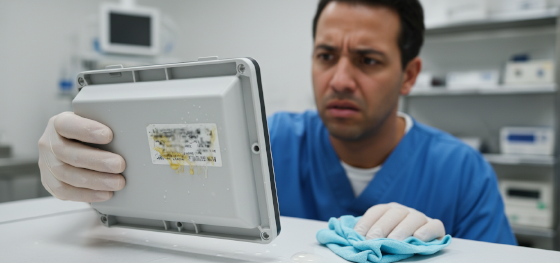
Passing strict federal compliance audits requires absolute supply chain accountability. When a mechanical failure occurs on a highway or inside an operating room, safety investigators must instantly identify the exact factory batch that produced the compromised hardware. Operating our advanced Shenzhen precision hub, JUCHENG integrates indestructible optical tracking right at the end of the final die casting surface finish cycle to protect your corporate reputation.
Managing this process across multiple vendors introduces terrifying scratching risks. Let's explore the physical difference between burning and melting the metal, why painted hardware demands highly specific optical wavelengths, and how true turnkey manufacturing secures your global brand identity permanently.
content:
Optical Physics: Engraving vs. Etching on Raw Metal
Regulatory Compliance: Surviving Medical and Auto Audits
Penetrating Armor: Marking Over Paint and Oxidation
JUCHENG Hub: Shenzhen's Turnkey Serialized Assembly
FAQ: Honest Answers About Depth, Contrast, and Speeds
Optical Physics: Engraving vs. Etching on Raw Metal
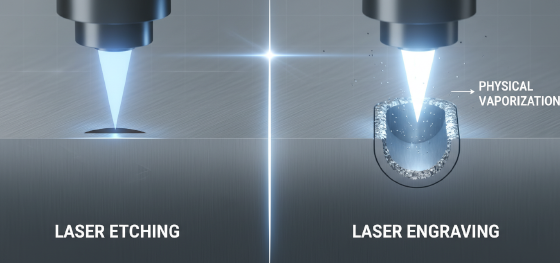
Blasting intense beams of concentrated light at raw metal triggers completely different physical reactions depending on the precise focal depth. Etching slightly melts the microscopic top layer of the alloy, forcing it to expand and create high-contrast dark marks without physically carving a deep trench into the substrate.
Engraving relies heavily on absolute brute force. Concentrated optical power physically vaporizes chunks of the metallic matrix, carving deep, tactile grooves that remain entirely legible even if the hardware suffers massive abrasive scraping during its operational lifespan.
Picking the right optical weapon dictates your manufacturing throughput. Etching processes incredibly fast, making it the dominant commercial choice for high-volume consumer electronics, while deep vapor engraving serves heavy-duty agricultural and military applications perfectly.
Regulatory Compliance: Surviving Medical and Auto Audits
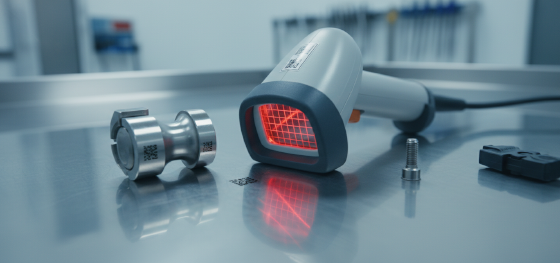
What happens if a complex surgical tool loses its Unique Device Identification (UDI) code?
The manufacturer instantly violates strict federal health regulations, facing devastating fines because the hospital administration can no longer legally track the sterilization history of that specific unit.
Securing these microscopic 2D matrix codes directly into the metal ensures lifelong compliance. Operating room nurses can aggressively scrub the metallic hardware with highly corrosive bleach daily without ever dulling the critical tracking data or smearing the barcode.
Vehicle Identification Numbers (VINs) require identical indestructible permanence. If a massive automotive engine block catches fire or survives a horrific highway crash, safety investigators must still be able to read the burnt laser marking die cast components to track down the faulty supplier.
Penetrating Armor: Marking Over Paint and Oxidation
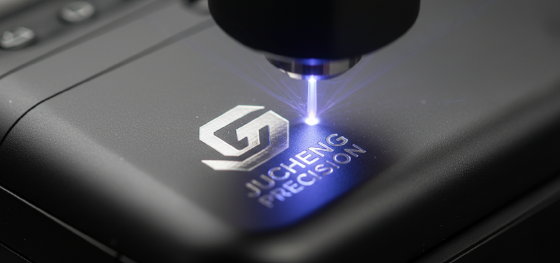
Can high-powered beams safely blast corporate logos onto finished, painted hardware?
Yes, executing this precise step directly after completing heavy anodizing die cast aluminum treatments delivers an incredibly striking visual contrast without damaging the surrounding aesthetic layer.
Focused optical beams cleanly vaporize the dark anodic oxide layer or heavy powder coat, exposing the bright, shiny raw silver metal underneath. This exact technique creates a stunning, razor-sharp corporate logo that physically cannot peel or flake off like traditional cheap silk screening.
Dialing in the frequency correctly prevents damaging the underlying structural integrity. We meticulously calibrate our fiber lasers to strictly remove the cosmetic paint layer without inadvertently carving dangerous stress-fracture grooves into the critical load-bearing chassis.
JUCHENG Hub: Shenzhen's Turnkey Serialized Assembly
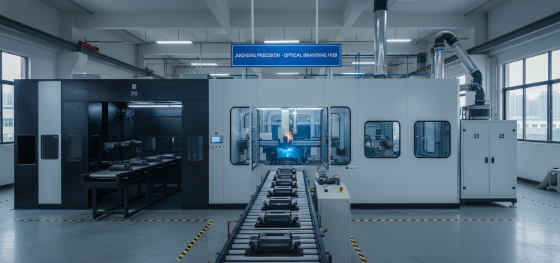
Shipping freshly painted hardware across town to a separate engraving shop guarantees catastrophic transit damage. Every time a warehouse worker physically moves your pristine electronics enclosures, the risk of dropping and violently scratching the expensive finish multiplies exponentially.
Operating our highly advanced manufacturing hub allows us to execute the entire lifecycle securely. We cast the raw metal, apply the protective cosmetic coatings, and burn the final serialized tracking codes right next to our final assembly and packing lines.
Stop paying third-party vendors to scratch your flawless aesthetic finishes. Send your CAD files and intricate logo vectors to our engineering team today for a comprehensive DFM evaluation, and secure fully branded, legally compliant commercial hardware.
FAQ: Honest Answers About Depth, Contrast, and Speeds
Does vaporizing the metal surface create dangerous toxic fumes in the factory?
Yes, melting industrial alloys releases hazardous metallic smoke. We enclose all our optical marking stations within heavy-duty vacuum extraction hoods to protect our technicians and maintain a sterile environment.
Will the burnt tracking codes eventually rust if left exposed outdoors?
Removing the protective paint layer to expose raw metal does invite localized oxidation. We regularly apply a clear, micro-thin chemical sealer over the burnt area to prevent red rust from attacking the exposed alloy.
How fast can a fiber beam burn a complex barcode into an aluminum bracket?
Modern optical systems operate at terrifying speeds, often completing a highly complex, dense 2D matrix barcode in less than three seconds, adding virtually zero delay to the final packaging throughput.
Can these high-powered systems cut completely through the thin metal walls?
While heavy industrial cutting equipment possesses that power, cosmetic tracking machines are specifically tuned to shallow focal depths, making it physically impossible for them to pierce entirely through your structural housings.

