


Forcing factories to hit impossible dimensional perfection across every single surface guarantees massive financial waste. Procurement teams frequently slap precision requirements onto basic cosmetic walls, completely ignoring the brutal realities of molten metal contraction. Consulting a reliable die casting design guide prevents this exact scenario by establishing realistic commercial expectations upfront. Utilizing established nadca die casting tolerances protects your hardware budget from predatory factory quotes while ensuring critical mating surfaces actually assemble correctly.

Relying on universal industry standards creates a transparent baseline between hardware founders and contract manufacturers. Demanding microscopic perfection everywhere forces toolmakers to slow down the injection speed drastically and replace the heavy steel cavity much faster, driving your piece price into the stratosphere.
Securing high-volume global contracts requires ruthless pragmatism regarding dimensional drift. Let's dissect the profound differences between standard and precision classes, evaluate how different liquid alloys respond to cooling, and explore why strategic secondary milling saves your profit margins.
content:
Regulatory Baselines: Understanding North American Standards
Standard Versus Precision: The Cost of Perfection
Metallurgical Limits: How Alloys Alter Guidelines
Calculating Drift: Incorporating Thermal Variables
JC Rapid Hub: Enforcing Strict Quality Control
FAQ: Honest Answers About Measurement and Audits
Regulatory Baselines: Understanding North American Standards

What specifically dictates the acceptable geometric drift for commercial metal injection?
The North American Die Casting Association outlines highly specific mathematical boundaries defining exactly how much a raw metal part can safely shrink or warp without being considered defective.
Establishing this baseline prevents toxic vendor disputes during final quality control inspections. When parts arrive slightly deviated from nominal CAD measurements, referencing these official guidelines instantly determines whether the factory failed or the engineer over-specified the blueprint.
Global manufacturers rely heavily on these strict metrics to standardize international production. Auditing your designs against these exact numbers guarantees any qualified facility can successfully inject your hardware without resorting to dangerous machine modifications.
Standard Versus Precision: The Cost of Perfection

Why do precision class requirements drastically inflate your final unit price?
Hitting microscopic dimensional limits requires the factory to drastically slow down cycle times, aggressively monitor thermal fluid lines, and replace the H13 tool steel significantly earlier.
Specifying standard class dimensions keeps your manufacturing incredibly cheap and extremely fast. This basic level accommodates normal thermal expansion effortlessly, providing fantastic baseline accuracy for non-critical interior walls and basic aesthetic housings.
Pushing specific features into the precision class forces extreme factory intervention. Smart procurement directors strictly reserve these expensive callouts exclusively for vital O-ring sealing grooves and complex interlocking gear mechanisms.
Metallurgical Limits: How Alloys Alter Guidelines
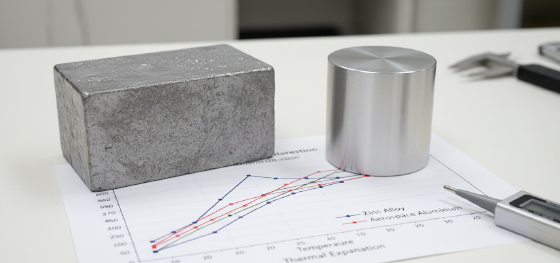
Does swapping raw metal ingots change your allowable dimensional drift?
Absolutely; heavy zinc alloys freeze incredibly predictably and shrink minimally, allowing for phenomenal as-cast accuracy, whereas high-heat aerospace aluminum fights back aggressively.
Processing zinc safely accommodates extremely tight nadca die casting tolerances directly out of the hot chamber press. Engineers designing micro-precision optical hardware lean heavily into this specific alloy to bypass secondary cutting operations entirely.
Pouring high-temperature aluminum or magnesium introduces severe thermodynamic chaos. These materials require significantly wider dimensional allowances to account for their aggressive volumetric contraction during the chilling phase.
Calculating Drift: Incorporating Thermal Variables
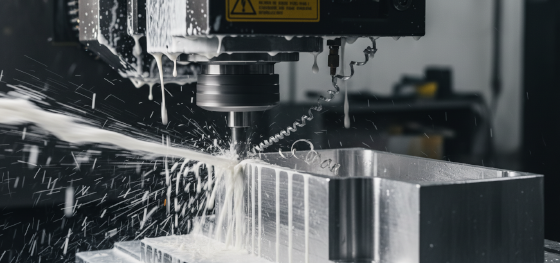
How do tooling engineers prevent cooling metal from ruining tight assembly gaps?
By proactively calculating the exact die casting shrinkage allowance beforehand, actively oversizing the raw steel cavity to ensure the final frozen metal lands exactly on your target dimensions.
Ignoring this physical contraction guarantees every single component will eject slightly too small. Advanced flow simulation software maps this thermodynamic drift perfectly, ensuring the final nadca die casting tolerances remain perfectly aligned with your original 3D CAD files.
Correcting minor deviations often requires strategic subtractive milling. Leaving a fractional layer of sacrificial metal allows 5-axis CNC cutters to shave critical mounting faces completely flat, rescuing the assembly without modifying the heavy steel injection tool.
JC Rapid Hub: Enforcing Strict Quality Control

Why trust JC Rapid to validate your most aggressive geometric blueprints?
Because our senior metallurgical team aggressively audits your tolerances during the DFM phase, pushing back against impossible demands to secure your commercial profit margins.
Sending over-toleranced files to cheap brokers guarantees they will accept the job, fail the inspection, and blame your design. Operating our massive turnkey manufacturing hub allows us to execute flawless injection control alongside precision secondary milling.
Stop bleeding capital on unnecessary machining labor. Send your complex hardware models to our engineering department today. We map the thermal flow, enforce realistic industrial limits, and deliver perfectly mated commercial assemblies.
FAQ: Honest Answers About Measurement and Audits
Can heavy vibratory tumbling push a part out of acceptable dimensional limits?
Yes. Aggressive ceramic media physically scrubs microscopic layers off the exterior skin. Engineers must calculate this fractional material removal before finalizing the blueprint.
Do moving side-action sliders hold the same accuracy as fixed mold halves?
No. Hydraulic sliders require tiny mechanical clearances to move back and forth, naturally introducing slight geometric shifts that solid tool blocks simply do not experience.
Why do cross-parting line dimensions always require wider acceptable variations?
Because the extreme hydraulic injection pressure can physically force the two massive steel mold halves apart by a fraction of a millimeter, slightly thickening the final product.
Will applying thick electrostatic powder coats ruin my precision clearances?
Heavy polymers add significant measurable thickness to the hardware. Technicians proactively mask critical threaded holes and mating surfaces to guarantee final assembly operations remain flawless.

