


Haptic translation dictates the efficacy of remote surgical intervention. When a clinician sits at a teleoperation console to perform a complex 12-hour laparoscopic procedure, the physical interface between human dexterity and robotic movement is entirely defined by the joystick or handle. If the grip feels slippery, exhibits microscopic gaps that trap bio-burden, or—most catastrophically—begins to peel away from its rigid core under the strain of continuous use, the surgeon's accuracy evaporates. Navigating this demand for zero-fatigue, zero-defect tactile interaction requires the strategic deployment of Overmolding medical robot handles. This advanced discipline within Medical Robotics manufacturing transforms a sterile piece of plastic into an ergonomic extension of the human hand. Jucheng Precision operates as a high-fidelity multi-material sanctuary in the Shenzhen precision manufacturing hub, providing the ISO 13485 rigor needed to permanently bond biocompatible elastomers to high-modulus substrates. We don't just "add rubber grips"; we engineer a seamless, hermetic "Molecular Handshake" that ensures your robotic controllers survive the laboratory and dominate the clinical suite.
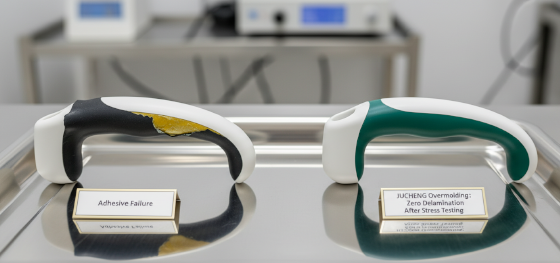
Establishing a resilient launch for clinician-facing hardware demands the absolute rejection of "Adhesive Logic." Amateurs often attempt to manually glue silicone or rubber pads onto rigid 3D printed chassis, unaware that these topical bonds will invariably fail when exposed to the harsh chemical solvents used in hospital sterilization. Jucheng Precision eliminates these "Delamination Disasters" by utilizing low-volume Reaction Injection Molding (RIM) and Two-Shot (2K) molding to physically melt and fuse the two polymers together during the curing cycle. Whether you are developing an ergonomic pendant for a mobile diagnostic cart or a thumb-control for an articulating endoscope, our multi-resin solutions allow you to achieve production-grade haptics in batches as small as 50 units. This guide deconstructs the physics of chemical adhesion, the necessity of mechanical undercuts, and why JUCHENG’s "Cleanroom Protocol" is the mandatory foundation for anyone developing Overmolding medical robot handles for 2026 FDA or CE Mark approval.
Chemical Sovereignty: The Physics of Molecular Fusion
Tactile Dynamics: Tuning Shore A Durometer for Surgeon Fatigue
Geometric Insurance: Designing Mechanical Interlocks
Environmental Armor: Surviving Aggressive Sterilization Protocols
JUCHENG Protocol: ISO 13485 Cleanroom Traceability
Frequently Asked Questions: Overmolding Medical Grips
Chemical Sovereignty: The Physics of Molecular Fusion
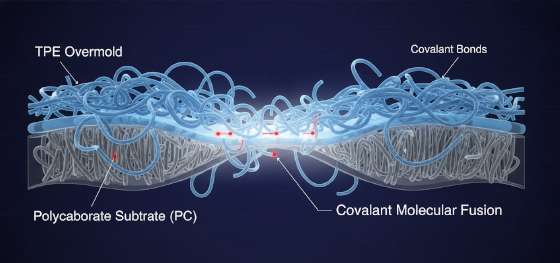
Permanent adhesion in the medical device sector is a high-stakes exercise in thermodynamic polarity. True Overmolding medical robot handles occurs only when the melt temperature and surface energy of the secondary soft elastomer perfectly align with the rigid substrate. If the substrate is Polycarbonate (PC) and the overmold is an incompatible non-polar TPO (Thermoplastic Olefin), the materials will merely touch, creating a "Cold Joint" that fails the first time a surgeon twists the handle. Jucheng Precision manages this chemical standoff by mapping your Bill of Materials against an extensive library of medical-grade Thermoplastic Elastomers (TPE) and Thermoplastic Polyurethanes (TPU). We control the injection cycle to ensure the molten TPE possesses enough thermal energy to microscopically "re-melt" the skin of the rigid core. This localized fusion allows the polymer chains to intertwine, creating a permanent covalent bond. We deliver "Cohesive Sovereignty"—where the elastomeric skin itself will tear before the bond between the two materials can be compromised.
Tactile Dynamics: Tuning Shore A Durometer for Surgeon Fatigue
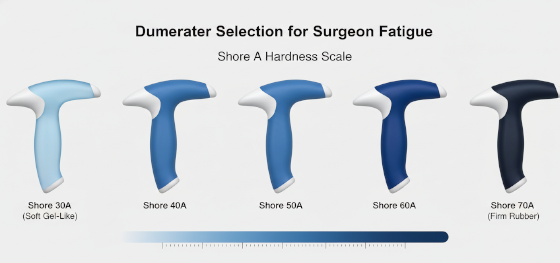
Fatigue reduction is the primary metric by which a robotic console is judged. If a surgeon must exert excessive force to hold a controller, micro-tremors will inevitably develop over an 8-hour operation. The "Squishiness" of the overmold is dictated by the Shore A Durometer scale. Jucheng Precision engineers do not settle for generic rubber; we "Dial-In" the exact haptic response required for your specific instrument. For gross motor controls, such as the steering handles on a heavy robotic cart, a durable Shore 70A (similar to a tire tread) is optimal. However, for the delicate pinch-grips of a master console, we frequently formulate TPEs down to a Shore 30A or 40A (similar to a pencil eraser). This compliance allows the material to conform to the surgeon's fingers, maximizing surface contact area and drastically reducing the grip force required to maintain control. By utilizing our rapid tooling capabilities, you can iterate through several durometer variations in a single week, ensuring your ergonomic data is validated before freezing the design.
Geometric Insurance: Designing Mechanical Interlocks
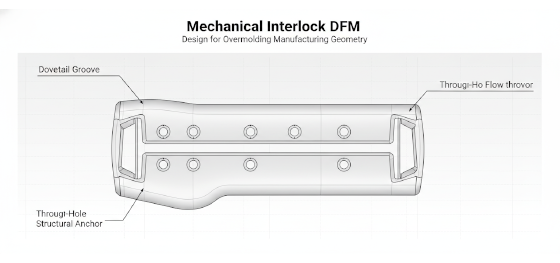
Relying exclusively on chemical adhesion is an unacceptable risk for safety-critical hardware. Professional DFM (Design for Manufacturing) mandates the inclusion of "Geometric Insurance" to protect against high-torque, twisting forces. During our complimentary audit of your Overmolding medical robot handles CAD file, Jucheng Precision engineers will actively search for opportunities to integrate mechanical interlocks into the rigid substrate. We recommend designing "Through-Holes," "Dovetail Channels," or "Undercut Lips" along the perimeter of the grip area. During the second injection phase, the liquid elastomer flows *through* these holes and solidifies on the back side, effectively creating a permanent "Polymer Rivet." This mechanical trap ensures that even if the part is subjected to extreme sheer stress or if the chemical bond is weakened over years of sterilization, the soft skin cannot physically be ripped away from the chassis. We turn "fragile layers" into "indestructible, monolithic assemblies."
Environmental Armor: Surviving Aggressive Sterilization Protocols
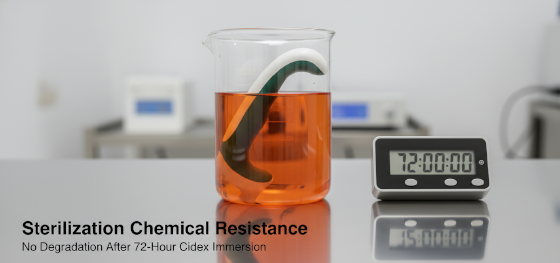
Clinical environments operate as high-grade chemical warzones. The soft elastomers used for robotic handles are notoriously susceptible to absorbing oils from human skin and degrading under the assault of hospital-grade disinfectants like Cidex (Glutaraldehyde), bleach, or concentrated Isopropyl Alcohol (IPA). If the TPE swells, becomes "sticky," or loses its color, it becomes a biological hazard. Jucheng Precision exclusively sources USP Class VI and ISO 10993 compliant medical-grade elastomers designed for extreme chemical defense. Furthermore, our 5-axis CNC mold machining ensures that the "Shut-Off" line—the boundary where the soft rubber meets the hard plastic—is razor-sharp to within 0.01mm. This eliminates "Flash" or microscopic gaps where bacteria could colonize, rendering the part fully "Wipe-Down Safe." We don't just provide a comfortable grip; we engineer a sterile barrier that survives the most aggressive hospital cleaning cycles.
JUCHENG Protocol: ISO 13485 Cleanroom Traceability
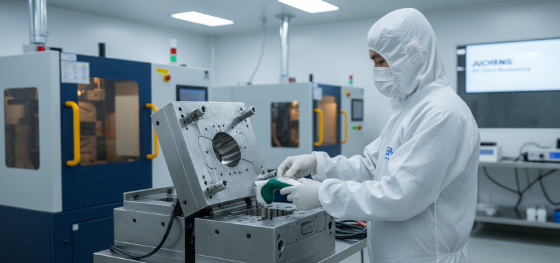
Manufacturing excellence at Jucheng Precision is built on the foundation of the documented pedigree. Overmolding is a complex, multi-stage process where contamination risks multiply. We execute all medical-grade overmolding within our ISO Class 8 (100,000) cleanroom environments, ensuring that the rigid cores remain perfectly pristine before the secondary TPE is applied. Our facility operates under the strict mandate of ISO 13485, providing full material lot traceability, curing profiles, and CMM dimensional inspection reports for every batch. Stop gambling your venture capital on vendors who treat multi-material molding as a hobby. Leverage our decade of Medical Robotics replication mastery to validate rapidly and scale profitably. Contact our technical team today for a free DFM review and see how we can turn your digital surgical interface into a chemically bonded, haptically superior physical reality that is documented for clinical success.
Frequently Asked Questions: Overmolding Medical Grips
Question: What is the difference between Insert Molding and Overmolding for a medical handle?
Answer: Overmolding typically refers to molding a soft plastic (like TPE) over a rigid plastic core. Insert molding involves molding plastic over a completely different material, such as a stainless steel surgical shaft or a threaded brass nut. JUCHENG excels at both.
Question: Can JUCHENG color-match the TPE grip to my brand's Pantone color?
Answer: Yes. We offer precise "In-Mold Pigmentation" for our medical-grade elastomers, ensuring your Overmolding medical robot handles maintain high-fidelity corporate branding that won't fade or rub off during sterilization.
Question: Is tooling for overmolded parts twice as expensive?
Answer: While automated 2K (Two-Shot) steel molds are very expensive, JUCHENG offers "Pick-and-Place" overmolding using rapid aluminum tools. This slashes tooling costs by up to 70%, making it highly economical for batches of 100 to 5,000 units.

