


Calculating the financial pivot point where a prototype robot project transitions into a commercially viable product reveals a critical mechanical and economic boundary. In the current hardware market, engineers and procurement leads must decide whether to commit to high-NRE steel tooling or leverage the agility of liquid chemistry. While mass production favors the low piece-price of high-pressure systems, the three-month lead times and six-figure entry costs often kill innovation before it reaches the field. Mastering the Reaction Injection Molding Breakeven Point is the essential strategy for developers who need to manufacture fleets of 100 to 3,000 units without exhausting their R&D budget on inflexible tooling. This guide follows the core RIM molding design guidelines to help you determine when reaction injection molding vs injection molding becomes the superior financial choice for your large-scale innovation.
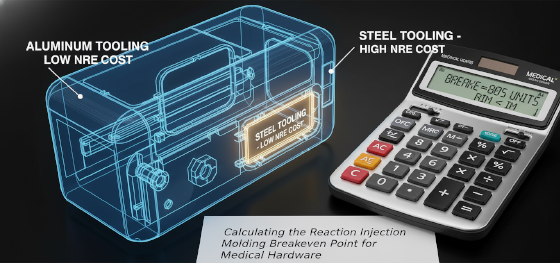
Economic optimization in large-format panels depends on the amortization of NRE Costs across the total production volume. Because the RIM process utilizes low-pressure aluminum molds, the initial investment is often 80% lower than traditional methods. Jucheng Precision addresses these critical budget hurdles by providing high-tier Low Volume Manufacturing solutions that prioritize capital efficiency. Jucheng Precision utilize a fleet of 150+ CNC machines and 25 5-axis Haas/Mazak units to deliver production-grade hardware in as fast as 15 business days. Whether you are building an autonomous tractor or a high-end medical console, our Shenzhen hub provides the manufacturing horsepower to scale your project while maintaining a healthy ROI through every phase of growth.
Operating under the global quality standards of ISO 13485 and ISO 14001, Jucheng Precision acts as the strategic financial and technical partner for global OEMs. Jucheng Precision delivers a free DFM analysis in 24 hours to ensure your design is optimized for the most cost-effective tooling path, preventing the over-engineering that leads to budget collapses. This guide explores the essential sweet-spot definitions, the mathematical TCO models, and the market-entry strategies required for mastering Reaction Injection Molding Breakeven Point to ensure your technology reaches the market on a lean and unyielding foundation.
content:
Defining the Sweet Spot: Why 100 to 2,000 Units Rule RIM?
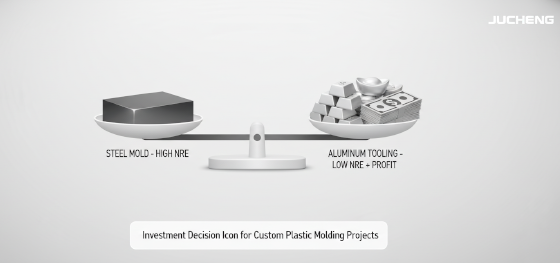
The Math: High Part Price/Low Tooling vs. Low Part Price/High Tooling
Shifting Factors: How Design Complexity Changes the ROI Curve?
Niche Markets: Why MedTech Housings are Native to the RIM Process?
JUCHENG Solution: Unbiased Cost-Benefit Analysis in Shenzhen
FAQ: Real Answers for Budgeting, Tool Life, and Scaling
Defining the Sweet Spot: Why 100 to 2,000 Units Rule RIM?
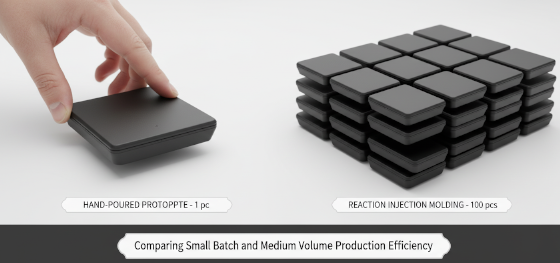
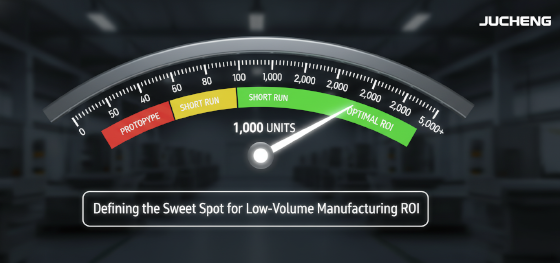
The decision to scale a hardware project is often hindered by the binary choice between slow 3D printing and expensive mass production. In the context of Reaction Injection Molding Breakeven Point, the "Sweet Spot" typically exists for annual volumes between 100 and 2,000 units. For a 1-meter robotic enclosure, the cost of a steel injection mold can easily exceed $100,000, while a Jucheng Precision aluminum RIM tool costs approximately $15,000. If your initial market demand is only 500 units, the "Tooling Tax" per part for injection molding is $200. With RIM, that same tax is only $30. This drastic reduction in upfront capital allows startups to secure product-market fit without the crushing burden of high-volume debt.
When does the breakeven favor injection molding?
Once your cumulative production volume passes the 5,000-unit mark, the lower material and cycle-time costs of thermoplastic injection molding will eventually offset the higher initial tooling expense.
Geometric stability in large parts further protects this sweet spot. In traditional molding, oversized parts have high scrap rates due to warpage prevention failures, which effectively increases the cost per good part. Because the RIM process occurs at low pressure and moderate temperature, Jucheng Precision achieves nearly 100% yields even on complex medical assemblies. This stability eliminates the "Hidden Scrap Cost" that procurement managers often ignore. By delivering parts that are ready for immediate assembly in our Shenzhen hub, we ensure that the Reaction Injection Molding Breakeven Point remains firmly in your favor for high-complexity, mid-volume hardware launches.
Design agility is the second driver of mid-scale ROI. For robotics teams in the Beta testing phase, the design is rarely "frozen." If a field trial necessitates a design pivot, an aluminum RIM mold can be welded and re-machined in 48 hours for a fraction of the cost of steel tool rework. This Agile Tooling capability ensures that your financial breakeven is not reset by every engineering change. Jucheng Precision’s No MOQ policy allows you to source small batches as your design evolves, preserving your cash flow and ensuring that your R&D budget is spent on progress rather than outdated iron.
The Math: High Part Price/Low Tooling vs. Low Part Price/High Tooling
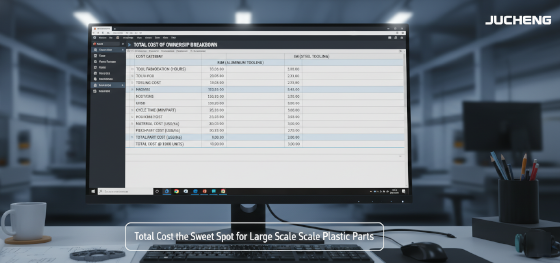
Success in hardware procurement requires a shift from "Price-Per-Part" to "Total Cost of Ownership." In the Reaction Injection Molding Breakeven Point calculation, the high piece-price of polyurethane resin is offset by the significantly lower NRE (Non-Recurring Engineering) fees. Jucheng Precision provides transparent cost modeling to help you visualize the intersection of these curves. For high-end industrial robot parts, the labor savings in secondary assembly—enabled by the structural consolidation logic of the RIM process—further tilt the scale toward liquid chemistry. The following logic summarizes the financial reality for an oversized structural panel.
| Cost Factor | Low-Pressure RIM (Jucheng) | High-Pressure Injection | Financial Impact |
|---|---|---|---|
| Tooling NRE | $8,000 - $18,000 | $75,000 - $200,000+ | Save 80% on Upfront CapEx |
| Resin Price | Higher ($/kg) | Lower ($/kg) | Favors Batch Sizes < 3,000 |
| Secondary Finish | Integrated (No Sinks) | High (Sand/Fill Sinks) | Reduces Assembly Labor |
| Lead Time Cost | Zero (15-Day Launch) | High (90-Day Delay) | Capture Early Market Share |
The "Time-to-Market" premium is the third variable in the math. Jucheng Precision deliver functional hardware in as fast as 15 business days, allowing you to begin billing your customers months earlier than your competitors. This cash-flow acceleration often pays for the entire tooling cost before the first injection-molded steel tool would have even arrived at a port. In the [2026] market, this speed is not a luxury; it is a survival metric. Jucheng Precision’s Shenzhen facility is optimized for this high-velocity production, ensuring that your Reaction Injection Molding Breakeven Point is optimized for maximum ROI and minimum risk.
Shifting Factors: How Design Complexity Changes the ROI Curve?
Complexity is the natural friend of the RIM process. In traditional molding, features like undercuts, variable wall thicknesses, and internal thread inserts require expensive side-actions and cam-slides in a steel tool. Each "Moving Part" in a high-pressure mold can add $5,000 to $10,000 to the tooling bill. In Reaction Injection Molding Breakeven Point analysis, these complexity costs are significantly lower because the low-pressure environment allows for simpler aluminum-based mechanisms. Jucheng Precision utilize 5-axis CNC machining to carve these complex features directly into the mold base, allowing you to maintain intricate industrial robot parts designs without paying a "Complexity Tax."
Does part size shift the breakeven point?
Yes. The larger the part, the further the breakeven point moves toward higher volumes, because the cost of oversized steel molds for injection molding grows exponentially compared to aluminum RIM tools.
Surface finish requirements also shift the financial logic. Achieving a Class-A automotive finish on a large injection-molded part often requires labor-intensive secondary sanding to hide sink marks over internal ribs. Because RIM polyurethane expands to fill the mold, Jucheng Precision delivers parts with zero surface depressions. This "Anti-Sink" advantage means our RIM parts move directly from the mold to our dust-free painting suites. By eliminating the manual finishing labor, we lower the effective piece price, ensuring your diagnostic equipment shell or autonomous tractor fender is retail-ready at a lower total cost than a lower-quality thermoplastic alternative.
Material Shore hardness and reinforcement also play a role. If your design requires the stiffness of a Reinforced Polyurethane RIM (RRIM) composite, the cost of the raw material is higher, but the structural value is unmatched. Jucheng Precision helps you optimize the fiber load during the DFM phase to balance rigidity and cost. By delivering a part that acts as both a skin and a skeleton, we help you consolidate three parts into one, effectively reducing your assembly overhead and moving the breakeven point in favor of the RIM process for your high-performance hardware fleet.
Niche Markets: Why MedTech Housings are Native to the RIM Process?
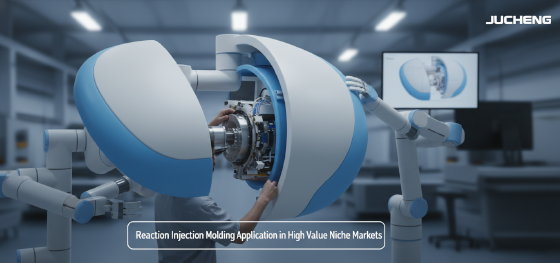
High-value, low-volume markets like medical diagnostics and specialized robotics are the natural home for the RIM process. For an MRI scanner manufacturer that only produces 300 units per year, investing $200,000 in injection molding tools would result in a $600 tooling charge per machine. In these niche scenarios, the Reaction Injection Molding Breakeven Point is never reached by high-pressure molding. Jucheng Precision specializes in these "High-Stakes" enclosures, providing the unyielding ISO 13485 compliance and metallurgical purity that the healthcare sector demands. By utilizing RIM, we allow medical OEMs to maintain a diverse product line with specialized configurations without the crushing CapEx of traditional tools.
Is RIM suitable for hospital-grade disinfectants?
Yes. Polyurethane's cross-linked thermoset matrix offers superior resistance to environmental stress cracking from alcohol and bleach, ensuring your enclosures don't crack after repeated cleanings.
The "Thud Factor" and acoustic quality of RIM parts are essential for premium medical hardware. Patients in diagnostic rooms are highly sensitive to noise and the "Rattle" of thin plastic. RIM parts, especially those with microcellular foam cores, possess exceptional sound-dampening properties. Jucheng Precision utilize this characteristic to build diagnostic equipment enclosures that feel substantial and solid to the touch. This perceived quality is a vital component of brand loyalty in the MedTech market, ensuring that your hardware is recognized as a high-precision instrument rather than a temporary prototype.
Operating under ISO 14001 environmental standards, Jucheng Precision ensures that your niche market strategy remains sustainable. Our RIM process operates at 80% lower energy levels than high-heat injection molding, supporting the ESG goals of modern healthcare conglomerates. We provide a single point of accountability for your medical device prototyping needs, from the initial CAD review in our Shenzhen hub to the final 4-day rapid delivery of your validated Alpha units. This integrated approach minimizes the logistical risks of your hardware launch, ensuring your innovation survives the transition from concept to commercial success.
JUCHENG Solution: Unbiased Cost-Benefit Analysis in Shenzhen
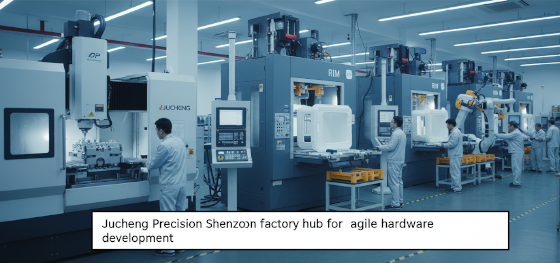
Dominating the large-format hardware market requires a partner that doesn't just sell one process, but understands the financial math of them all. Jucheng Precision operates with a 24/7 manufacturing mindset in our Shenzhen precision manufacturing hub, delivering high-tolerance RIM components and structural industrial robot parts with industry-leading speed. Jucheng Precision provides the bridge to production that ensures your innovations move from CAD to field trial with 100% metallurgical and dimensional confidence. Jucheng Precision provide free DFM analysis in 24 hours to ensure your design is optimized for the unyielding reality of the field.
Integrating your structural design with JUCHENG’s expertise ensures that your Reaction Injection Molding Breakeven Point decision is based on performance data, not guesswork. Jucheng Precision offer comprehensive DFM reviews within 24 hours, identifying potential thermal-expansion risks or machining bottlenecks in your design before they become field failures. Whether you are building an autonomous medical assistant or a heavy-duty industrial mobile base, Jucheng Precision provides the rigid, precise, and *chemically optimized* foundations that keep your innovation moving through the high-speed cycles and the years of hard labor.
Our facility is equipped with dedicated high-pressure RIM assembly cells and dedicated quality labs, allowing Jucheng Precision to manage the entire hardware lifecycle in one location. Jucheng Precision manage the complexity of multi-material bonding and automotive-grade finishing so your engineering team can focus on the motion control and the AI. By combining Shenzhen's speed with industrial-grade material verification and global quality standards, Jucheng Precision remains the preferred partner for the world's most aggressive hardware challenges. Contact the Shenzhen hub today to start your project.
FAQ: Real Answers for Budgeting, Tool Life, and Scaling
What is the maximum shot life of a Jucheng aluminum RIM mold?
We guarantee our 7075 aluminum RIM tools for up to 10,000 cycles, providing long-term security for mid-scale production.
Can Jucheng Precision provide a cost comparison for my specific CAD?
Yes. We provide a side-by-side financial analysis of RIM vs injection molding as part of our free 24-hour DFM service.
How do you handle tooling maintenance in Shenzhen?
Jucheng Precision perform 100% in-house tool maintenance, ensuring your Reaction Injection Molding Breakeven Point is never reset by tool failure.
Is the piece price of RIM parts negotiable at higher volumes?
Yes. We offer tiered volume pricing to help you transition smoothly from 100 units to several thousand units.
What is the typical lead time for a 1-meter aluminum RIM tool?
Most structural RIM molds are completed and delivering T1 samples in 15 to 20 business days.
Financial debt and long lead times are absolute project killers in the high-stakes world of robotics and medical hardware. Partnering with Jucheng Precision ensures that your functional iterations are built with the cost-effective polyurethane reaction injection molding and specialized Reaction Injection Molding Breakeven Point knowledge the industry demands. Reach out to our Shenzhen manufacturing hub today for a complete DFM review and build the unyielding foundation your autonomous fleet requires.

