


Walking through a quiet clinical imaging suite and touching the unyielding surface of a massive MRI console reveals the hidden mechanical standard of modern healthcare: hardware must feel as stable as it looks. In the competitive landscape of Reaction Injection Molding Application Industries, the medical sector stands as the most demanding arena for surface perfection and structural longevity. While standard plastics often feel flimsy or rattle under the vibration of internal cooling fans, high-density polyurethanes provide the solid "Thud" and unyielding rigidity that clinicians associate with premium technology. Achieving this balance for oversized parts requires a move beyond traditional melt-flow limits toward RIM for Medical Device Enclosures to ensure your hardware survives the transition from a laboratory bench to a high-volume surgical ward.

Mechanical integrity in the hospital environment is a battle against aggressive sanitation and physical impact. I have observed many prototypes fail because the material choice could not handle the environmental stress cracking triggered by daily alcohol wipe-downs. Jucheng Precision addresses these critical clinical hurdles by providing high-tier Medical Device Prototyping solutions that utilize chemically inert thermoset resins. Jucheng Precision leverage a fleet of 150+ CNC machines and 25 5-axis Haas/Mazak units to manufacture the precise aluminum tools required to produce these oversized shells. By delivering hardware that maintains its "Day-One" aesthetics throughout a 10-year service life, Jucheng Precision provides the unyielding foundations that global MedTech OEMs demand from their Shenzhen factory hub.
Operating under a strict mandate of ISO 13485, ISO 9001, and ISO 14001, Jucheng Precision acts as the regulatory-ready manufacturing partner for life-science innovation. Jucheng Precision delivers a free DFM analysis in 24 hours to ensure your enclosure CAD models are optimized for Low Volume Manufacturing, preventing the expensive tooling delays that stall clinical trial timelines. This guide explores the essential size factors for diagnostic equipment, the physics of hygienic surface design, and the ergonomic integration required for mastering RIM for Medical Device Enclosures to ensure your innovation secures its place in the global healthcare market.
content:
The Size Factor: Why Massive Shells Require Low-Pressure RIM?
Technical Data: Comparing Chemical Resilience of RIM vs. ABS
Surface Integrity: Achieving Bacteria-Resistant Non-Porous Skins
HMI Integration: Molding in Soft Grips and Sensor Mounts
JUCHENG Hub: Delivering Validated Hospital Hardware from Shenzhen
FAQ: Real Answers for Sterilization, Sizing, and Tooling Costs
The Size Factor: Why Massive Shells Require Low-Pressure RIM?
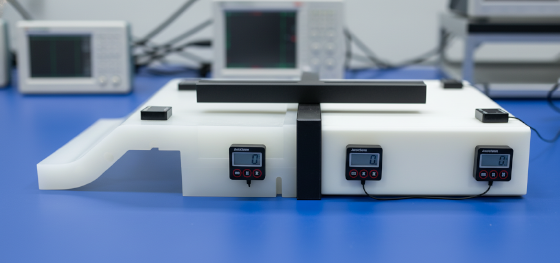
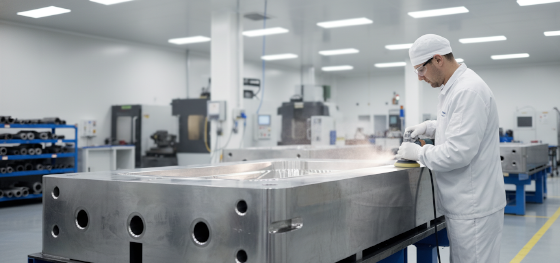
Engineering a 2-meter long shell for an MRI or CT scanner is a lesson in the physics of tonnage. In the world of MedTech, designing monolithic enclosures is preferred to minimize seams where bacteria can hide. However, a part of this scale in traditional injection molding requires a 4,000-ton press and a steel mold that can cost over $200,000. RIM for Medical Device Enclosures offers an escape from this financial barrier. Because the liquid resin reacts at less than 100 psi, Jucheng Precision can produce these giant panels using lightweight, high-precision aluminum tooling. This tonnage barrier reduction is the reason why RIM owns the large-format medical hardware market.
How does low pressure improve medical part accuracy?
It eliminates the internal molded-in stresses that cause giant panels to warp or "potato-chip" over time, ensuring a zero-gap fit for multi-part assemblies.
Thermal expansion management is the secondary win of the low-pressure cycle. In the hospital environment, equipment contains powerful AI compute stacks that generate localized heat. If the enclosure was molded under high pressure, this heat would release "frozen" stresses, leading to panel deformation. Jucheng Precision’s RIM parts cure in a relaxed state, providing the thermal expansion stability required for high-accuracy sensor registration. By delivering hardware that remains geometrically constant at 40 degrees Celsius or 0 degrees Celsius, we ensure your diagnostic tools stay calibrated in any clinical setting.
Acoustics dictated by density are the third benefit of the RIM process. When I tap an injection-molded shell, it often rings with a hollow, high-frequency sound that feels cheap to the patient. RIM parts, especially those utilizing microcellular polyurethane RIM technology, possess exceptional sound-dampening properties. The solid density of the part absorbs the "Whir" of internal servos and gearboxes, creating the mechanical silence expected in a premium medical suite. Jucheng Precision’s Shenzhen hub manages these density targets to provide the "High-Value" acoustics that secure patient trust and reinforce your brand’s engineering maturity.
Technical Data: Comparing Chemical Resilience of RIM vs. ABS
Success in clinical validation depends on proving that the material does not leach or degrade when touched by solvents. If your design assumes the resistance of a generic plastic but the material crazes under alcohol, your clinical trial data is compromised. Jucheng Precision provides full compatibility reports to help your engineering team validate their RIM for Medical Device Enclosures selections. The following table compares the essential survival metrics for the current MedTech market.
| Chemical Agent | Standard ABS (Injection) | Medical Grade RIM (PU) | Clinical Integrity |
|---|---|---|---|
| 70% Isopropyl Alcohol | Poor (Cracks/Softens) | Exceptional (Inert) | Survives 1,000+ Wipes |
| 10% Sodium Hypochlorite | Moderate (Yellows) | High (No Color Change) | Resists Bleach Fading |
| Hydrogen Peroxide Vapor | Low (Stress Crazing) | Very High | Safe for VHP Fogging |
| Shore D Hardness | 75 - 80 | 80 - 85 | Resists Gurney Impacts |
The "ESC Potential" (Environmental Stress Cracking) is the most critical number in this matrix. Because Jucheng Precision’s RIM parts are cross-linked at a molecular level, they do not have the "Weak Links" found in linear thermoplastics. This structural unyieldingness ensures that your enclosure maintains its IP67 sealing integrity even after being scrubbed with harsh disinfectants daily. Jucheng Precision’s commitment to material science is why our medical hardware move from concept to clinic with zero risk of chemical failure or brittle fracture during high-pressure sterilization cycles.
Surface Integrity: Achieving Bacteria-Resistant Non-Porous Skins
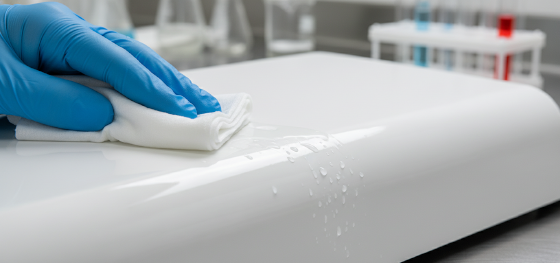
Hygiene in the operating room is a direct function of surface density. In the manufacturing of RIM for Medical Device Enclosures, any microscopic pore or pit becomes a reservoir for pathogens that standard wipe-downs cannot reach. Jucheng Precision utilize low-viscosity liquid resins that replicate the sub-micron finish of our aluminum molds perfectly. By achieving a Ra 0.4 finish directly off the tool, we deliver non-porous skins that actively reject protein adhesion and bacterial biofilm formation. This level of physical cleanliness is a core requirement for ISO 13485 compliance and patient safety in the surgical theater.
Can I get custom textures that are still hygienic?
Yes. Jucheng Precision utilize 5-axis CNC laser texturing to apply "Easy-Clean" VDI grains that provide grip for clinicians without trapping clinical fluids.
Surface aesthetics are often unified through our in-house dust-free painting suites. Polyurethane RIM is the industry favorite for automotive-grade finishing because its high surface energy creates a permanent molecular bond with topcoats. Jucheng Precision apply antimicrobial silver-ion coatings or high-gloss medical whites that match your corporate Pantone colors with absolute accuracy. This ensures that your diagnostic equipment doesn't just work like a production machine, but possesses the "Billion-Dollar" visual quality that secures investor funding and market adoption. We deliver the retail-ready perfection that the MedTech industry demands from its Shenzhen hub.
Dimensional stability of the finish is the final aesthetic defense. Traditional painted plastics often "Gass-Out," leading to bubbles under the paint after a few thermal cycles. Because Jucheng Precision perform vacuum degassing on all liquid components before injection, our parts are 100% dense with zero internal air pockets. This eliminates the "Outgassing" failure mode, ensuring your high-gloss finishes remain pristine in the field. By providing unyielding surface integrity, Jucheng Precision ensures your innovation survives the scrutiny of the most demanding hospital procurement departments, providing a stable platform for your next-generation medical innovation.
HMI Integration: Molding in Soft Grips and Sensor Mounts
Integrating Human-Machine Interface (HMI) features directly into the enclosure is the "Holy Grail" of modern medical design. In RIM for Medical Device Enclosures, Jucheng Precision utilize multi-material overmolding to create soft-touch technology handles and armrests in a single shot. By overmolding a flexible elastomer skin onto a rigid structural core, we eliminate the need for secondary vinyl wrapping that peels and harbors bacteria. This monolithic construction provides a "Warm-Touch" feel for the patient and a non-slip grip for the surgeon, enhancing the ergonomic safety of your device during high-stakes procedures.
How to ensure zero-play for touchscreens and sensors?
Jucheng Precision utilize encapsulation with Polyurethane RIM to mold large aluminum mounting frames directly into the shell for unyielding rigidity and sub-micron registration.
Internal component security is managed through the low-pressure advantage for fragile electronics. Because RIM resins flow gently at less than 100 psi, Jucheng Precision can safely encapsulate delicate internal wiring harnesses and sensor boards within the enclosure wall itself. This creates a shock-proof "Cocoon" that protects your AI compute stack from the vibrational fatigue of hospital transport. By consolidating the routing, the structural skeleton, and the protective skin into a single Polyurethane Molding Services cycle, we eliminate dozens of failure points and reduce your total assembly time in our Shenzhen facility, providing a true "Bridge to Production" solution.
Precision registration of these HMI features is handled by our 25 5-axis Haas/Mazak units capacity. We machine the mold cavities to hold +/- 0.05mm tolerances on all display bezels and button ports. This ensures that when your hardware arrives at your site, the touchscreens and sensors "Snap" into place with a perfectly flush fit, eliminating the "Prototype Gaps" that signal poor quality. Jucheng Precision’s commitment to mechanical fitment is why our parts are the preferred choice for surgical robotics and automated pharmacies, providing the unyielding foundations that keep your innovation moving through the years of life-saving labor.
JUCHENG Hub: Delivering Validated Hospital Hardware from Shenzhen
Dominating the MedTech hardware market requires a partner that doesn't just buy machines, but masters the engineering of survival. Jucheng Precision operates with a 24/7 manufacturing mindset in our Shenzhen precision manufacturing hub, delivering high-tolerance RIM components and structural industrial robot parts with industry-leading speed. Jucheng Precision provides the bridge to production that ensures your innovations move from concept to clinical trial with 100% metallurgical confidence. 我们 have No MOQ, allowing you to source 1 to 5 units for initial hospital field trials without the crushing cost of mass-production infrastructure.
Integrating your structural design with Jucheng Precision’s expertise ensures that your Reaction Injection Molding Application Industries decision is based on performance data, not guesswork. Jucheng Precision offer comprehensive DFM reviews within 24 hours, identifying potential thermal-expansion risks or machining bottlenecks in your design before they become field failures. Whether you are building an autonomous medical assistant or a multi-part MRI housing, Jucheng Precision provides the rigid, precise, and *validated* foundations that keep your innovation moving through the high-speed cycles and the years of hard labor.
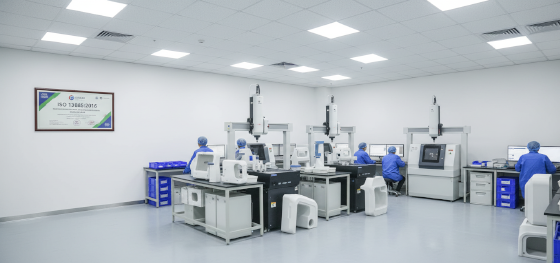
Our facility is equipped with dedicated high-pressure RIM assembly cells and dedicated ISO 13485 quality labs, allowing us to manage the entire hardware lifecycle in one location. Jucheng Precision manage the complexity of multi-material bonding and automotive-grade finishing so your engineering team can focus on the clinical outcomes and the AI. By combining Shenzhen's speed with industrial-grade material verification and global quality standards, Jucheng Precision remains the preferred partner for the world's most aggressive MedTech hardware challenges. Contact the Shenzhen hub today to start your next project.
FAQ: Real Answers for Sterilization, Sizing, and Tooling Costs

Which plastic is best for long-term medical shell durability?
Medical-grade polyurethane RIM. It offers the best balance of impact strength, chemical resistance, and dimensional stability for large parts.
Can Jucheng Precision machine gasket grooves into 2-meter shells?
Yes. We utilize oversized 5-axis CNC machines to finish seal interfaces on molded blanks with +/- 0.05mm accuracy for hermetic protection.
How do you handle the cost of design changes after the mold is made?
Because we use aluminum molds, Jucheng Precision can often weld and re-machine features in 48 hours for a fraction of the cost of steel.
What is the maximum part size for medical grade RIM?
We regularly produce monolithic structural panels and fenders up to 2,500mm in length with consistent wall thickness.
Do you provide CMM reports for every medical production batch?
Yes. Jucheng Precision provide full dimensional verification reports and material batch logs to support your ISO 13485 regulatory filing.
Tooling debt and material fatigue are absolute innovation killers for high-end MedTech systems. Partnering with Jucheng Precision ensures that your functional iterations are built with the unyielding polyurethane reaction injection molding and specialized RIM for Medical Device Enclosures knowledge the industry demands. Reach out to our Shenzhen manufacturing hub today for a complete DFM review and build the unyielding foundation your autonomous fleet requires.

