


Additive manufacturing, commonly known as 3D printing, has transformed industries by enabling the creation of complex, customized parts directly from digital designs. Among the various techniques available, selective laser sintering (SLS) stands out for its versatility and ability to produce durable, functional components without the need for support structures. This article delves into the intricacies of SLS, exploring its process, materials, applications, and comparisons with other technologies. We will also cover advancements in metal SLS, providing a holistic view of this innovative method.
content:
What is Selective Laser Sintering?
How Does an SLS 3D Printer Work?
What Can You Make With It? Strong Nylon Parts!
SLS vs. Other 3D Printers
The Superpower of SLS: Printing with Metal!
What is Selective Laser Sintering?
The name sounds complicated, but it's actually easy to understand. Let's break it down:
Selective: The printer chooses specific spots to print.
Laser: It uses a powerful, tiny laser beam.
Sintering: This is a fancy word for "fusing tiny particles together using heat."
So, Selective Laser Sintering means a laser carefully heats and sticks together tiny grains of powder to shape an object, one thin slice at a time. Sometimes people use other names for it, like sls laser sintering, but it's the same amazing process. The best part? The unused powder acts like a natural support for the object being printed, so it can make really complex shapes without anything breaking.The following will introduce the comparison between sls and other processes.

How Does an SLS 3D Printer Work?
Think of it like building a sandcastle, but with a laser and powder instead of sand and water.
A Thin Layer of Powder: Inside a selective laser sintering 3d printer, a blade or roller spreads a very thin layer of fine powder (like really smooth flour) over a flat platform.
The Laser Draws: The laser beam, controlled by a computer, zips across the powder. It "draws" the shape of the first layer of the object. Wherever the laser touches, the powder particles heat up and melt together, or sinter.
The Platform Drops: The platform moves down just a tiny bit.
A New Layer: Another fresh layer of powder is spread over the top.
Repeat! The laser then draws the next layer, fusing it to the layer below. It keeps doing this over and over until the entire object is buried inside a block of powder, fully formed.
The Big Reveal: Once the printing is done, the build chamber is left to cool down. Then, workers carefully dig out the solid, finished object from the loose powder. That loose powder isn't wasted—it can be used again for the next print!
What Can You Make With It? Strong Nylon Parts!
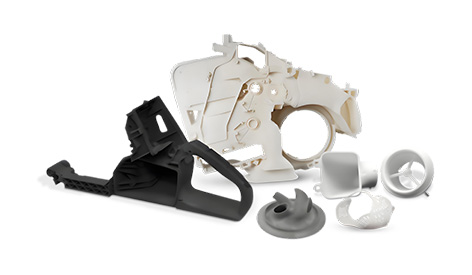
The most common material used in SLS is a strong and slightly flexible plastic called Nylon. When something is made this way, we call it laser sintered nylon.
These sls parts are not just for show; they are tough enough to be used in real-life situations. For example:
Toys: Strong gears and joints inside action figures or model cars.
Sports Equipment: Custom guards for helmets or special grips.
Art and Fashion: Intricate jewelry and unique designs that are hard to make any other way.
Because the parts are made from powder, they have a slightly rough, sandy feel, but they are very durable and don't break easily.

SLS vs. Other 3D Printers
Not all 3D printers are the same! Two other popular kinds are FDM and SLA.
FDM Printers: These are the most common home 3D printers. They work like a hot glue gun, squeezing out a string of melted plastic to build layers. The parts can have visible lines and are often weaker than sls parts.
SLA Printers: These use a liquid resin (like super strong syrup) that hardens when a light touches it. SLA 3D printing materials are great for making super smooth and detailed models, but the parts can be brittle and break if you drop them.
When we look at SLS 3d printing vs other technologies, SLS usually wins for making parts that need to be tough and functional, not just good-looking models. The big discussion of sls 3d printing vs other technologies often comes down to strength and the ability to make very complex designs without supports.
The Superpower of SLS: Printing with Metal!
The technology gets even cooler. What if we could use metal powder instead of plastic? That's exactly what metal sls is!
Metal SLS follows the same basic steps, but with a super-powerful laser that can melt metal powder. This lets people create solid metal objects that are just as strong as those made in a factory, but in shapes that are impossible to make with traditional tools.
Think about:
Medical: Doctors can print custom metal bone implants that perfectly fit a patient.
Aerospace: Rocket and airplane companies use it to make lighter, stronger parts for engines.
Selective laser sintering continues to be a cornerstone of modern additive manufacturing, offering unmatched flexibility in producing functional parts from polymers to metals. From laser sintered nylon components to metal SLS innovations, this technology supports a wide range of applications across industries. As SLS printing materials and printers evolve, SLS is set to become even more integral to custom and industrial production, driving efficiencies and enabling new designs. By understanding its process, benefits, and comparisons with other methods, businesses can leverage SLS to stay competitive in a rapidly changing manufacturing landscape.

