


In the rapidly evolving world of additive manufacturing, professionals and enthusiasts alike are often faced with a critical decision: which 3D printing technology best suits their project needs? Among the various options, Selective Laser Sintering (SLS) has emerged as a powerful method, particularly for industrial applications requiring durability and complex geometries. This article delves into a detailed technical comparison of SLS against other prominent technologies like Stereolithography (SLA) and Fused Deposition Modeling (FDM). We will explore key aspects such as performance, material options, and practical use cases, providing insights to help you navigate the landscape of modern 3D printing. By understanding the nuances of each method, you can make informed choices that optimize outcomes for prototyping, production, or custom projects.
content:
What is 3D Printing, Anyway?
Meet the 3D Printing Teams
The Printer vs. Printer Battles
What Can You Make with SLS?
So, Which 3D Printer Should You Choose?
What is 3D Printing, Anyway?
SLS 3D printing utilizes a high-powered laser to fuse small particles of polymer powder, layer by layer, into solid structures. Unlike methods that require support structures, SLS allows for intricate designs and functional parts with high strength and thermal resistance. When considering sls 3d printing vs other technologies, it stands out for its ability to produce durable components with minimal waste, as unused powder can often be reused. This makes it a go-to for industries like aerospace and automotive, where precision and material efficiency are paramount. However, it typically involves higher initial costs and longer post-processing steps compared to some alternatives, positioning it as a premium choice for end-use parts rather than simple prototypes.
Meet the 3D Printing Teams
1. FDM: The Friendly Beginner's Printer
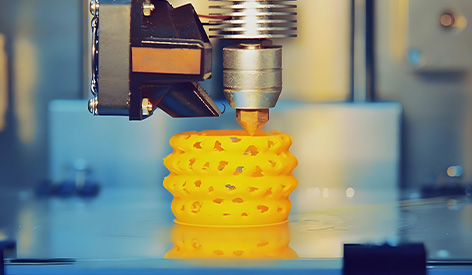
How it works: Think of a hot glue gun controlled by a robot. It melts a string of plastic (called filament) and squeezes it out through a tiny nozzle, drawing one layer at a time on a platform.
Good for: Making quick models, DIY projects, and Lego-like parts.
Not so good for: Making super smooth or very strong parts. You can often see and feel the layers, like lines on a piece of paper.
2. SLA: The Detail Artist
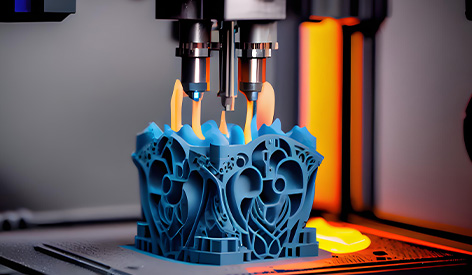
How it works: This printer uses a special liquid (resin) that hardens when a laser light touches it. The laser draws a shape on the liquid, hardening just one layer. The platform then lifts, and the process repeats.
Good for: Creating incredibly smooth and detailed objects, like miniatures for games, detailed jewelry, or dental molds.
Not so good for: Making parts that need to be super tough or left outside for a long time, as the resin can be brittle and can fade in sunlight.
3. SLS: The Strong and Tough Builder
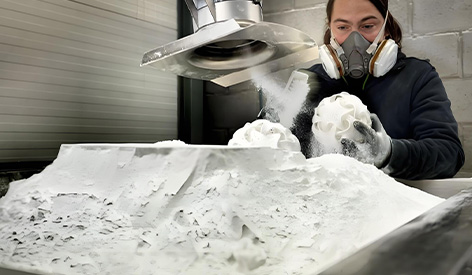
How it works: This one uses a fine powder (usually a type of nylon plastic) instead of liquid or string. A laser zaps the powder, melting it just enough to fuse the particles together to form a solid layer. Then, a new thin layer of powder is spread over the top, and the laser draws the next layer. The coolest part? The surrounding powder acts like a support for any hanging parts, so you can make amazing shapes that other printers can't!
Good for: Making strong, durable, and complex parts like functional gears, custom machine parts, and prosthetics.
The Printer vs. Printer Battles
Battle 1: The Artist vs. The Builder (SLA vs. SLS)
This is a battle of detail versus strength.
SLA (The Artist) wins when you need something to look perfect. If you're printing a tiny model of a dragon, you'd want every single scale to be visible. That’s a job for SLA.
SLS (The Builder) wins when you need something to work perfectly. If you’re making a wheel for a remote-control car that needs to survive crashes, SLS is your winner. The parts are much tougher and can handle stress and heat better.
Battle 2: The Builder vs. The Beginner's Printer (SLS vs FDM)
This is about strength and complexity versus ease and cost.
FDM is like drawing with a marker. It’s great for a quick sketch (a prototype) to see if your idea works. It’s cheap and easy.
SLS is like a professional building with bricks. The parts are strong in every direction and don’t have weak points between the layers. You can also design crazy, intricate shapes that would be impossible for an FDM printer to make without collapsing.
Battle 3: The Three-Way Race (FDM vs SLA vs SLS)
Let's line them all up!
Cost & Ease: FDM is the winner. You can buy a printer for a few hundred dollars and start printing at home.
Detail & Smoothness: SLA takes the crown. Its prints look almost like they were made in a factory.
Strength & Complexity: SLS is the champion. It makes tough, complex parts that can be used in real machines.
What Can You Make with SLS?
Because SLS 3d printing uses strong nylon powder, the sls 3d printing materials are perfect for parts that need to last. Think about:
Hinges and brackets for drones.
Custom-fit helmets or masks.
Interlocking parts that don’t need to be assembled.
The process, called selective laser sintering, is like a super-precise baker laying down flour and using a laser to draw a cookie shape to fuse it, over and over, until a 3D cookie is formed inside the powder!
So, Which 3D Printer Should You Choose?
It all depends on what you want to create!
Want to start learning and make simple, fun models? Pick FDM.
Want to make incredibly detailed figurines or models? Pick SLA.
Need to make a strong, complex part that really works, like a custom bike part or a tough toy? Then SLS is the best technology for the job.
Understanding the differences between sls 3d printing vs other technologies helps everyone from engineers to students pick the right tool. It’s like knowing when to use a pencil, a paintbrush, or a welding torch! Each one is awesome for its own special project,Sls 3d printing materials are also different.

