


For high-end consumer goods and automotive components, color consistency is a non-negotiable quality standard. Achieving a perfect "spray paint match" is not based on guesswork or human eyesight; it is a discipline of Industrial Color Matching that relies on precise instrumentation, chemical expertise, and rigorous quality control to ensure every component, regardless of its material, looks identical under any light source.
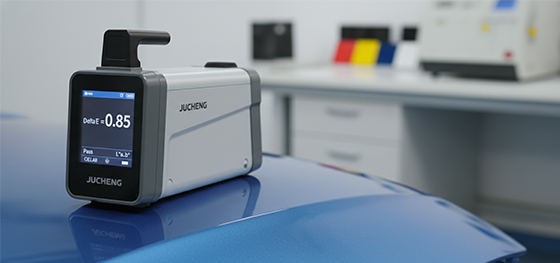
The challenge is amplified when matching paint across dissimilar substrates (like plastic and metal) or ensuring batch-to-batch consistency over years of production. This guide explores the scientific metrics and specialized processes used to eliminate color variance and guarantee aesthetic fidelity.
content:
Color Quantification: The Science of Delta E and CIELAB
The Substrate Effect: Managing Color Variance Across Materials
Metamerism Control: Ensuring Color Match Under All Lighting
Batch Consistency: Protocol for Long-Term Color Stability
Tooling and Finish Role: The Impact of Surface Texture and Gloss
Color Quantification: The Science of Delta E and CIELAB
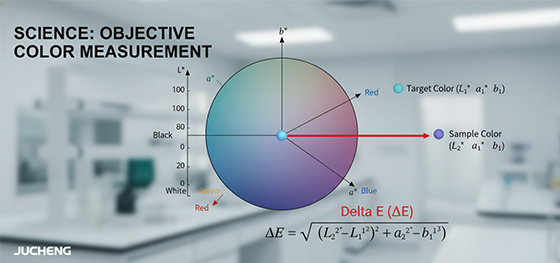
Industrial color matching removes human subjectivity by translating color into quantifiable numerical coordinates using instruments and standards:
CIELAB System: Color is measured using the L a b color model, where 'L' represents lightness (0=black, 100=white), 'a' represents the red/green axis, and 'b' represents the yellow/blue axis. Every color has a unique (L, a, b) coordinate.
Delta E (ΔE): Delta E is the single most important metric. It is the numerical difference between two color coordinates. A ΔE of less than 1.0 is generally invisible to the human eye, which is the standard for high-end OEM automotive painting.
Instrumentation: Color measurement is performed using a Spectrophotometer, a device that measures the reflectance spectrum of the sample to generate objective L a b values, ensuring accuracy across all manufacturing batches.
The Substrate Effect: Managing Color Variance Across Materials
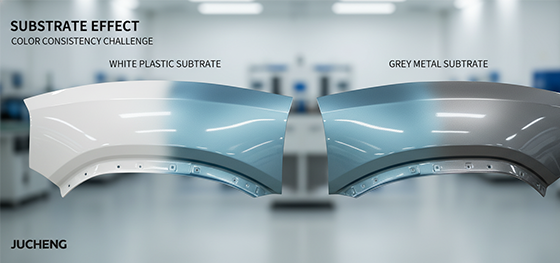
A critical challenge in multi-material products is ensuring color consistency when the same paint is applied to different substrates (e.g., an ABS plastic housing and a CNC machined aluminum trim piece):
Base Color Influence: Thin layers of paint, especially bright or light colors, are influenced by the base color of the substrate. Gray aluminum and off-white plastic will affect the final topcoat color differently.
Primer Layer: To mitigate the substrate effect, a uniform, high-opacity primer layer is often applied first. The goal of the primer is to provide a single, neutral color base that minimizes the influence of the underlying plastic or metal.
Material Absorption: Plastics can absorb paint components differently than metal, affecting the final gloss level or hue. The paint formulation itself must be adjusted (using different solvents or pigments) for the specific substrate.
Metamerism Control: Ensuring Color Match Under All Lighting
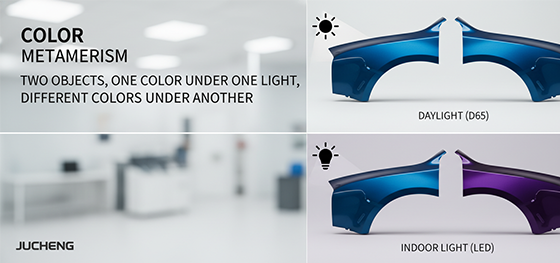
Metamerism occurs when two objects appear to be the same color under one light source but appear different under another (e.g., color matches indoors but not in sunlight). This is a common failure in multi-component assemblies:
Cause: Metamerism is caused by using different pigments to achieve the same color in different materials (e.g., using different pigments in the plastic resin versus the spray paint).
Solution: Professional color matching ensures that the paint system uses the same basic pigment chemistry as the reference color. Inspection must be performed using standardized viewing booths that simulate multiple light sources (e.g., Daylight, Fluorescent, Incandescent).
Aesthetic Verification: Final color approval is a blend of scientific measurement (ΔE < 1.0) and visual assessment under controlled lighting to confirm metamerism is eliminated.
Batch Consistency: Protocol for Long-Term Color Stability

Maintaining color over years of production and across different manufacturing batches requires strict laboratory and process control protocols:
Master Samples: A physically perfect, approved "Master Sample" must be retained and used as the objective standard for all future production.
Pre-Production Samples: Before each new batch of paint or plastic material is used, a sample piece is coated and measured. This Pre-Production Sample (PPS) must fall within a tolerance of ΔE < 0.5 compared to the Master Sample.
Process Control: Spray booth parameters (temperature, humidity, air pressure) are logged continuously. Any variation in the application process can affect the paint's dry film thickness and final hue, requiring constant process monitoring.
Tooling and Finish Role: The Impact of Surface Texture and Gloss

Even a perfect color formula can appear incorrect if the final gloss or texture is off. The final aesthetic relies heavily on the quality of the Injection Molding or CNC Machining process:
Mold Texture Transfer: If a non-glossy, textured finish is required (e.g., VDI standard), the mold steel itself must be chemically etched or laser-ablated. This texture is perfectly transferred to the plastic part and is verified using a texture master gauge.
Gloss Measurement: A gloss meter measures the amount of light reflected at a specific angle (usually 20°, 60°, or 85°). The final gloss must be verified against the aesthetic specification, which is independent of the color hue.
Surface Preparation: For high-gloss finishes, the underlying substrate must be perfectly smooth (polished or finely sanded) to avoid "orange peel" or roughness showing through the clear coat.
Industrial Color Matching is a disciplined engineering process that controls chemical formulation, measurement technology, and process environment. Jucheng Precision Technology leverages spectrophotometers, Delta E standards, and IATF-grade protocols to guarantee flawless cross-material color consistency for your high-end automotive and consumer components.
Secure guaranteed color consistency for your products. Contact us today to discuss the optimal material, surface preparation, and color matching strategy for your next project.

