


Deploying hardware into deep space, commercial aircraft engines, or deep inside the human body represents the absolute peak of material engineering stress. When your hardware demands the ultimate strength-to-weight ratio alongside complete biological compatibility, executing titanium sheet metal fabrication is the only viable manufacturing path. This transition metal combines the high tensile limits of structural steel with the low physical mass of aluminum, while resisting highly corrosive chemical environments under continuous thermal stress.

Using standard steel or aluminum for critical surgical implants or jet engine brackets introduces catastrophic failure points. Steel assemblies are far too heavy, while aluminum cannot survive high operating temperatures and is easily degraded by aggressive body fluids. Protecting the joint from environmental gases using an active inert gas shield is the best way to maintain metallurgical integrity on high-performance parts.
Balancing the material's massive yield strength and physical resistance to cold forming is what separates clean, certified titanium hardware from split, cracked scrap. Let's examine how titanium alloys maximize load efficiency, explore the specialized press setups required to control extreme angular springback, and review the strict shielding parameters necessary during thermal fusion.
content:
The Unmatched Strength-to-Weight Ratio of Titanium
Why Titanium is Difficult to Fabricate
TIG Welding Titanium in Inert Environments
High-Precision Titanium Fabrications at JUCHENG
FAQ: Critical Questions About Titanium Sheet Metal Fabrication
The Unmatched Strength-to-Weight Ratio of Titanium

What makes titanium the elite alloy for aerospace and medical applications?
Titanium is roughly 45% lighter than structural steel while offering comparable tensile strength, outstanding thermal limits, and complete non-toxicity for human tissue.
Understanding the metallurgical properties of titanium is essential to designing high-performance assemblies. For most forming applications, we utilize commercially pure Grade 2 titanium, which offers excellent ductility and superior corrosion resistance. This level of protection is driven by its natural ability to build a highly stable titanium dioxide oxide layer that resists aggressive chemical attacks.
For high-load aerospace components, we utilize Ti-6Al-4V (Grade 5), an alpha-beta alloy containing aluminum and vanadium. This material exhibits an incredibly high yield strength, allowing structural engineers to minimize sheet thicknesses and reduce weight on satellites and commercial aircraft without compromising structural integrity.
Why Titanium is Difficult to Fabricate
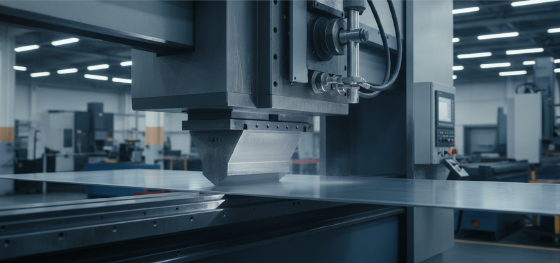
What are the primary mechanical obstacles when bending and forming titanium sheets?
Titanium exhibits extreme elastic springback and high friction coefficients, requiring generous bend radii, slower press speeds, and specialized lubricants to prevent cracking.
Forming titanium requires a deep understanding of its high physical resistance to cold work. Due to its high yield-to-tensile ratio, the material exhibits extreme angular springback when the press brake retracts, which can cause significant dimensional drift if not calculated. We resolve this by over-bending the metal using specialized CNC programs.
Additionally, titanium is highly susceptible to galling, where the soft titanium molecules stick to the tool steel die under high pressure, scratching the surface of the sheet. To prevent galling, our operators utilize generous minimum bend radii (typically three to five times the sheet thickness for Grade 5) and apply specialized high-pressure lubricants during press operations, delivering a clean, defect-free profile.
TIG Welding Titanium in Inert Environments

Why does welding titanium require strict atmospheric isolation?
At temperatures exceeding 400 degrees Celsius, titanium becomes highly reactive to atmospheric oxygen, nitrogen, and hydrogen, causing severe weld embrittlement and joint failure.
Welding titanium is a highly precise metallurgical process. When the electric arc ignites, the molten titanium puddle behaves like a chemical sponge, absorbing trace gases from the air. If oxygen or nitrogen penetrates the weld zone, it initiates interstitial contamination, making the cooled joint extremely brittle and prone to cracking under minimal vibration.
To ensure a certified, high-strength fusion, our certified welders execute TIG welding under complete inert gas protection. We utilize specialized trailing shield nozzles that continue to flood the hot weld seam with pure argon gas long after the torch has moved past. For complex medical and aerospace assemblies, we execute the entire welding process inside dedicated, hermetically sealed purge chambers filled with pure argon gas, ensuring a pristine weld bead.
High-Precision Titanium Fabrications at JUCHENG
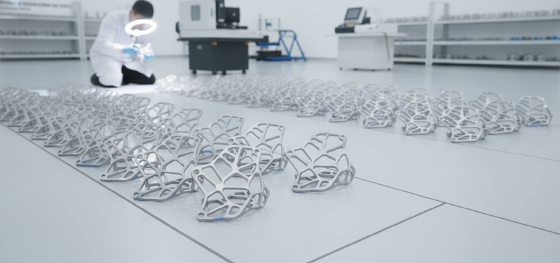
How does JUCHENG manage high-precision titanium manufacturing?
We operate high-power fiber laser cutters, heavy-duty press brakes, and dedicated inert welding chambers managed by certified operators, utilizing custom tooling to ensure tight tolerances.
Selecting this high-strength, biocompatible sheet metal material ensures that your surgical instrument cases, aircraft brackets, and exhaust housings maintain maximum structural integrity under continuous environmental stress. JUCHENG integrates advanced fiber cutting, punching, and forming systems into our full-service production lines, allowing us to transition your 3D models into fully finished, certified titanium hardware with extreme dimensional accuracy.
We operate an ISO 13485 and AS9100 compliant environment, utilizing over 150 high-performance manufacturing machines to execute complex stamping and forming runs. Our engineering team provides a 24-hour free DFM analysis to check your CAD models for bend limits and tool clearances before cutting steel. Supported by our no MOQ policy and rapid delivery guarantee, we manage your project from initial flat pattern cutting to final, fully integrated packaging.
FAQ: Critical Questions About Titanium Sheet Metal Fabrication
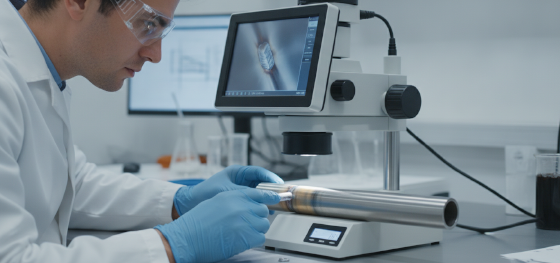
What do different weld colors on titanium indicate?
The color of a titanium weld indicates the level of oxygen contamination during cooling. A silver or light straw color represents a clean, uncontaminated weld with excellent structural integrity. Blue or purple colors indicate light contamination that may require structural review, while white, grey, or yellow powdery deposits indicate severe oxygen contamination, rendering the joint brittle and unusable.
Can Grade 5 titanium (Ti-6Al-4V) be bent cold?
Grade 5 titanium is extremely hard and possesses high yield strength, making it highly prone to cracking when bent cold. While thin gauges can be folded cold using large bending radii, thick Grade 5 plates often require localized induction heating (hot forming) to temporarily increase ductility, allowing the metal to deform cleanly without structural cracking.
Why is waterjet or fiber laser cutting preferred over plasma cutting for titanium?
Plasma cutting utilizes intense heat and air, which causes severe oxygen and nitrogen contamination along the cut edge, requiring extensive secondary grinding to remove the brittle contaminated layer before welding. Utilizing high-power fiber laser cutting with high-pressure nitrogen or cold waterjet cutting completely prevents this contamination, delivering a clean, weld-ready edge.
How does JUCHENG prevent tool damage during titanium sheet metal fabrication?
High-hardness titanium alloys exert extreme friction on press brakes and shearing blades, causing rapid tool wear and galling. To maintain precise tolerances, our team utilizes certified, through-hardened tool steel dies, applies specialized anti-friction coatings, and monitors press tonnages using digital sensors to prevent overloaded stress conditions.

