


Every engineer faces a constant dilemma. The choice between cost and performance. For most parts, a good balance can be found with materials like mild steel or alloy steel.
But what if the job is too tough for them? What if the part needs to withstand incredible pressure, extreme abrasion, and high temperatures, day after day?
In these situations, compromise is not an option. You need the ultimate performer in the world of Metallic materials. You need Tool Steel. This is not a material for everyday parts. It is a material for when failure is not an option.
content:
The Engineer's Dilemma: Cost vs. Performance
What is Tool Steel? A Metal Designed to Shape Others
The 'Secret Sauce': Carbon, Alloys, and Heat
The Challenge for a Manufacturer
When Do You Need This Ultimate Performance?
The Engineer's Dilemma: Cost vs. Performance

Imagine a spectrum of steel performance. On one end, you have mild steel. It is soft, easy to machine, and very cheap. It is great for structural parts that do not see much wear.
In the middle, you have alloy steels. They are harder, stronger, and more expensive. They are perfect for high-stress parts like gears and shafts.
And then, at the far end of the spectrum, you have tool steel. It represents the peak of hardness, wear resistance, and toughness. It is also the most expensive and the most difficult to work with. It is a specialist material, chosen only when the demands of the job are extreme.
What is Tool Steel? A Metal Designed to Shape Others
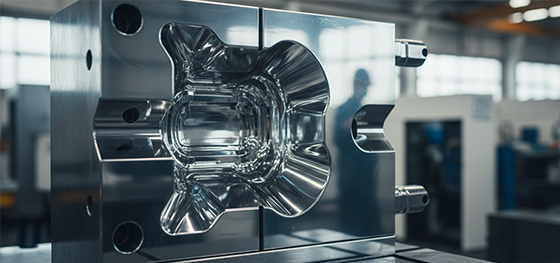
The name "tool steel" gives you the biggest clue. It is a family of steels designed specifically to be made into tools. But not wrenches or screwdrivers.
These are industrial tools. Tools that cut, press, stamp, and form other materials, including other steels.
The most common application is in mold and die making. An injection mold for making plastic parts must withstand immense pressure and high temperatures. It must also have a very hard, polished surface that can be used to make millions of parts without wearing out. Only Tool Steel can do this job.
Similarly, a stamping die used to cut shapes from sheet metal must be harder than the metal it is cutting. Again, this is a job for tool steel.
The 'Secret Sauce': Carbon, Alloys, and Heat
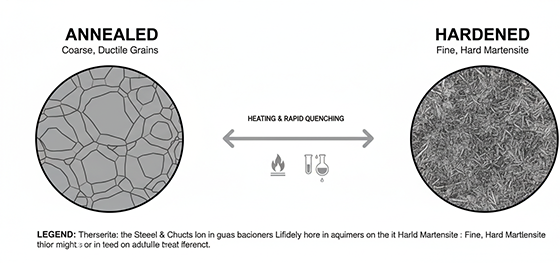
What gives tool steel its incredible properties? It is a combination of three things.
First, a high carbon content. Carbon is the primary hardening element in steel. Tool steels have a carefully controlled, high percentage of carbon.
Second, a rich recipe of alloying elements. Elements like chromium, vanadium, tungsten, and molybdenum are added in significant amounts. Each one adds a special property. Tungsten, for example, helps the steel stay hard even when it gets red-hot. Vanadium helps to form very hard carbide particles within the steel.
Third, a precise and complex heat treatment process. This is the final step that unlocks the material's potential. Through controlled heating and quenching, the internal crystal structure of the steel is transformed into a very hard and stress-resistant state called martensite. This heat treatment is a science in itself.
The Challenge for a Manufacturer

All the properties that make tool steel great also make it incredibly difficult to manufacture.
Machining tool steel is a huge challenge. It is so hard that it quickly wears down even the strongest cutting tools. A manufacturer must use special coated carbide cutters. They must run their CNC machines at very slow speeds and feeds. This means the time it takes to machine a tool steel part is much longer than for a mild steel part.
The heat treatment process is also very complex and must be controlled with extreme precision.
This difficulty is why working with tool steel is a specialist skill. It requires powerful machines, advanced tooling, and deep process knowledge. This is why the cost of a finished tool steel part is significantly higher. You are paying for the material, the machine time, and the expertise.
When Do You Need This Ultimate Performance?

So, when is this high cost justified?
You need Tool Steel when your part's primary job is to shape or cut other materials. This includes injection molds, extrusion dies, stamping tools, and cutting blades.
You need it when your part will be subjected to extreme, repetitive wear and abrasion. Think of a high-wear component in a powerful industrial machine.
Choosing tool steel is an investment. You are paying more upfront for a part that will last much, much longer. It will produce more parts with higher accuracy. It will reduce downtime. In these demanding applications, the initial high cost of the tool steel component is easily paid back by its long life and reliability.

