


Your CAD model is finished. It is a beautiful, complex shape. But now comes the hard question. How do you actually make it?

This is a question of geometry. Can a cutting tool physically reach every surface you have designed? Choosing from the different types of cnc machine is not about choosing the "best" machine. It is about choosing the right key to unlock your specific geometric puzzle.
This guide is not a list of machine specs. It is a map of those puzzles, and the specific tools designed to solve them.
content:
Solving Flat-Land Problems: The 3-Axis Workhorse
Adding a Twist: The 4th Axis
Unlocking True Freedom: The 5-Axis Revolution
Another Way to Classify: Mills vs. Lathes
Choosing Your Weapon Wisely
Solving Flat-Land Problems: The 3-Axis Workhorse

The first puzzle is the simplest. Imagine your part is a flat plate with some pockets and holes drilled into it. All the features can be reached directly from the top.
This is a job for the workhorse of every machine shop: the 3-axis CNC mill.
Its name tells you everything. The cutting tool can move in three linear directions: X (left and right), Y (forward and back), and Z (up and down). It is perfect for what is called "2.5D" machining. This covers a huge range of common parts, like base plates, simple brackets, and machinery tags. It is fast, efficient, and the most cost-effective type of CNC Machining.
Adding a Twist: The 4th Axis
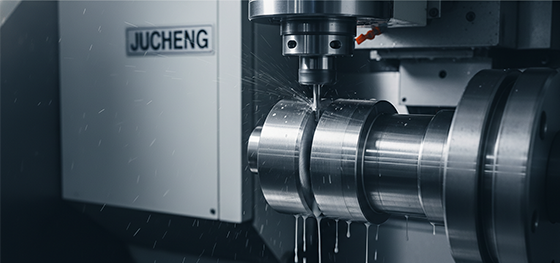
Now for puzzle number two. Imagine your part is a cylindrical shaft. You need to cut a keyway along its side. And drill a hole through its center. A 3-axis machine cannot do this in one setup. It can only work from the top.
The solution is to add a twist. This is the job of a 4-axis machine.
A 4-axis machine is a 3-axis mill with an added rotational axis, usually called the A-axis. This allows the machine to rotate the part as it is being cut. It can now access the part from the front, the back, and all sides.
This unlocks a whole new world of geometry. It is essential for making parts like camshafts, propeller hubs, and complex housings. It allows multiple sides of a part to be machined in a single setup, which dramatically improves accuracy.
Unlocking True Freedom: The 5-Axis Revolution
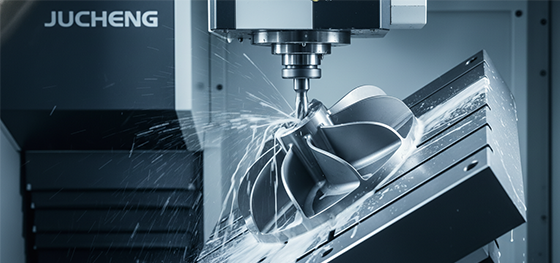
Now for the final, most difficult puzzle. Imagine an aerospace impeller. It has complex, twisted, flowing blades. There are no flat surfaces. The tool needs to reach deep inside the part at strange angles.
This is a puzzle that only a 5-axis machine can solve.
A 5-axis machine adds a fifth axis of movement, usually a tilting motion called the B-axis. This means the machine can move in X, Y, Z, and rotate in A and B, all at the same time. This is called "simultaneous 5-axis machining."
It gives the cutting tool almost unlimited freedom to approach the part from any angle. It can create the smoothest, most organic, and most complex shapes imaginable. It also allows for the use of shorter, more rigid tools, which results in a much better surface finish and higher accuracy. This is the pinnacle of the different types of cnc machine.
Another Way to Classify: Mills vs. Lathes
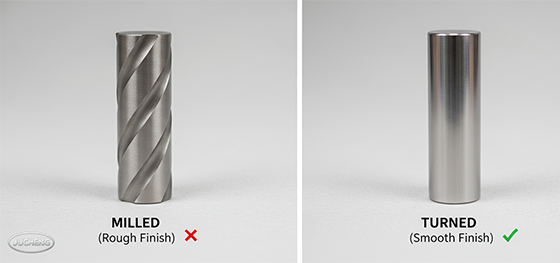
There is another basic way to classify CNC machines. By how they remove material.
A CNC Mill is what we have been discussing. The part is held stationary, and a rotating tool moves around it to cut away material. This is perfect for parts that are mostly prismatic, or blocky.
A CNC Lathe, or turning center, does the opposite. The part itself spins at a very high speed. A stationary cutting tool is then brought into contact with it. This is the ideal process for any part that is cylindrical. Think of shafts, pins, nozzles, and rings. Turning can create exceptionally round and smooth surfaces very quickly.
Many modern machines are multi-axis mill-turn centers, which combine both capabilities in one.
Choosing Your Weapon Wisely

The number of axes is not a measure of "good" or "bad." It is a measure of capability. Using a 5-axis machine for a simple 3-axis job is a waste of time and money.
The key is to choose the simplest, most efficient process that can successfully create your part's geometry.
This is where a partnership with an expert manufacturer is invaluable. At JUCHENG, with our large fleet of 3, 4, and 5-axis machines, we are not biased toward one solution. Our engineers will analyze your design. We will determine the most efficient and cost-effective way to make it. This DFM feedback ensures that we solve your geometric puzzle in the smartest way possible.

