


Joining cast iron to stainless steel is a complex welding task that demands careful preparation, the right techniques, and a clear understanding of the properties of both metals. While challenging, it is possible with a meticulous approach. This article delves into the specifics of this process, covering electrode selection, procedures, and practical applications.
content:
Can Cast Iron Be Welded to Stainless Steel?
Understanding the Challenges: Metallurgy of the Bond
Selecting the Right Filler Metal: Welding Rod Choices
The Welding Procedure: A Step-by-Step Approach
Practical Application: Welding Hinges to a Gate
Proceed with Caution and Expertise
Can Cast Iron Be Welded to Stainless Steel?
The direct answer is yes, can cast iron be welded to stainless steel is technically feasible. However, it is not a straightforward process and is often considered a specialized repair procedure rather than a standard manufacturing practice. The primary challenges arise from the fundamental differences in the materials' composition and behavior. Cast iron is brittle, has a high carbon content, and is prone to cracking from thermal stress due to its low ductility. Stainless steel, particularly austenitic grades, has high strength and ductility but a different thermal expansion rate. Success hinges on controlling heat input, managing dilution, and using a buffer or transition material to accommodate these differences.

Understanding the Challenges: Metallurgy of the Bond
The core difficulty in cast iron to stainless steel welding lies in creating a sound metallurgical bond without creating brittle compounds. The high carbon in cast iron can migrate into the stainless steel weld metal, forming chromium carbides. This depletion of chromium reduces the corrosion resistance of the stainless steel in the heat-affected zone (HAZ) and can lead to cracking. Furthermore, the significant difference in thermal expansion coefficients means the joint experiences immense stress during heating and cooling, increasing the risk of fractures in the cast iron. Therefore, the goal is not to fuse the metals directly but to create a mechanical and controlled metallurgical bond that can withstand service conditions.
Selecting the Right Filler Metal: Welding Rod Choices
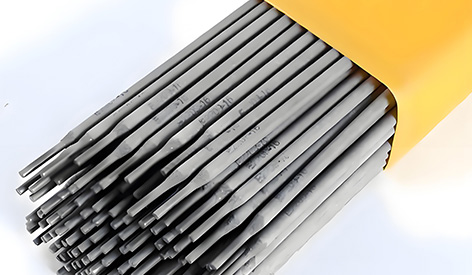
Choosing the correct filler metal is the most critical step for a successful joint. You cannot use a standard stainless steel or cast iron electrode. The recommended approach is to use a high-nickel filler metal, which acts as a ductile buffer. The two primary choices for a welding electrode for cast iron to stainless steel are:
Nickel-Iron (ENiFe-Cl or ENiFeCI-A): This is often the preferred cast iron to stainless steel welding rod. Alloys like 55% Nickel, 45% Iron offer good strength and ductility. They have a thermal expansion rate that is a better match for cast iron than pure nickel, reducing stresses. They are also more economical than pure nickel rods.
Pure Nickel (ENi-Cl or ENiCI-A): These rods (99%+ Nickel) offer maximum ductility and are excellent for machining. The soft nickel alloy absorbs stress effectively, preventing it from transferring to the brittle cast iron. This is an excellent choice for the first layer when stick welding cast iron to stainless steel.
For MIG welding, nickel-based wires like ERNiCr-3 or ERNiFeCl are available. The principle remains the same: use a ductile, nickel-rich filler to create a compliant layer.
The Welding Procedure: A Step-by-Step Approach
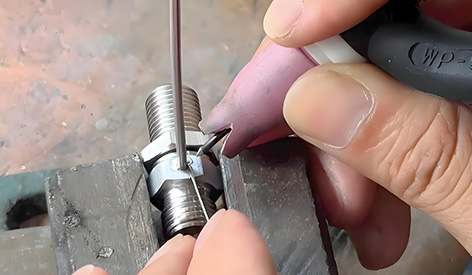
The process for welding stainless steel to iron requires patience and strict adherence to procedure. Stick welding cast iron to stainless steel (SMAW) is the most common method for repairs.
Preparation: Clean both metals thoroughly. Remove all paint, oil, grease, and dirt. On the cast iron, grind the surface down to clean, base metal. Any impurities will cause defects in the weld.
Preheating: Preheating the cast iron is absolutely essential. Heat the cast iron piece evenly to a range of 500-1200°F (260-650°C). Use a temperature stick to monitor. Preheating slows the cooling rate, minimizing the risk of hard, brittle zones and cracking.
Tack Welding: Use small tack welds to secure the parts. Peen each tack weld immediately after deposition while it is still hot. Peening involves lightly hammering the weld bead to relieve internal stresses.
Welding Technique: Use a low amperage setting for your stick welder. Employ a short bead technique, often called a "stitch" or "skip" weld. Deposit a small bead (approx. 1 inch) and then stop. Allow the heat to dissipate before placing another bead in a different area. This minimizes heat buildup. Peen each bead before moving on.
Cooling: This is as important as preheating. After welding, insulate the entire assembly in an insulating blanket or bury it in dry sand to allow for a very slow, gradual cooling to room temperature. This may take many hours.
Practical Application: Welding Hinges to a Gate
A common real-world application is welding stainless steel hinges to an iron gate. The gate is often made of cast or wrought iron, and stainless steel hinges are chosen for their corrosion resistance. The process follows the steps above. A video how to weld stainless steel hinges to iron gate would visually demonstrate the critical steps: thorough cleaning, careful preheating of the iron gate post with a torch, tacking the hinges in place, and using a nickel-based stick electrode to make small, peened welds. The video would emphasize the importance of letting the assembly cool slowly to avoid cracking the iron post, a common failure point for DIY attempts.
Proceed with Caution and Expertise
While the question "can you weld cast iron to stainless steel" has a positive answer, it should be approached with respect for the materials' properties. It is a high-skill procedure that prioritizes crack prevention above all else. For critical components, consulting a professional welder is strongly advised.

