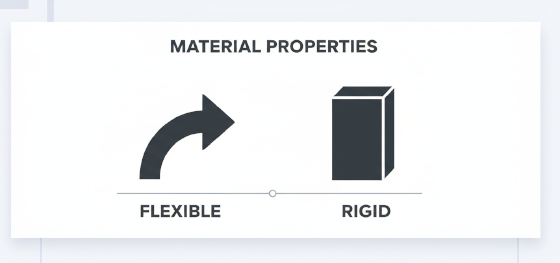
Selecting the correct hardness for a 2-meter long enclosure in [2026] reveals the most frequent debate in the reaction injection molding process: do you need the part to stand like a wall or act like a shield? Choosing between Rigid vs Flexible Polyurethane RIM is not just about the "feel" of the plastic; it is about how the material dissipates energy when an autonomous vehicle hits a warehouse rack or a medical technician bumps a multi-million dollar scanner. If the material is too stiff, it shatters; if it is too soft, it fails to protect the internal AI compute stack. Mastering this selection is critical for the long-term survival of high-value hardware.
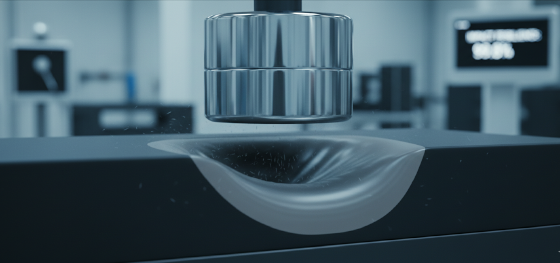
Modern Industrial Robot Parts demand a level of performance that traditional thermoplastics like ABS or PP often cannot reach in oversized formats. While injection-molded parts suffer from internal stress and brittle failure modes, Polyurethane Molding Services allow engineers to "dial in" the exact mechanical personality of a part by adjusting the chemical cross-linking. Jucheng Precision addresses these selection dilemmas by providing a range of Impact Resistant Materials, from glass-hard structural frames to elastomeric bumpers that can absorb a sledgehammer hit and return to their original shape in seconds.
Operating within the Shenzhen precision manufacturing hub, JUCHENG acts as the mechanical intelligence partner for global OEMs. We transform raw liquid chemistry into validated structural skins that protect your technology from the chaos of the field. This guide explores the essential Shore hardness standards, elongation-at-break data, and the application logic required for deciding between Rigid vs Flexible Polyurethane RIM to ensure your next fleet of autonomous machines is built on a foundation of unyielding reliability.
content:
Rigid PU: When Does Your Hardware Need Absolute Stiffness?
Technical Data: Comparing Rigid vs. Flexible Mechanical Specs
Flexible RIM: Using Elastomers to Solve the Impact Crisis
The Semi-Rigid Middle Ground: The Best of Both Worlds?
JUCHENG Hub: Helping You Tune Your Material in Shenzhen
FAQ: Real Answers for Selecting the Right Material Hardness
Rigid PU: When Does Your Hardware Need Absolute Stiffness?
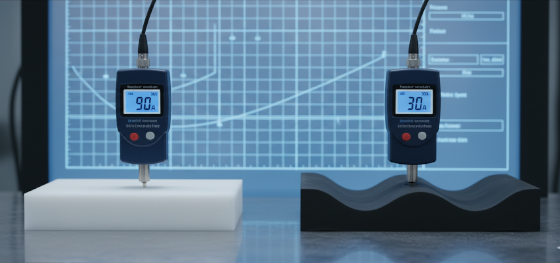
Absolute stiffness is the primary requirement for large-scale medical diagnostic consoles and structural robot frames. In the battle of Rigid vs Flexible Polyurethane RIM, the "Rigid" side mimics the behavior of high-performance engineering plastics like ABS and Polycarbonate, but with much higher bending stiffness for oversized parts. If your enclosure must support the weight of a 24-inch touch screen or house high-precision LiDAR sensors that cannot tolerate a micron of movement, Rigid PU is the only choice. JUCHENG’s rigid formulations reach Shore D hardness levels of 85+, providing a rock-solid foundation that prevents the "Ghost Jitter" that ruins autonomy algorithms.
Will a rigid part shatter if it drops?
Unlike brittle 3D-printed resins, JUCHENG’s rigid RIM materials are chemically cross-linked to provide high impact toughness, meaning they dent or "bruise" before they ever shatter.
Thermal stability is a silent advantage of the rigid side. In [2026] electronics manufacturing, internal compute stacks generate massive heat. Rigid PU RIM has a higher heat deflection temperature (HDT) than its flexible counterpart, ensuring that the enclosure stays dimensionally perfect even when internal temperatures reach 80°C. JUCHENG utilizes specialized "high-viscosity" polyols to create a dense molecular mesh that resists thermal creep, ensuring that the seams and gasket seals of your medical scanner remain airtight throughout a 24-hour shift in a non-climate-controlled ward.
Surface aesthetics are another reason engineers choose rigid RIM for their prototype robot builds. Because the material is hard, it can be sanded and polished to a Class-A automotive finish. JUCHENG applies high-gloss 2K urethane coatings to these rigid shells, creating a retail-ready appearance that is essential for trade show demos and venture capital pitches. This combination of "Structural Backbone" and "Visual Perfection" is what makes JUCHENG a preferred partner for global robotics firms that need to convey technical maturity and design excellence.
Technical Data: Comparing Rigid vs. Flexible Mechanical Specs
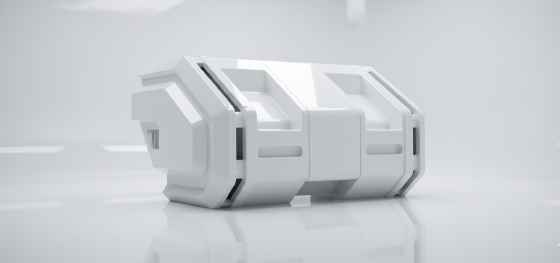
Understanding the data behind Rigid vs Flexible Polyurethane RIM is the only way to avoid a hardware failure in the field. While your industrial designer might want a "Soft-Touch" feel, your mechanical engineer needs to know if the part will sag under its own weight. Jucheng Precision provides full chemical and physical batch logs to help you validate your designs. The following table compares the essential performance metrics for our standard rigid and flexible formulations in the [2026] market.
| Metric | Rigid RIM (Structural) | Flexible RIM (Elastomeric) | Engineering Impact |
| Hardness (Shore) | 80 - 85 D | 40 - 90 A | Determines Dent vs. Bounce |
| Flexural Modulus (psi) | 250,000 - 320,000 | 5,000 - 50,000 | Rigidity for Enclosures |
| Elongation at Break | 5% - 15% | 150% - 400% | Critical for Crash Zones |
| Specific Gravity | 1.05 - 1.15 | 0.95 - 1.05 | Weight and Buoyancy |
The "Elongation at Break" is the key differentiator for Impact Resistant Materials. In a flexible RIM part, the material can stretch up to four times its original length before it tears. This allows JUCHENG to manufacture robotic "skins" and bumpers that act like airbags for the robot’s skeleton. By contrast, the low elongation of the rigid side ensures that mounting points remain geometrically constant, even when subjected to the high-torque vibrations of large-scale motor reversals.
Flexible RIM: Using Elastomers to Solve the Impact Crisis
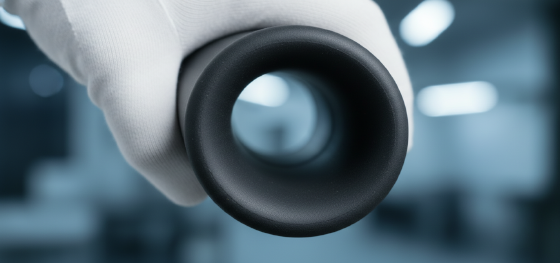
Collision events are non-negotiable for autonomous mobile robots (AMRs). No matter how advanced the AI, a robot will eventually strike an obstacle. In Rigid vs Flexible Polyurethane RIM, the "Flexible" side provides the ultimate defensive hardware. JUCHENG’s elastomeric RIM materials are engineered to absorb the kinetic energy of an impact through molecular deformation. This means that instead of the force being transmitted directly into the expensive industrial robot parts (like the LiDAR or the gearbox), the flexible bumper "soaks up" the energy. This "Bionic Dampening" is essential for robots operating in shared human workspaces like fulfillment centers or hospital corridors.
Can a flexible part be used for structural mounting?
Generally no. Flexible RIM is designed to be a "protective skin" or bumper; it lacks the stiffness needed to hold tight tolerances for motor or sensor alignment.
Vibration isolation is a secondary superpower of flexible RIM. By overmolding a flexible polyurethane layer onto a rigid chassis, JUCHENG creates a monolithic part with integrated dampening features. This "Soft-on-Hard" architecture is a core competency of our Polyurethane Molding Services. It allows us to protect delicate electronics from the high-frequency vibrations of the drivetrain, effectively extending the mean-time-between-failures (MTBF) of the entire robot. In our Shenzhen hub, we use specialized bonding agents to ensure the flexible and rigid layers never delaminate, even after millions of flex cycles.
Comfort and ergonomics are the final drivers for the flexible side. In collaborative robotics (cobots), the machine must be "safe to touch." JUCHENG utilizes flexible RIM to produce "soft skins" that cover the metallic joints of the robot. This reduces the risk of pinching injuries for human operators and makes the robot feel more like a tool and less like a threat. By achieving a "Warm-Touch" surface finish on these elastomeric parts, we help our clients pass human-factors testing and increase the user-acceptance of their automation solutions in the [2026] market.
The Semi-Rigid Middle Ground: The Best of Both Worlds?
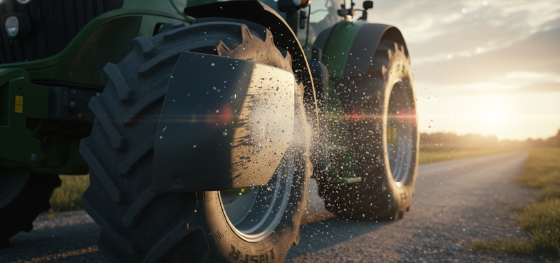
Sometimes, your hardware needs the stiffness of a shell but the impact resistance of a tire. This is where the "Semi-Rigid" category of Rigid vs Flexible Polyurethane RIM wins the day. JUCHENG specializes in semi-rigid formulations (Shore D 60-70) that offer "Ductile Toughness." These materials are favored for industrial robot parts like fenders and side-skirts on autonomous tractors or mining robots. A semi-rigid part will flex significantly under a direct rock-strike, absorbing the energy without shattering, but will snap back to its original shape perfectly once the load is removed.
Is semi-rigid cheaper than rigid PU?
The material cost is similar, but the ROI is often higher because semi-rigid parts survive the "Rough-Handling" of shipping and installation better than ultra-rigid alternatives.
Thickness management is the key to semi-rigid success. JUCHENG’s DFM team helps you optimize the wall thickness to achieve the desired "Spring Effect." By thickening the ribs and thinning the aesthetic faces, we can create a part that feels rigid when handled but behaves like a spring during a crash. This variable mechanical behavior is unique to the reaction injection molding process and is impossible to replicate with traditional injection molding or 3D printing. We provide 100% density in these parts, ensuring no internal air pockets can become starting points for cracks.
Dimensional stability in semi-rigid parts is maintained through the low-pressure RIM cycle. Unlike traditional high-impact plastics that want to warp as they cool, JUCHENG’s semi-rigid PU cures in a relaxed state. This ensures that large tractor fenders or robot battery covers fit the steel chassis perfectly with zero "forced assembly." In the fast-moving Shenzhen hub, we deliver these "High-Forgiveness" parts to global clients who need hardware that can survive the transition from the lab to the mud without a single field recall, ensuring a zero-defect launch in the [2026] season.
JUCHENG Hub: Helping You Tune Your Material in Shenzhen
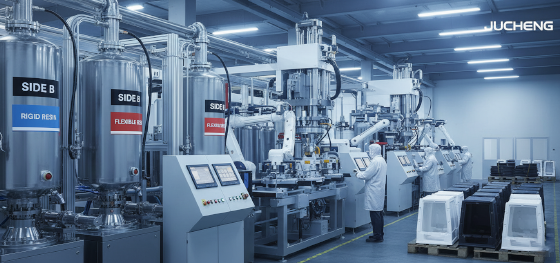
Dominating the hardware market requires a partner that doesn't just sell one process, but understands the chemistry of survival. Jucheng Precision operates with a 24/7 manufacturing mindset in our Shenzhen precision manufacturing hub, delivering high-tolerance RIM components and structural industrial robot parts with industry-leading speed. We provide a "Bridge to Production" that allows you to move from a single hand-poured prototype to a commercial deployment of 5,000 units with consistent chemical and dimensional quality.
Integrating your structural design with JUCHENG’s expertise ensures that your Rigid vs Flexible Polyurethane RIM decision is based on data, not guesswork. We offer comprehensive DFM reviews within 24 hours, identifying potential impact risks or thermal-expansion bottlenecks in your design before they become field failures. Whether you are building an autonomous vineyard scout or a multi-part surgical robot, Jucheng Precision provides the rigid, precise, and *chemically optimized* foundations that keep your innovation moving through the high-stakes cycles and the years of hard labor.
Our facility is equipped with 150+ CNC machines and dedicated high-pressure RIM assembly cells, allowing us to manage the entire material and part lifecycle in one location. We manage the complexity of multi-material bonding and custom polyol blending so your engineering team can focus on the motion control and the AI. By combining Shenzhen's speed with industrial-grade material verification and global ISO 13485 standards, JUCHENG remains the preferred partner for the world's most aggressive Impact Resistant Materials challenges. Contact us today to start your next project.
FAQ: Real Answers for Selecting the Right Material Hardness
What is the typical hardness of a rigid medical enclosure?
We recommend Shore D 80 to 85. This provides the stiffness of ABS but with much better durability for large parts.
Can I overmold a flexible bumper onto a rigid frame?
Yes. We specialize in dual-durometer RIM molding where an elastomeric layer is permanently bonded to a rigid skeleton.
Which material is best for high-vibration environments?
Semi-rigid PU (Shore D 65) is ideal because it possesses enough internal dampening to protect sensitive sensors.
Is flexible RIM resistant to chemical wipe-downs?
Yes. We utilize specialized polyols that are chemically inert to hospital disinfectants and agricultural fertilizers.
What is the maximum part size JUCHENG can mold in flexible PU?
We regularly produce flexible bumpers and protective skins up to 2,000mm in length.
Brittle fractures and heavy vibration are absolute innovation killers for large-scale robotics. Partnering with Jucheng Precision ensures that your functional iterations are built with the precision-balanced reaction injection molding process and specialized Rigid vs Flexible Polyurethane RIM techniques the industry demands. Reach out to our Shenzhen manufacturing hub today for a complete DFM review and build the unyielding foundation your autonomous fleet requires.


