Finding air bubbles or "pockmarks" on the surface of a fresh 1.5-meter long medical housing is every designer's nightmare in [2026]. When you are using the reaction injection molding process, you aren't just pushing plastic; you are managing a chemical explosion inside a closed box. If the air inside that box has nowhere to go, it gets trapped in the liquid, leaving your expensive parts looking like Swiss cheese. Getting Mold venting in RIM process right is the difference between a high-end product that investors love and a pile of scrap that eats your R&D budget.
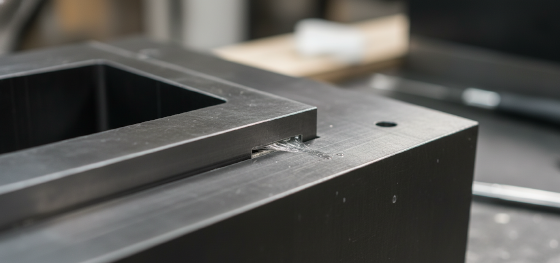
Most Plastic Part Defects in large-scale molding aren't caused by the material itself, but by poor plumbing within the tool. Because RIM uses low-viscosity liquids, the air wants to stay ahead of the flow, but it easily gets pinned in corners or high spots. Jucheng Precision handles these "invisible" air problems by using a mix of gravity and smart vent placement. We deliver parts that are solid all the way through, so your robot or diagnostic device doesn't just look good—it has the structural strength to handle real-world hits.
Operating from our Shenzhen precision manufacturing hub, JUCHENG acts as your on-the-ground engineering team to fix these issues before they happen. We take your designs and run them through a "Venting Audit" to spot where air will get stuck. This guide is a down-to-earth look at how we handle air traps, where we put the vents, and why tilting the whole machine is sometimes the smartest thing to do. Let's make sure your Mold venting in RIM process is working for you, not against you.
content:
The Air Trap Nightmare: Why Bubbles Kill Large Parts
Technical Data: How Venting Precision Saves Your Budget
Where to Put Vents: Simple Rules for Clean Surfaces
The Tilt-Filling Trick: Using Gravity to Push Air Out
JUCHENG Hub: Eliminating Defects in the Shenzhen Shop
FAQ: Real Answers for Bubbles and Molding Problems
The Air Trap Nightmare: Why Bubbles Kill Large Parts
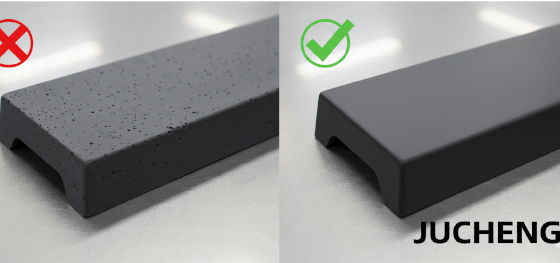
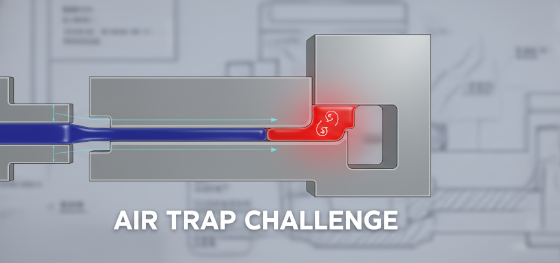
Think of the mold as a room and the liquid polyurethane as water filling it from the bottom. If there is no window, the air gets squeezed into the ceiling. In Mold venting in RIM process, these "ceiling zones" are usually the most visible parts of your robot shell or medical console. When air gets trapped, it creates a void—a hole where there should be plastic. This isn't just an ugly spot; it's a weak point. If a technician bumps a scanner with an air-trapped corner, it will crack instantly. JUCHENG uses flow simulation to find these "no-window" zones in your CAD before we even cut the aluminum mold.
Why do air bubbles happen in the same spot every time?
Air follows the path of least resistance. If your part has a "high point" that fills last, that is exactly where the air will congregate and stay trapped without a vent.
Surface "orange peel" or "streaking" is another common result of bad venting. When air cannot escape, it creates back-pressure. This pressure fights the incoming liquid, making the flow turbulent. In the [2026] market, where everyone wants a smooth automotive finish, turbulent flow is a killer. It creates microscopic swirls on the surface that even a heavy coat of paint can't hide. By letting the air breathe out through the mold's parting line, JUCHENG ensures the liquid flows like silk, giving you that perfect out-of-the-mold finish that reduces your secondary sanding costs.
Burn marks are the extreme version of air traps. In high-speed Injection Molding Problems, air is compressed so fast it actually turns into a tiny explosion of heat, scorching the plastic. While RIM is a low-pressure process, we still see "gas burns" in deep ribs or around mounting bosses. JUCHENG prevents this by using "Venting Pins"—tiny mechanical rods that let air out through the middle of the part, not just the edges. This ensures that even the most complex industrial robot parts come out clean, without any black spots or brittle "charred" zones that would fail an inspection.
Technical Data: How Venting Precision Saves Your Budget
Venting isn't just about quality; it's about the bottom line. Every defective part we throw away at our Shenzhen hub is money out of your pocket. By investing 10% more time in the venting design, we can often reduce the scrap rate from 15% down to less than 2%. The following table shows how different venting strategies impact the cost and look of a 1-meter enclosure. Use this to help choose the right level of complexity for your next prototype robot build.
| Venting Type | Scrap Risk | Surface Quality | Cost Impact |
| Standard Parting Line | High (on large parts) | Average | Lowest Tooling Cost |
| Flash Gates (Peripheral) | Low | Excellent (No bubbles) | Requires extra trimming |
| Vacuum Assisted | Very Low | Mirror-like | Higher (Pump & Seals) |
| Tilt-Fill + Active Vents | Zero (Targeted) | Premium | Best long-term ROI |
Vacuum-assisted Mold venting in RIM process is becoming the standard for 2026 medical-grade hardware. By physically sucking the air out of the mold before the liquid enters, we eliminate the chance of an air trap entirely. This is essential for clear parts or high-gloss shells where even a single speck of trapped air is visible. JUCHENG integrates these vacuum systems directly into our aluminum RIM tools, giving you the clarity of a high-end lens with the toughness of an industrial bumper.
Where to Put Vents: Simple Rules for Clean Surfaces
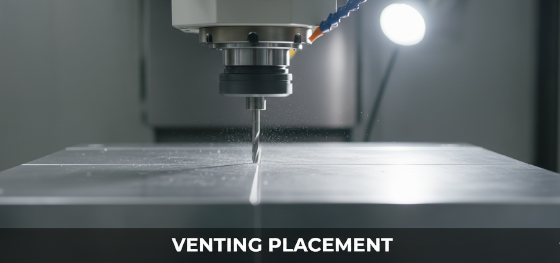
Most people think you just put a hole at the end of the mold and call it a day. In reality, Mold venting in RIM process is a puzzle. We have to put vents at every "dead end" in the design. If your robot fender has a complex curved lip, that lip acts like a hook that catches air. JUCHENG’s mold makers use 5-axis CNC to cut thin venting channels (usually about 0.05mm deep) right into the parting line of these hooks. This lets the gas escape but is too narrow for the thick liquid polyurethane to leak out, keeping the mess to a minimum.
Can I hide the vent marks on my part?
Yes. We place vents in "non-aesthetic" areas like the underside of a flange or behind a mounting boss so the customer never sees the small mark.
Flash gating is our favorite "dirty secret" for perfect parts. Instead of one small hole, we create a thin gap along the entire top edge of the mold. As the liquid rises, it pushes a wall of air out through this gap. This creates a thin "skin" of waste plastic called flash, which we later trim off with a robotic arm. This might sound wasteful, but it guarantees that every square inch of your diagnostic scanner’s front panel is 100% bubble-free. It's much cheaper to trim a little extra plastic than to throw away a whole housing because of a bubble in the middle of your logo.
Ribs and bosses are the hardest areas to vent. In industrial robot parts, these features provide the strength, but they are also air-trapping "wells." JUCHENG uses porous metal inserts or "Venting Pins" in these deep pockets. These pins allow air to bleed through the tool itself. We ensure these pins are perfectly flush with the mold surface, so they leave a mark no bigger than a pinhead. This attention to detail is how we achieve the structural integrity needed for heavy-duty AgTech hardware without the surface flaws that look like Plastic Part Defects.
The Tilt-Filling Trick: Using Gravity to Push Air Out
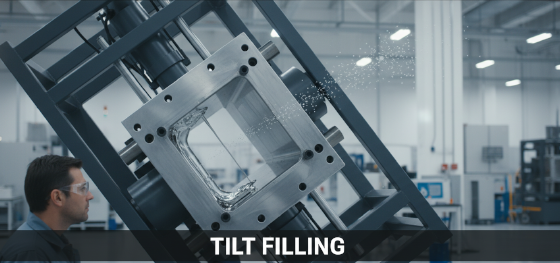
Sometimes, no matter how many vents you add, the air still won't move. This is when JUCHENG uses the "Tilt-Fill" method. We mount the entire 1,000kg mold onto a hydraulic tilting table. As the reaction injection molding process starts, we tilt the mold at an angle. This forces the liquid to flow into one corner first and gradually "climb" up the walls. This natural, uphill flow pushes the air ahead of it toward the top vents with zero turbulence. It’s a simple, low-tech trick that solves high-tech problems in large-scale molding.
Does tilt-filling add time to the cycle?
Only a few seconds for the machine to move, but it saves hours of hand-sanding and repair work on the finished parts.
Flow speed management is the partner to tilt-filling. If the liquid enters the mold too fast, it creates a "fountain effect," splashing and trapping air in its own waves. JUCHENG uses variable-speed pumps to slow down the injection at the start and speed it up once the air is safely pushed out. This "Slow-Fast-Slow" rhythm is the hallmark of an experienced RIM shop. It ensures that the Mold venting in RIM process has enough time to do its job without slowing down the overall production of your Beta fleet.
Material viscosity also plays a role in how well air escapes. In our Shenzhen hub, we pre-heat the Side A and Side B components to lower their viscosity, making them flow like water. This "Thinner" liquid is much better at squeezing air out of tight spots than a thick, gummy resin. We monitor these temperatures in real-time, ensuring that every shot is consistent. By controlling the heat, the tilt, and the speed, we eliminate the Injection Molding Problems that leave other manufacturers guessing why their parts are coming out with holes.
JUCHENG Hub: Eliminating Defects in the Shenzhen Shop

Dominating the [2026] large-format hardware market means delivering parts that are "Boringly Perfect." Jucheng Precision operates with a 24/7 problem-solving mindset in our Shenzhen precision manufacturing hub, delivering high-tolerance RIM components with lead times that keep your R&D moving. We provide a "Bridge to Production" that ensures your prototype robot or medical console is built on a foundation of solid, bubble-free plastic. We don't just sell molding; we sell the peace of mind that your hardware will survive the field.
Integrating your design with JUCHENG’s expertise ensures that your Mold venting in RIM process is optimized before the first tool is cut. We offer comprehensive DFM reviews within 24 hours, identifying potential air-traps or structural weak spots in your design. Whether you are building an autonomous tractor hood or a multi-part surgical housing, Jucheng Precision provides the rigid, precise, and *vented* foundations that keep your innovation moving through the high-stakes cycles and the years of hard labor.
Our facility is equipped with oversized hydraulic RIM presses and dedicated ISO 13485 quality labs, allowing us to manage the entire hardware lifecycle in one location. We manage the complexity of flow dynamics and tilt-filling so your engineering team can focus on the sensors and the software. By combining Shenzhen's speed with industrial-grade material verification and global quality standards, JUCHENG remains the preferred partner for the world's most aggressive MedTech and AgTech hardware challenges. Contact us today to start your next project.
FAQ: Real Answers for Bubbles and Molding Problems

Why can't I just sand off the air bubbles?
Bubbles often go deeper than the surface. Sanding them just opens up more holes, ruining the structural integrity of the part.
What is the maximum part length JUCHENG can vent?
We regularly vent and mold structural panels up to 2.5 meters in length using multiple strategic air-exit points.
Does vacuum venting make the tool much more expensive?
It adds about 15-20% to the tool cost but pays for itself by nearly eliminating scrap on high-value parts.
Can venting issues be fixed after the mold is made?
Yes. Since we use aluminum molds, we can easily CNC additional vents or add porous pins if new air traps are found.
How do you know where the air will get stuck?
We use specialized flow analysis software to predict exactly where the last bits of air will be squeezed.
Air traps and surface holes are absolute innovation killers for large-scale robotics. Partnering with Jucheng Precision ensures that your functional iterations are built with the clean-surface reaction injection molding process and specialized Mold venting in RIM process techniques the industry demands. Reach out to our Shenzhen manufacturing hub today for a complete DFM review and build the solid, bubble-free foundation your autonomous fleet requires.


