


You are an engineer designing a product for the global market. You send your design, which specifies the trusty 6061 aluminum, to a European supplier. They write back: "We recommend using 6082 instead."
Is this a bait and switch? Are they trying to sell you a cheaper, inferior material? Or is this a smart, region-specific recommendation?
This is a common scenario in global manufacturing. The debate of 6061 vs 6082 aluminum is not just about metallurgy. It is about geography, standards, and supply chains. This guide will clarify the confusion.
content:
Meet the Twins: Two Structural Workhorses
The Subtle Difference: A Bit More 'Give'
The Deciding Factor: Regional Availability and Standards
Your Global Manufacturing Partner
Meet the Twins: Two Structural Workhorses
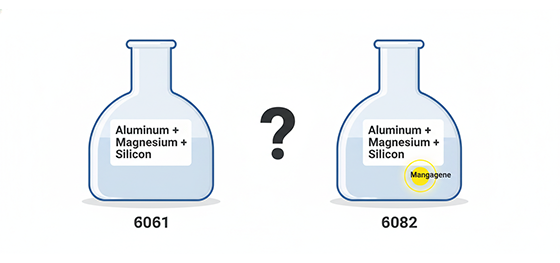
Think of 6061 and 6082 as very, very close siblings. Almost twins. Both are part of the 6000 series of cnc machining aluminum alloys. This means they both use magnesium and silicon as their primary alloying elements.
Both are heat-treatable to a high-strength T6 temper. Both have excellent corrosion resistance. Both are fantastic for machining and welding. They are both considered the "structural workhorses" of their respective regions.
Their chemical compositions are nearly identical. The only significant difference is that 6082 contains a slightly higher percentage of manganese. This tiny change in the recipe gives 6082 a subtly different personality.
The Subtle Difference: A Bit More 'Give'
That small amount of extra manganese makes 6082 slightly stronger. In the T6 temper, its minimum tensile strength is a little higher than 6061-T6.
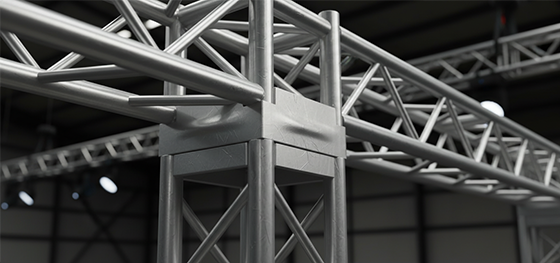
This gives it a slight edge in highly stressed structural applications. This is why it is commonly used in Europe for things like cranes, bridges, and high-load trusses for stage and event production. It has a little more "give" before it fails.
However, for the vast majority of applications, this strength difference is not significant. The performance of the two alloys is so similar that, in most cases, they can be considered interchangeable from a purely technical standpoint. A part designed for 6061 will almost always work perfectly if made from 6082, and vice versa.
The Deciding Factor: Regional Availability and Standards
So if they are so similar, why do both exist? The real reason is history and geography.
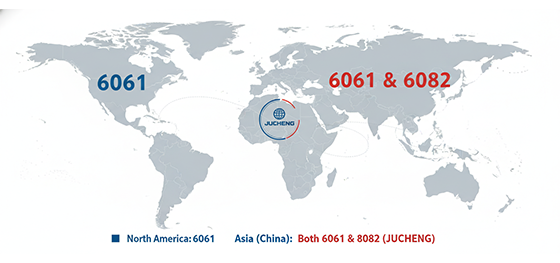
6061 is historically the dominant structural alloy in North America. It is specified under US standards like ASTM and SAE. It is widely available in the US in every possible form (plate, bar, extrusion).
6082, on the other hand, is the dominant structural alloy in Europe. It is specified under European Norm (EN) and British standards. It is the common, readily available workhorse alloy across the UK and the continent.
This is the real answer to the 6061 vs 6082 aluminum debate. The choice is often not made by the engineer, but by the supply chain. A European manufacturer will recommend 6082 because it is what they have in stock. An American manufacturer will recommend 6061 for the same reason.
| Factor | 6061 Aluminum | 6082 Aluminum |
|---|---|---|
| Primary Region | North America | Europe |
| Governing Standard | ASTM / SAE | EN / BS |
| Tensile Strength (T6) | ~310 MPa | ~310-340 MPa (Slightly Higher) |
| Interchangeable? | Yes, for most applications | |
Your Global Manufacturing Partner

For a company designing a product for the global market, this can be a headache. What material should you put on your drawing?
This is where working with a truly global manufacturing partner is a huge advantage.
At JUCHENG, we are located in the heart of Asia's manufacturing hub. We have access to a massive global supply chain. This means we stock and can easily source BOTH 6061 and 6082 aluminum.
We are fluent in both sets of standards. We understand the subtle differences. We can look at your design and help you make the smartest choice. If your part is not highly stressed, we might recommend the more available and cost-effective option. If your part needs to meet a specific European certification, we will ensure it is made from certified 6082.
This expertise removes the headache. It gives you the confidence that your part will be made from the right material, to the right standard, no matter where in the world your product will be sold.

