


Your project requires a good, all-around aluminum alloy. You know that 6061 is the industry workhorse. It is strong, weldable, and easy to machine. For most jobs, it is the perfect choice. But what if "good" is not good enough?
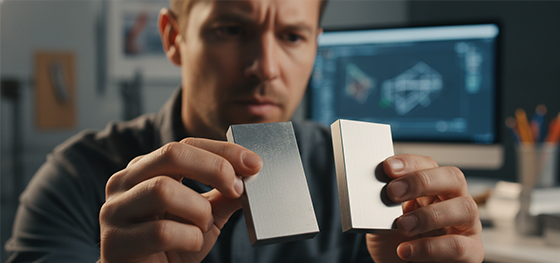
What if your product's success depends not just on its strength, but on its flawless, beautiful surface finish? What if you need to create a complex, intricate shape that demands a more cooperative material?
This is where a subtle but critical choice emerges. This is the world of aluminum 6061 vs 6063. It is a decision between a trusted engineer and a gifted artist.
content:
Two Brothers from the Same Family
The Defining Difference: Extrudability and Finish
The Price of Strength
Making the Right Call for Your Project
Two Brothers from the Same Family
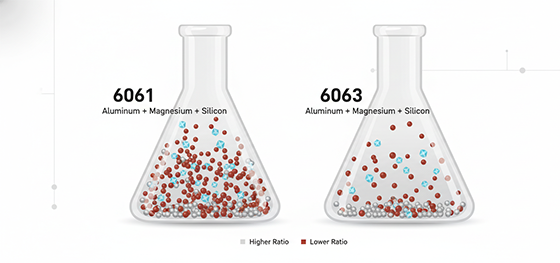
On the surface, 6061 and 6063 aluminum look and feel very similar. They are like two brothers. They both belong to the 6000 series of aluminum alloys, which means their primary alloying elements are magnesium (Mg) and silicon (Si).
Both are heat-treatable. Both have good corrosion resistance. Both are popular choices in the world of cnc machining aluminum.
The key difference lies in the recipe. 6061 contains a significantly higher percentage of these alloying elements compared to 6063. This seemingly small difference in their chemistry gives them two very distinct personalities and purposes.
The Defining Difference: Extrudability and Finish
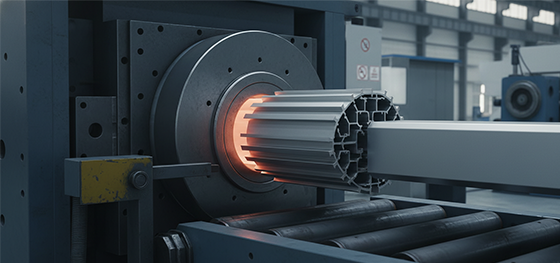
The lower alloy content of 6063 gives it its superpower. It has a lower hardness and is more ductile. This makes it far easier to push through a die in the extrusion process.
This "extrudability" is why 6063 is famously known as the "architectural alloy." It can be formed into incredibly complex and intricate cross-sectional profiles with very thin walls. Think of the complex, multi-chambered frames of a modern window system or a curtain wall. This is a job that 6063 was born for.
Its other, even more important, advantage is its superior surface finish. The fine grain structure and chemical composition of 6063 make it the perfect canvas for anodizing. It produces a much more uniform, visually appealing, and flawless anodized finish than 6061. For any product where the final cosmetic appearance of the anodized surface is the number one priority (like an Apple product), 6063 is the superior choice.
The Price of Strength
So, if 6063 has a better finish and is easier to extrude, why would anyone use 6061? The answer is simple: strength.
The higher alloy content in 6061-T6 makes it significantly stronger, stiffer, and harder than 6063-T6. Its yield strength can be over 35% higher.
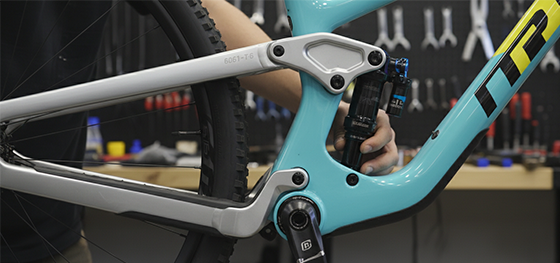
This makes 6061 the undisputed champion for structural applications. If your part is a load-bearing bracket, a machine chassis, a bicycle frame, or any component where mechanical performance is the primary concern, 6061 is the correct and safer choice. Its strength and reliability are why it is the workhorse of the engineering world.
Making the Right Call for Your Project

The choice in the aluminum 6061 vs 6063 debate is a classic trade-off between beauty and brawn.
| Property | Aluminum 6063-T6 ("The Artist") | Aluminum 6061-T6 ("The Engineer") |
|---|---|---|
| Superpower | Superior Finish & Extrudability | Higher Strength |
| Yield Strength | ~145 MPa (Fair) | ~276 MPa (Good) |
| Primary Use | Architectural, Cosmetic | Structural, General Purpose |
| Best For | Intricate Extrusions, Anodized Finishes | Machined Parts, Welded Frames |
You choose 6063 when the look and feel of the surface is a critical part of your product's value proposition. You choose it when you need to create complex custom profiles via extrusion.
You choose 6061 when the part has a job to do. When it needs to be strong, reliable, and cost-effective.
A good manufacturing partner understands this subtle but critical distinction. At JUCHENG, we are fluent in the language of both alloys. We can help you make the smart choice that aligns with your product's true purpose.

