


Hardware realization speed remains the ultimate judge of autonomous market entry. In the high-velocity environment of 2026, the transition from a digital CAD model to a physical AGV and AMR prototyping phase is a race against capital exhaustion. Software algorithms for navigation and obstacle avoidance can be simulated in a cloud environment in seconds, but the physical chassis—the motor mounts, the sensor brackets, and the protective skins—must survive the violent realities of the factory floor. If your first five beta-test robots take three months to manufacture, your market data arrives too late, and your venture funding evaporates. Navigating this requirement for extreme iteration velocity requires the strategic deployment of AGV and AMR Parts manufacturing protocols. Jucheng Precision operates as a high-fidelity hardware sanctuary in the Shenzhen precision manufacturing hub, providing the multi-process depth needed to deliver walking or rolling hardware in days, not months. We don't just "supply parts"; we engineer an integrated iterative engine that ensures your first mechanical manifestations are structurally sovereign and boardroom-ready.
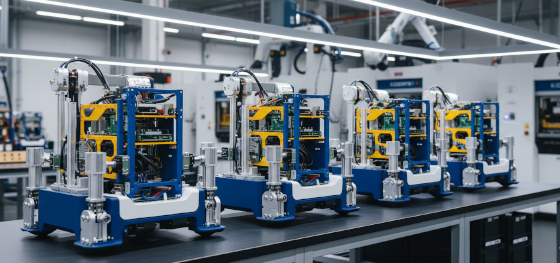
Establishing a resilient robotics roadmap demands the absolute rejection of "single-vendor" limitations. Amateurs often spend forty percent of their R&D cycle managing the logistics between a CNC shop that doesn't understand bionic tolerances and a 3D print farm that provides warped plastic. Jucheng Precision eliminates this "Coordination Friction" by providing an integrated ecosystem of 5-axis CNC, vacuum casting, and additive manufacturing. Whether you are developing a low-profile sorter or a heavy-duty autonomous pallet mover, our facility provides the material science and metrological rigor required for 2026 market entry. We turn "Bill of Materials" chaos into "Single-Source" certainty, delivering functional Alpha units while the iron is still hot. This guide deconstructs the necessity of hybrid manufacturing, the physics of internal fitment checks, and why JUCHENG’s "BOM Orchestration" is the mandatory foundation for anyone developing AGV and AMR prototyping projects for global fulfillment.
Iteration Velocity: Why robotics startups must fail fast?
Space Audits: Using 3D printing for internal fit checks
Cosmetic Authority: Vacuum casting for functional Alpha units
JUCHENG Protocol: Orchestrating the entire robotic BOM
Frequently Asked Questions: AGV Prototyping
Iteration Velocity: Why robotics startups must fail fast?
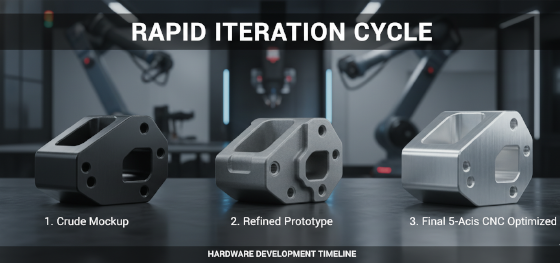
Mechanical agility dictates the survival of disruptive Ag-tech and warehouse robotics startups. The primary reason AGV and AMR prototyping fails is the inability to correct "Fit and Finish" errors found during early assembly. In a mobile robot, the interior is a dense puzzle of batteries, motors, and high-frequency sensors. A single clearance error of 0.5mm can halt an entire project. Jucheng Precision recognizes that 2026 robotics development requires a "fail fast" mentality. We utilize Low Volume Injection Molding and rapid CNC to ensure that if a structural flaw is identified on Monday, a corrected physical part is back on your assembly bench by Thursday. This speed allows your design team to iterate through three versions of a sensor mount in the time it takes a competitor to receive their first set of parts. We provide the manufacturing insurance needed to ensure your hardware iterations are measured in hours, allowing you to secure your next funding round with physical proof of progress.
Space Audits: Using 3D printing for internal fit checks
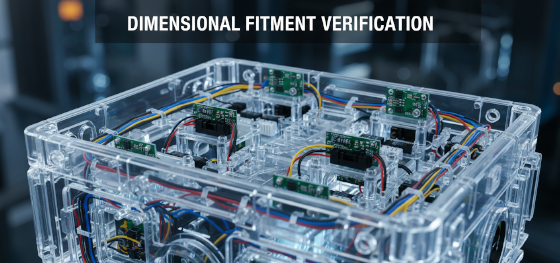
Dimensional sovereignty and sub-micron resolution are mandatory for electronic "Space Audits." When executing AGV and AMR prototyping, the internal frames and brackets that house the logic boards and LiDAR units require extreme geometric complexity. Jucheng Precision utilizes industrial-grade Stereolithography (SLA) and Multi Jet Fusion (MJF) 3D printing for this phase. SLA provides the crystalline clarity needed to visually verify cable routing and connector clearances, while MJF with Carbon-Fiber Nylon provides the high-stiffness foundation for internal structural racks. We don't use these additive methods for your final drive-wheels, but they are the undisputed kings of the "Fit-Check" phase. By delivering full-scale internal mockups in 48 hours, we ensure your service robots have the assembly integrity intended in the digital CAD file before you commit to the high-stakes world of subtractive metalwork.
Cosmetic Authority: Vacuum casting for functional Alpha units
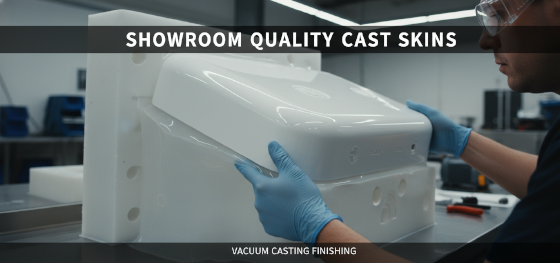
Visual authority dictates the perceived value of the machine. A robot dog or a hospital sorter covered in rough, layered 3D-printed shells looks like an amateur experiment, instantly repelling high-end corporate clients and investors. AGV and AMR prototyping at Jucheng Precision leverages polyurethane vacuum casting to solve this "Cosmetic Gap." By machining a single, highly polished master pattern, we create a flexible silicone tool capable of pouring 10 to 20 identical copies of your robot’s exterior armor. We utilize specialized resins that simulate the impact strength of ABS and meet UL94 V-0 fire safety standards. Our in-house finishing department then applies automotive-grade 2K paints and silk-screened logos, delivering a showroom-ready exterior that reflects the sophisticated AI running beneath it. You achieve the visual impact of a mass-produced product on a prototype budget, ensuring your Alpha units are ready for global marketing photography.
JUCHENG Protocol: Orchestrating the entire robotic BOM
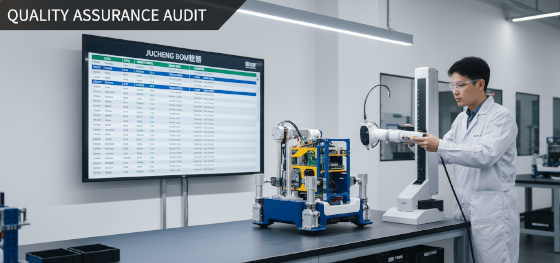
Manufacturing excellence at Jucheng Precision is built on the foundation of single-source accountability. We don't believe you should manage three vendors for a single robotic prototype. Our integrated facility houses over 150 machines, orchestrating the manufacture of your entire robotic Bill of Materials (BOM). We route your heavy steel chassis to our sheet metal wing, your high-torque actuators to our 5-axis CNC bay, and your cosmetic skins to our vacuum casting cleanrooms. This vertical integration ensures zero data loss; the engineers who perfected your CNC machining LiDAR sensor mounts are the same experts who verify the fitment of your overmolded bumpers. We provide full material lot traceability and CMM dimensional inspection reports for every batch, providing the "Paper Trail of Quality" required for eventual medical or automotive tier-certification. Stop gambling your venture growth on slow vendors. Leverage our decade of multi-process mastery to validate rapidly, scale responsibly, and maintain a zero-inventory balance sheet.
Frequently Asked Questions: AGV Prototyping
Question: How fast can JUCHENG deliver a functional AGV and AMR prototyping kit?
Answer: By executing CNC machining, 3D printing, and vacuum casting concurrently in our integrated facility, we typically deliver complete, ready-to-assemble prototype kits in 10 to 14 business days from CAD approval.
Question: Can I test real production plastics during the prototyping phase?
Answer: Yes. By utilizing our rapid aluminum prototype injection molding services, you can inject real engineering thermoplastics like Glass-Filled Nylon or Polycarbonate to verify the exact structural performance and shrinkage before mass production.
Question: Do you provide secondary finishing for Large AMR enclosure manufacturing prototypes?
Answer: Absolutely. Our finishing lab provides high-gloss painting, custom Pantone color matching, and laser-marking for control panel icons, ensuring your prototypes have a professional, retail-ready appearance.
Question: How do you ensure the precision of sensor mounts in AGV and AMR prototyping?
Answer: We prioritize 5-axis CNC machining for all sensor mounting interfaces, achieving +/- 0.01mm tolerances and providing CMM reports to guarantee that your LiDAR and cameras are perfectly aligned with the robot’s coordinate system.

