


Custom sheet metal brackets do not have a dependable price based on quantity alone. Material grade, sheet thickness, flat size, bends, hardware, finish and inspection all affect the quotation. A small L-bracket and a welded mounting assembly can have the same order quantity and very different costs.
For a useful estimate, separate one-time preparation from the work repeated on each part. Then compare suppliers using the same drawing revision and finished-part requirements. This guide explains that comparison and the information to send for a sheet metal fabrication quotation.

What makes up a bracket quotation?
Ask for the quoted scope rather than assuming that every supplier includes the same operations. A practical cost model is: allocated setup and tooling, plus material, cutting, forming, hardware, finishing, inspection and packaging. Freight and destination charges should be identified separately when comparing delivered cost.
| Cost item | Information needed | Useful comparison question |
|---|---|---|
| Material | Grade, thickness, stock form and required certification | Is the same material quoted, and are substitutions permitted? |
| Cutting and preparation | Flat size, cut length, holes, deburring and edge requirements | Does the quotation include deburring and all cut features? |
| Forming | Bend radii, angles, flange lengths, directions and tolerances | Can the geometry use available tooling, or is additional tooling required? |
| Hardware and assembly | Fastener part numbers, installation direction and weld requirements | Are hardware purchase, installation and verification included? |
| Finish | Coating specification, colour, masking, cosmetic faces and corrosion requirements | Are pretreatment, masking and any minimum batch charge included? |
| Inspection | Critical dimensions, datums, sampling and report requirements | Which characteristics and documents are included in the price? |
| Setup and tooling | Order quantity, repeat releases and any dedicated tool requirement | What is charged once, what is charged per release, and who owns dedicated tools? |
How quantity changes cost
Programming and setup spread across more parts can reduce their contribution to unit cost. That does not make setup free, and it does not guarantee a particular unit price. Repeat orders can still require setup, material purchasing or a new review when the drawing changes.
Laser cutting and press-brake forming can be considered for prototypes and smaller releases. Punching or dedicated stamping may become attractive for a repeat design, but the decision depends on geometry, tooling investment and expected releases. There is no universal quantity at which every bracket should switch process.
Request quotation options for the quantities you actually expect to order. Ask suppliers to show dedicated tooling separately and explain which assumptions must remain unchanged for repeat pricing.
Ribs and thinner sheet: evaluate the whole design
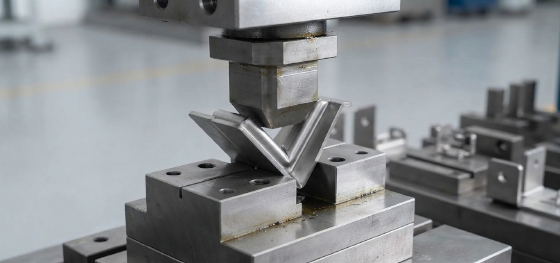
A rib, return flange or other formed feature may improve stiffness in a selected direction. It also changes tooling and forming work. Reducing thickness requires checking the load case, deflection, yielding, fatigue where relevant, fastener loading and available forming geometry.
A ribbed 1.5 mm sheet cannot be assumed to replace a flat 3.0 mm sheet under every load. Have the design assessed and validated for its application, then quote both approved options. Compare finished-part cost, including the rib operation and tooling, rather than claiming a fixed percentage saving from material thickness alone.
Include hardware, finish and assembly
Self-clinching nuts, studs and standoffs add component and installation costs. Specify the fastener part number and check its approved sheet thickness, hardness, hole requirements and installation conditions. Direct tapping may or may not suit a thin sheet; the required thread engagement and load must be assessed for the actual design.
Reducing unnecessary fastener variants can simplify purchasing and installation. However, standardizing threads should follow the assembly requirements. Also identify any cosmetic surface that must be protected during forming or installation, and define an acceptable finish instead of promising a universally scratch-free part.
Coating can affect both price and fit. State coating thickness where it affects assembly, identify masked threads or contact surfaces and define the corrosion exposure. Bare steel, pre-coated steel, stainless steel and coated aluminum require different reviews; no material is always the cheapest finished solution.
A bracket quotation example with explicit assumptions
Illustrative RFQ example, not a customer quote or a price offer: consider an L-bracket specified in 2.0 mm 5052-H32 aluminum, with two mounting holes, one bend and no installed hardware. The example gives no service-load rating; engineering must approve the design for its application.
To make that design quotable, attach a dimensioned drawing with the flat size, hole sizes and locations, bend angle and inside radius. Identify critical formed dimensions, deburring, finish and the inspection records needed. Ask for separate quotations for 10 and 100 pieces, with delivery to the same destination.
For comparison, request a second option with a specified coating and a defined masking scope. The change can then be discussed as an additional finish operation rather than interpreted as a different material or machining price. Record quote date, currency, validity and delivery terms. Actual prices require supplier quotations against the completed drawing.
Prepare a drawing-based request for Jucheng
- Send the current drawing and model, with part number, revision and units.
- State material grade, thickness, quantity and anticipated repeat releases.
- Mark dimensions that control fit and identify datums for measurement.
- Specify finish, cosmetic faces, hardware and assembly requirements.
- List material records, inspection reports and packaging needs.
- Provide the destination and target arrival date so delivery can be quoted separately from production.
The project quotation should confirm accepted requirements, process scope, tooling charges and timing. A generic website article cannot confirm a universal zero-tooling-fee policy or delivery guarantee. Use the quotation form to submit the actual part requirements.
Common cost questions
Can I estimate price from a photograph?
A photograph can explain the application, but it does not establish dimensions, material, tolerances or finish. An early estimate should list its assumptions and be updated when the controlled drawing is available.
Does standard bending mean no setup cost?
Available tooling may avoid a dedicated tool purchase, while programming, setup and forming work still contribute to the quotation. Ask how each is included.
Should I loosen every tolerance to save money?
No. Keep requirements needed for fit and function. Review noncritical requirements with engineering and approve any change before quoting or production.
Where can I check design guidance?
Protolabs' sheet metal design guide discusses design features and tooling constraints. Supplier-specific guidance should be checked against the process proposed for your drawing. For general dimensional tolerances, see our ISO 2768 resource and worked examples.

