


The prototype looks perfect. The joints are clean. The frame is straight. You take your new aluminum robot chassis to the test bench. You apply the first torsional stress test. And then you hear it. A sharp crack. A critical weld has failed.
Why did it break? This is one of the most frustrating questions in metal working. The answer is that aluminum welding is not like welding steel. It is a far more demanding process.
It has two invisible enemies that are constantly trying to ruin your weld. Understanding and defeating these enemies is the secret to a strong, reliable aluminum product.
content:
The Crime Scene: A Broken Weld
Suspect #1: The Stubborn Oxide Layer
Suspect #2: The Heat Thief
The Solution: A Process of Intense Cleaning and Focus
Why This Demands an Expert Partner
The Crime Scene: A Broken Weld

When an aluminum weld fails, it often looks like a clean break. If you look closely at the broken surface, you might see small, dark specks or a grainy texture. This is evidence. It tells you that the two pieces of metal never truly fused into one.
It was like trying to glue two dusty surfaces together. The glue just stuck to the dust, not to the surfaces themselves. The weld had no internal strength. This is called a "lack of fusion." It is the most common cause of weld failure. And it is usually caused by our first suspect.
Suspect #1: The Stubborn Oxide Layer
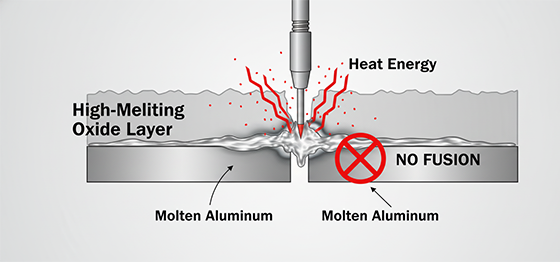
Aluminum's greatest strength is also its greatest weakness in welding. It instantly reacts with air to form a thin, tough, transparent layer of aluminum oxide. This layer is fantastic at preventing corrosion.
But it is a disaster for welding. The melting point of this oxide layer is about 2072°C (3762°F). The melting point of the aluminum metal underneath is only about 660°C (1220°F).
This means that when you try to weld it, you can have molten aluminum trapped inside a solid "bag" of aluminum oxide. The molten puddles from the two parts cannot mix. They cannot fuse. The oxide layer acts as a wall between them.
If this oxide is not completely removed right before and during the welding process, it will get trapped inside the weld. This is what causes those dark specks and the weak, grainy structure.
Suspect #2: The Heat Thief
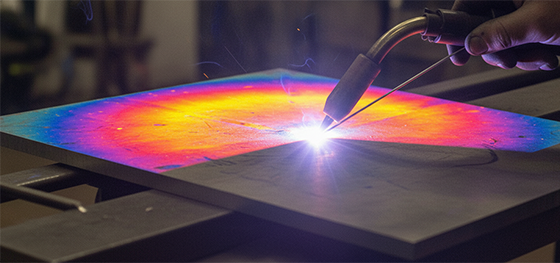
The second enemy of aluminum welding is the metal's own nature. Aluminum is an incredible conductor of heat. This is great for a heat sink. It is terrible for welding.
As soon as you apply the intense heat of the welding torch to one spot, the aluminum acts like a thief. It rapidly pulls that heat away and spreads it across the entire part.
This makes it very difficult to create and maintain a stable molten "puddle" to work with. You have to pump a huge amount of energy into the part just to get it to melt. But if you use too much heat, you can easily melt a hole straight through the part, especially on thin sheets.
This balancing act between needing a lot of heat, but not too much, is extremely difficult. It requires a huge amount of skill and a very specific welding process.
The Solution: A Process of Intense Cleaning and Focus
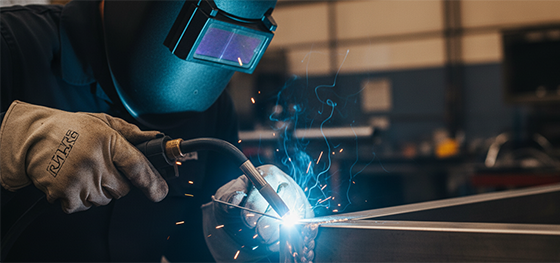
The professional solution for high-quality aluminum welding is almost always TIG (Tungsten Inert Gas) welding. This process is designed to defeat both enemies.
First, it uses an alternating current (AC). The AC electricity rapidly switches direction. In one part of the cycle, the current flows from the part to the torch. This action acts like a powerful electronic scrub brush. It blasts away the stubborn oxide layer. This is the "cleaning" action.
In the other part of the cycle, the current flows from the torch to the part. This provides the intense, focused heat needed to melt the aluminum and create the weld puddle.
TIG welding also gives the welder a huge amount of control. They use a foot pedal to vary the heat in real-time. They use their other hand to carefully feed a filler rod into the weld puddle. This allows them to manage the "heat thief" and create a perfect, strong weld.
Why This Demands an Expert Partner

TIG welding is a highly skilled art. It is often called the "brain surgery" of the welding world. It takes years of practice to master.
This is why your choice of manufacturing partner is so important. A cheap shop with inexperienced welders will give you welds that look okay, but are full of hidden oxide and lack fusion. They will fail under stress.
A professional partner like JUCHENG has a team of certified, expert welders. They understand the science. They have the skill. They have the right equipment. They know how to defeat the two enemies of aluminum.
They deliver parts with welds that are not just beautiful. They are deeply fused, clean, and incredibly strong. They deliver the performance and reliability your project demands.

