


Hanging massive robotic arms on flimsy metal guarantees catastrophic factory accidents. Extreme kinetic torque generated by high-speed assembly motors will instantly rip cheap stamped joints apart during rapid deceleration. Specifying an unyielding Automation machine bracket completely neutralizes this mechanical violence, locking heavy machinery permanently into place. Relying on thin folded plates for these critical junctions destroys your production line the moment a heavy payload shifts unexpectedly.
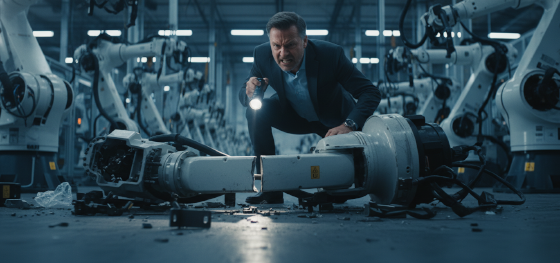
Testing structural integrity before mass deployment saves immense capital. Developing a rugged Industrial enclosure prototype alongside your heavy mounting hardware ensures the entire robotic cell survives brutal factory vibrations. Engineers must push these physical models to absolute failure in the lab before ever authorizing global commercial rollout.
Balancing raw subtractive cutting against hydraulic folding determines your final tooling budget. Let's explore why solid billets defeat metal fatigue, exactly when to utilize heavy folding brakes, and how to protect these vital joints from aggressive industrial corrosion.
content:
Defeating Robotic Torque: Why Weak Joints Snap
Subtractive Milling Versus Hydraulic Folding
Surface Treatments: Defeating Factory Wear and Tear
Seamless Integration: Connecting to Control Panels
Turnkey Hub: Delivering Heavy Industrial Armor
FAQ: Honest Answers About Yield Strength and Coatings
Defeating Robotic Torque: Why Weak Joints Snap
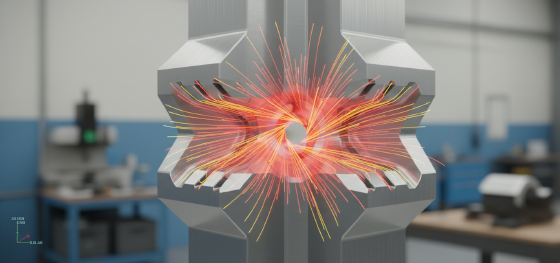
Why do fast-moving assembly robots frequently tear their mounting bases right out of the floor?
Continuous robotic motion generates aggressive harmonic frequencies that constantly stress weak mounting points; cheap stamped metal slowly develops microscopic fatigue cracks until the entire structure violently shears off mid-operation.
Carving your primary load-bearing Automation machine bracket out of solid aerospace aluminum completely neutralizes this catastrophic threat. Subtractive milling eliminates the weak stress points typically introduced by sloppy manual welding or thin sheet bending operations.
Securing high-speed motors requires absolute zero-gap tolerances across all mating faces. High-end CNC machines guarantee perfectly flat mounting surfaces, ensuring the robotic arm never vibrates out of alignment during crucial, high-speed production runs.
Subtractive Milling Versus Hydraulic Folding
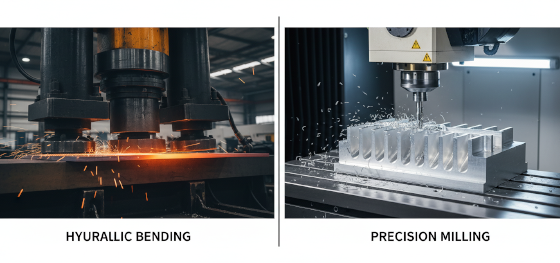
Budgeting for massive structural supports forces engineers to choose between two drastically different factory processes. The engineering matrix below highlights exactly when to deploy solid cutting versus heavy plate bending.
| Fabrication Method | Primary Engineering Advantage | Best Industrial Application |
|---|---|---|
| 5-Axis CNC Milling (Solid Billet) | Absolute unyielding rigidity, microscopic tolerances, zero weak weld seams. | High-torque robotic arm bases and precise motor mounts. |
| Heavy Hydraulic Bending | Extremely fast production speed, vastly lower material costs for large parts. | Massive exterior machine guards and static electrical cabinets. |
| Hybrid (Milled Joints + Folded Plates) | Perfect balance of ultimate structural strength and commercial cost efficiency. | Complete automated assembly cells and conveyor systems. |
Thick metallic plates folded on massive hydraulic brakes provide incredible strength at a fraction of the raw billet cost. Smart engineers rely heavily on this sheet metal method for larger, less complex structural frames holding heavy static weights.
Complex three-dimensional motor mounts demand advanced 5-axis cutting. When your geometry requires intricate cooling fins or precise internal bearing journals, milling raw solid blocks remains the only mathematically viable option for survival.
Surface Treatments: Defeating Factory Wear and Tear
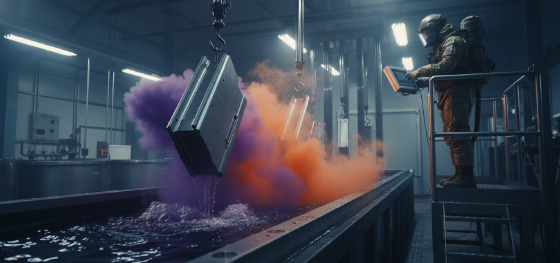
What happens to raw aluminum exposed to aggressive manufacturing coolants daily?
Bare metal oxidizes rapidly and pits deeply when bombarded by caustic airborne factory chemicals; leaving structural joints unprotected guarantees rapid material decay over long deployment cycles.
Submerging these milled components into chemical anodizing baths creates brutal, scratch-resistant oxide armor. This tactical ceramic-like layer actively repels corrosive fluids while providing a premium, non-reflective aesthetic finish for high-end equipment.
Applying thick electrostatic powder coats delivers even stronger physical impact protection. Baked polymers wrap the Automation machine bracket completely, deflecting flying metal chips, aggressive tool drops, and heavy forklift bumps effortlessly.
Seamless Integration: Connecting to Control Panels
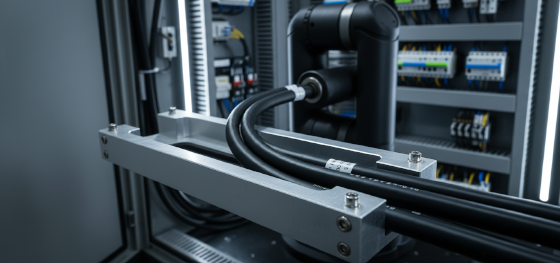
How do designers protect vital communication wires passing through these heavy joints?
Routing thick power cables from the moving robotic arm into the main brain requires seamlessly integrated hardware; sloppy external connections expose delicate wiring to crushing mechanical pinch points.
Executing precise Control panel enclosure fabrication alongside your heavy motor mounts ensures flawless physical integration. We laser-cut precise cable routing channels directly into the thick metallic plating, shielding your data streams completely.
Consolidating both manufacturing processes prevents massive assembly delays. When the massive electronic cabinet perfectly aligns with the heavy-duty mounting joints, your factory technicians can bolt the entire robotic cell together instantly without messy manual drilling.
Turnkey Hub: Delivering Heavy Industrial Armor
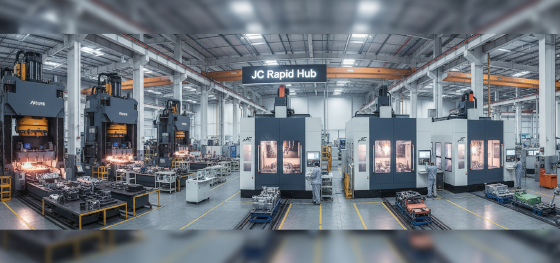
Why must procurement teams avoid splitting orders between different machine shops?
Fragmenting your heavy industrial supply chain across multiple brokers invites catastrophic tolerance mismatches; shipping raw milled joints to a separate facility for powder coating guarantees severe transit scratching.
Operating our massive precision manufacturing hub eliminates this logistical nightmare entirely. JC Rapid executes the heavy milling, laser cutting, hydraulic folding, and final chemical coating completely under one integrated factory roof.
Stop trusting unyielding payloads to cheap stamped metal. Send your complex CAD files to our engineering team today for a ruthless structural audit and secure indestructible factory hardware that never breaks.
FAQ: Honest Answers About Yield Strength and Coatings
Does hollowing out the mounting joint drastically reduce its crash survival rate?
Executing proper topological optimization removes dead weight strictly from zero-stress zones, maintaining ultimate yield strength while actively slashing your raw material and spindle time invoices.
Can I weld an aluminum mounting block directly to a steel factory frame?
Welding dissimilar metals causes immediate galvanic corrosion and weak bonding. You must utilize heavy-duty bolted fasteners and isolating polymer gaskets to join aluminum joints to steel beams safely.
Why do some thick metal parts warp aggressively during the CNC cutting phase?
Raw metal billets often trap internal manufacturing stress. As the cutter removes material, this stress violently releases, warping the part. We strictly utilize stress-relieved aerospace blocks to prevent this.
Will thick powder coating ruin the precise tolerances of my motor mounting holes?
Heavy polymers definitely add measurable thickness to the surface. Our technicians proactively mask all critical threaded holes and flat mating faces before baking to ensure perfect assembly alignments.

