


Building hardware for aggressive factory floors requires absolute structural defense. Standard commercial shells instantly fail when exposed to crushing vibrations, toxic chemical dust, and extreme temperature fluctuations. Securing an unyielding Industrial enclosure prototype forces engineering teams to confront these brutal realities long before funding massive mass-production runs. Skipping this physical validation guarantees your expensive internal motherboards will short-circuit within weeks of deployment.
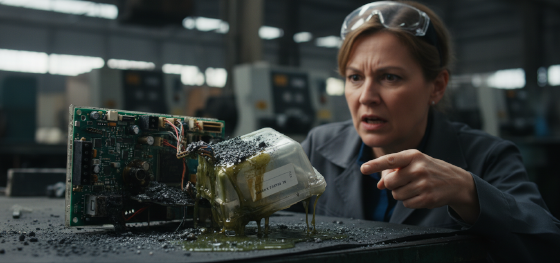
Procurement directors constantly underestimate the financial liability of poorly sealed industrial cabinets. Leaking moisture or highly conductive metallic dust ruins expensive control boards rapidly, triggering catastrophic assembly line shutdowns. Partnering with JC Rapid allows your team to test combat-ready hardware that mathematically guarantees ultimate survival in the harshest global sectors.
Validating complex geometry prevents massive tooling debt later. Let's dissect the most aggressive environmental hazards, compare specialized manufacturing pathways for structural armor, and explore how diverse materials secure critical diagnostic instruments.
content:
Severe Factory Challenges: Designing Indestructible Armor
Core Manufacturing Technologies: Milling, Folding, and Casting
Heavy-Duty Material Selection: Aluminum, Steel, and Polymers
Testing and Measurement Applications: Protecting Sensitive Diagnostics
Turnkey Factory Hub: Accelerating Industrial Hardware Development
FAQ: Honest Answers About Ingress Protection and Tooling
Severe Factory Challenges: Designing Indestructible Armor
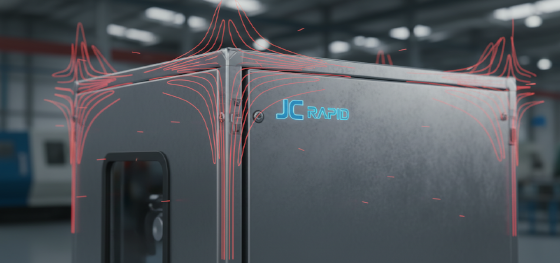
Why do standard hardware boxes disintegrate inside heavy manufacturing facilities?
Constant exposure to airborne metallic dust, high-pressure washing fluids, and aggressive harmonic vibrations violently tears apart weak plastic joints and compromises basic rubber seals.
Engineers designing heavy-duty equipment face a terrifying battle against environmental ingress. Tiny gaps in a chassis act like magnets for corrosive industrial lubricants. If airborne coolant mist enters the main control board, the entire robotic cell shorts out instantly, costing factories tens of thousands of dollars in downtime.
Defeating these hazards requires incredibly tight geometric tolerances across every single mating surface. We mathematically calculate precise compression ratios for elastomeric gaskets, guaranteeing your hardware passes brutal NEMA and IP rating audits flawlessly.
Core Manufacturing Technologies: Milling, Folding, and Casting
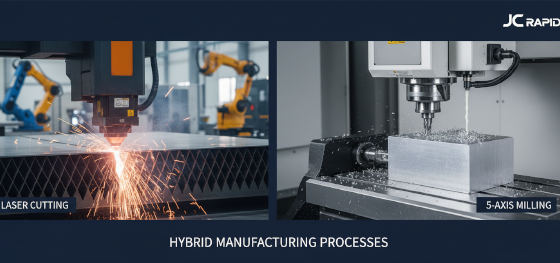
Choosing the correct fabrication pathway dictates both prototype speed and structural integrity. Bending thick metallic plates through robust Control panel enclosure fabrication provides massive structural walls capable of housing heavy electrical breakers and ruggedized industrial touchscreens efficiently.
Supporting massive internal robotic arms requires flawless subtractive milling. Executing precise Automation machine bracket manufacturing carves indestructible solid aluminum joints that easily absorb brutal kinetic torque without ever bending or flexing under extreme payloads.
Designing organic, complex aesthetic shells for medical or scientific devices demands advanced polymer replication. We pour specialized polyurethane resins under vacuum environments to deliver a stunning Laboratory instrument casing that perfectly mimics expensive injection-molded plastics.
Heavy-Duty Material Selection: Aluminum, Steel, and Polymers
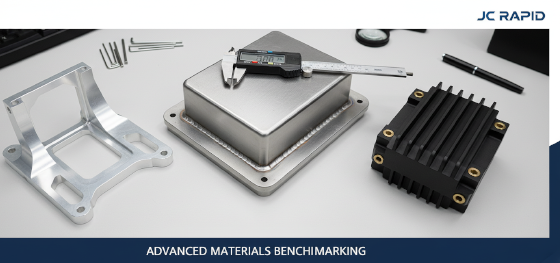
Specifying the wrong raw ingot destroys your commercial budget immediately. The engineering matrix below highlights exactly when hardware teams must upgrade their foundational metallurgy to survive extreme abuse.
| Heavy-Duty Material | Primary Engineering Advantage | Best Commercial Application |
|---|---|---|
| Aerospace Aluminum (6061/7075) | Ultimate thermal extraction and lightweight impact resistance. | Heavy motor brackets and main exterior chassis walls. |
| Stainless Steel (316L) | Absolute chemical immunity and exceptional compressive yield strength. | Corrosive chemical processing controls and marine panels. |
| Flame-Retardant ABS (UL94-V0) | Halts electrical fires instantly while providing excellent insulation. | Internal high-voltage component covers and sensor mounts. |
Relying exclusively on heavy stainless steel provides unmatched chemical defense but brutally destroys CNC machining drill bits, driving up your piece price. Smart designers isolate this expensive alloy strictly for exterior shells while utilizing cheaper aluminum for internal skeletons.
Testing and Measurement Applications: Protecting Sensitive Diagnostics
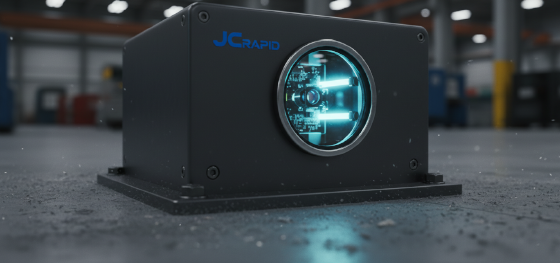
How do factories prevent microscopic vibrations from ruining expensive diagnostic equipment?
By milling incredibly dense, unyielding foundational chassis blocks that actively absorb harmonic resonance, keeping fragile optical sensors completely isolated from factory floor tremors.
Quality control technicians rely heavily on unyielding Test fixture CNC machining to hold sensitive assemblies perfectly still during automated laser inspections. Any dimensional warping in these physical fixtures instantly creates false-positive rejection data.
Protecting million-dollar spectrometers requires wrapping them in flawless metallic armor. Milling a dedicated Measurement equipment housing ensures vital internal processing boards remain permanently shielded from both destructive kinetic shocks and invisible electromagnetic interference.
Turnkey Factory Hub: Accelerating Industrial Hardware Development
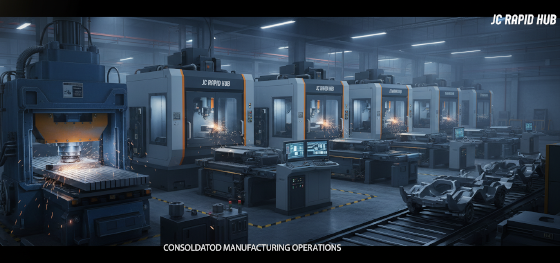
Shipping raw hardware to a separate paint shop introduces severe logistical friction and transit damage. Fragmented supply chains inevitably result in scratched surfaces and compromised watertight seals before the parts even reach final assembly.
Consolidating your entire physical prototype build inside our massive turnkey hub eliminates this toxic liability entirely. We execute the heavy milling, precise laser cutting, and final powder coating completely under one integrated factory roof.
Stop risking your flagship commercial equipment on unverified, leaky enclosures. Send your complex CAD assemblies to our engineering department today for a ruthless DFM audit, securing flawless hardware built to survive industrial warfare.
FAQ: Honest Answers About Ingress Protection and Tooling
Do you install threaded brass inserts and rubber gaskets before shipping the prototypes?
Absolutely. Our assembly technicians press-fit high-strength brass inserts and install custom elastomeric seals so your hardware arrives completely ready for motherboard integration.
Will thick industrial powder coating ruin the precise tolerances of folded metal doors?
Thick polymers naturally add measurable dimensions. We proactively mask critical mating faces and hinge points before baking to guarantee smooth, friction-free door operations.
Can I use a 3D-printed plastic model to test my equipment's thermal exhaust limits?
Plastics trap heat violently. We highly advise against using basic printed polymers for thermal testing; you must utilize milled aluminum to accurately validate thermodynamic heat dissipation.
Why do some thin metal panels vibrate and rattle violently near heavy electric motors?
Thin walls lacking proper structural reinforcement act like acoustic drums. We aggressively weld rigid support ribs behind large flat panels to neutralize destructive harmonic frequencies permanently.

