


Pulling a raw metal casting out of the press reveals a chaotic, visually ugly surface. Shiny spots clash violently against dull gray patches, and shallow flow marks spiderweb across the entire component. Handing this mottled, inconsistent mess to a luxury consumer electronics brand will instantly trigger a massive batch rejection. Executing aggressive bead blasting die casting procedures acts like a physical eraser, uniformly masking these superficial manufacturing scars. Controlling this pneumatic friction determines whether your final product looks like cheap scrap or a million-dollar assembly.

Securing a premium, tactical matte aesthetic requires bombarding the raw alloy with thousands of microscopic glass spheres. Procurement teams desperately rely on this specific mechanical treatment to transform ugly industrial metal into retail-ready hardware. Dialing in the exact pneumatic pressure during this phase dictates your ultimate die casting surface finish success.
Throwing aggressive silica sand at precision hardware completely destroys critical mounting threads. Let's break down why round glass media protects your dimensional tolerances, how texturing the metal guarantees indestructible paint adhesion, and why premium electronics demand this exact tactile feel.
content:
Glass Spheres vs. Aggressive Sand: What is the Difference?
Masking Imperfections: Hiding Superficial Flow Marks
Chemical Anchors: Prepping for High-Adhesion Coatings
JUCHENG Hub: Shenzhen's Automated Matte Finishing
FAQ: Honest Answers About Tolerances and Media Types
Glass Spheres vs. Aggressive Sand: What is the Difference?
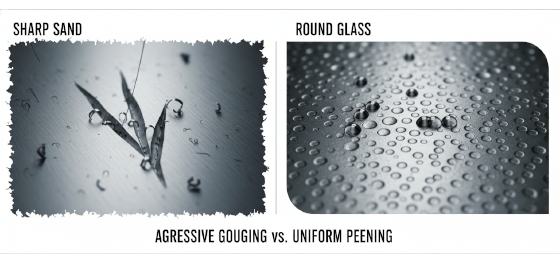
Why do high-end factories refuse to use traditional sandblasting on precision hardware?
Crushed silica sand acts like jagged little knives, aggressively chewing away layers of metal and completely destroying the tight dimensional tolerances your CNC machines just worked so hard to cut.
Firing perfectly round, microscopic glass beads changes the physical dynamics entirely. These tiny spheres do not cut or gouge the aluminum; instead, they violently dimple the surface upon impact. This peening action physically compresses the outer molecular layer without removing any actual material mass.
Protecting your fragile O-ring grooves and tapped screw holes requires this gentle, non-destructive approach. We strictly utilize specialized glass or ceramic spheres to guarantee your complex assemblies mate together flawlessly long after they exit the finishing bay.
Masking Imperfections: Hiding Superficial Flow Marks
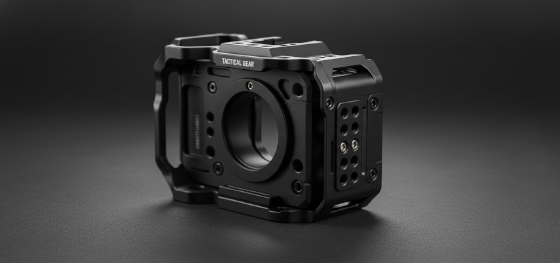
How do hardware brands achieve that perfectly uniform, non-reflective gray aesthetic?
Blasting the metallic skin homogenizes the chaotic raw texture, blending shallow visual inconsistencies into a beautifully flat, consistent matte canvas that consumers immediately associate with premium quality.
Relying on this abrasive technique rescues batches that suffer from minor cosmetic blemishes. However, if you need to dive deeper into severe structural flaws, mastering die casting surface defects troubleshooting remains mandatory, as glass media cannot physically hide deep, catastrophic cold shuts.
Engineers designing rugged outdoor cameras or tactical military gear heavily favor this stealthy, anti-glare finish. The resulting microscopic texture effectively hides daily fingerprints and minor scratches, keeping the product looking pristine in the hands of the end-user.
Chemical Anchors: Prepping for High-Adhesion Coatings
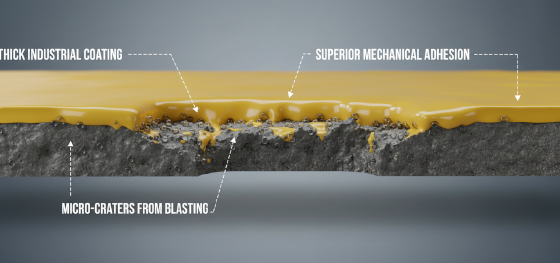
Why does applying liquid paint directly to smooth, raw metal guarantee peeling failures?
Smooth metal provides absolutely zero mechanical grip for wet chemicals; blasting the surface creates millions of microscopic craters that act like tiny hooks, allowing the paint to bite furiously into the substrate.
Skipping this crucial abrasive step destroys your cosmetic investment entirely. We aggressively texture the hardware right before executing anodizing die cast aluminum protocols, ensuring the chemical oxide layer grows evenly across a perfectly uniform foundation.
Heavy industrial powder coats also demand this roughened surface. When the baked polymer flows into these microscopic craters, it locks into place permanently, providing supreme weather resistance against harsh saltwater and UV degradation.
JUCHENG Hub: Shenzhen's Automated Matte Finishing
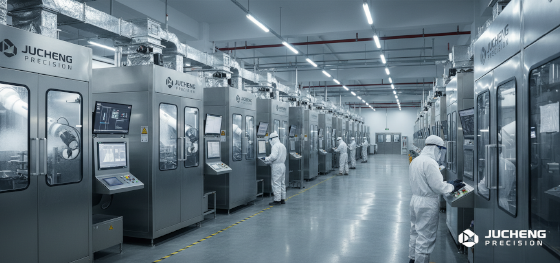
Why must you partner with a factory that automates their abrasive blasting cabinets?
Manual operators get tired, holding the pneumatic spray gun too close to the metal and severely warping thin walls; automated robotic cabinets guarantee the exact same blast pressure and distance for every single unit.
Shipping raw hardware to a third-party finishing shop exposes your sensitive components to oxidation and transit damage. Operating our massive Shenzhen manufacturing hub ensures your parts transition instantly from the CNC bay directly into our enclosed blasting cabinets.
Stop paying for inconsistent, blotchy cosmetic finishes. Send your 3D CAD files to our engineering team today. We will dial in the perfect pneumatic media pressure, erase your visual defects, and deliver stunning, retail-ready matte hardware.
FAQ: Honest Answers About Tolerances and Media Types
Will high-pressure glass beads accidentally erase fine laser-engraved logos?
Yes, aggressive blasting will completely obliterate shallow laser markings. We strictly perform all abrasive texturing operations first, applying the permanent laser traceability codes as the very last step in the factory.
Can you blast extremely thin, delicate cooling fins without bending them?
Shooting high-pressure media at paper-thin walls causes severe warping. We lower the pneumatic pressure significantly and utilize ultra-fine glass dust to protect delicate heatsinks from structural deformation.
Does this process remove heavy, jagged flash from the parting lines?
No. Microscopic glass spheres lack the cutting power to shear off heavy burrs. You must utilize aggressive vibratory tumbling or CNC milling to remove heavy flash before moving to the blasting cabinet.
Do the glass beads embed themselves into the soft metal surface?
Cheap, shattered glass media can sometimes lodge into the alloy. We utilize advanced filtration vacuums to constantly cycle out broken beads, ensuring only perfectly round spheres strike your valuable hardware.

