


Paying dozens of workers to manually file down sharp metal edges destroys commercial profit margins instantly. Hardware founders rarely calculate the staggering labor cost required to hand-finish thousands of raw injected components. Deploying automated vibratory finishing die casting techniques completely eliminates this financial bleeding by processing massive batches of hardware simultaneously. Attempting to skip this vital mechanical smoothing phase guarantees your assembly workers will suffer deep cuts from razor-sharp manufacturing burrs.
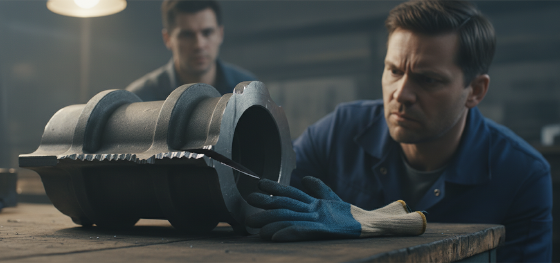
Raw metal erupting from a steel mold always carries jagged flash along the parting lines. Leaving these dangerous imperfections intact ensures your cosmetic paint layers will chip off immediately. Operating our automated Shenzhen manufacturing hub, JUCHENG relies on heavy-duty tumbling machinery to erase these microscopic defects without introducing human error into your strict dimensional tolerances.
Slashing your secondary machining bill requires aggressive bulk processing. Let's break down exactly how ceramic tumbling stones soften sharp metallic corners, why picking the correct abrasive media dictates your final die casting surface finish, and how mass deburring accelerates global hardware launches.
content:
Mass Deburring: Eliminating Expensive Hand Labor
Friction and Chemistry: How Tumbling Actually Works
Media Selection: Ceramic, Plastic, and Steel Stones
JUCHENG Hub: Shenzhen's Automated Bulk Finishing
FAQ: Honest Answers About Deep Scratches and Part Damage
Mass Deburring: Eliminating Expensive Hand Labor
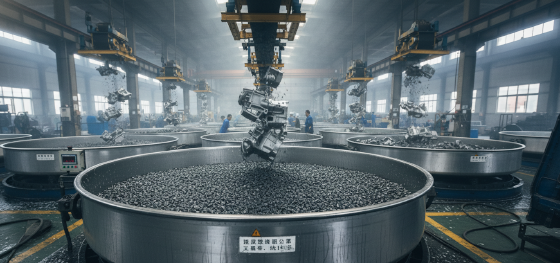
Hiring human technicians to grind away metal flash introduces terrifying inconsistency into your supply chain. One tired worker pressing a hand-file too aggressively will shave off critical mounting tabs, sending your tightly toleranced components straight into the scrap bin.
Replacing unpredictable human hands with automated vibrating bowls stabilizes your unit cost permanently. Dumping a thousand raw automotive brackets into a massive tub allows a single machine operator to smooth out every single part uniformly within just two hours of machine runtime.
Procurement teams absolutely demand this specific mechanical prep before approving subsequent painting steps. Freshly tumbled parts possess a highly uniform, slightly matte texture that acts like microscopic velcro, allowing heavy powder coatings to grip the metal furiously without blistering.
Friction and Chemistry: How Tumbling Actually Works
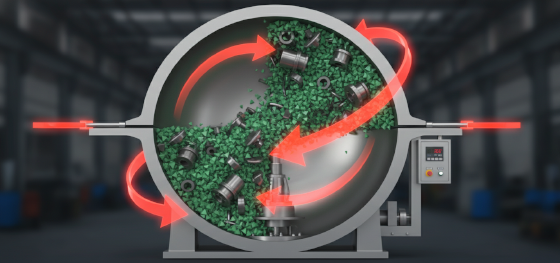
Violent vibration forces the metallic parts to constantly rub against thousands of abrasive stones. Heavy industrial motors mounted beneath the massive bowl generate a high-frequency corkscrew motion, ensuring the abrasive media scrubs every single internal corner of your hardware.
Dry friction alone ruins the metal surface by overheating the components and grinding dangerous dust into the air. We actively pump specialized liquid cutting compounds and rust inhibitors directly into the vibrating mixture, flushing away tiny metal shavings while preventing flash oxidation.
Matching the exact frequency of the machine prevents delicate parts from violently smashing into each other. Engineers dial in the specific vibration amplitude based directly on your hardware's wall thickness, guaranteeing zero physical warping during the aggressive scrubbing cycle.
Media Selection: Ceramic, Plastic, and Steel Stones
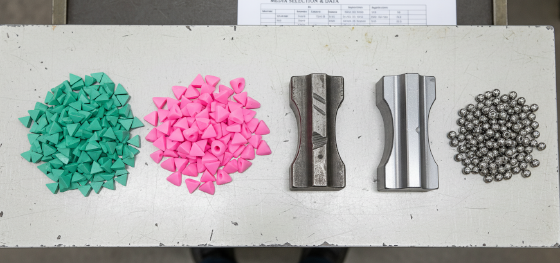
Throwing the wrong stones into the machine completely destroys your hardware. The engineering matrix below highlights exactly how different abrasive materials interact with raw injected alloys.
| Abrasive Media Type | Primary Mechanical Action | Best Hardware Application |
|---|---|---|
| Heavy Ceramic Triangles | Aggressive cutting, rapid removal of heavy burrs and sharp flash. | Hard aluminum engine blocks and structural chassis. |
| Synthetic Plastic Cones | Gentle smoothing, zero scratching, leaves a refined matte texture. | Soft zinc alloys, delicate telecom cooling fins. |
| Stainless Steel Balls | Burnishing and polishing through heavy continuous impact. | Creating a bright, shiny base layer before electroplating. |
Failing to match the size of the abrasive stone to your CAD geometry causes massive headaches. If the ceramic triangles are too small, they will permanently wedge themselves inside your critical screw holes. We mathematically analyze your part dimensions to select stones that are physically impossible to trap inside your enclosures.
JUCHENG Hub: Shenzhen's Automated Bulk Finishing
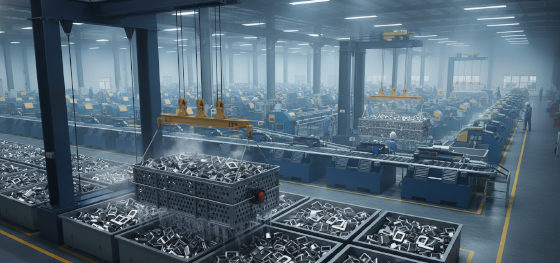
Shipping heavily burred metal across town exposes your supply chain to intense logistical friction. Executing automated vibratory finishing die casting directly next to the injection presses ensures your parts are cleaned and prepped within hours of leaving the hot steel mold.
Integrating this mass processing step seamlessly into our Shenzhen factory allows us to feed flawlessly prepped hardware directly into our secondary CNC machining bays. Clean parts sit perfectly flat inside the CNC vises, guaranteeing absolute zero-gap tolerances during final threading operations.
Stop paying exorbitant manual labor fees just to make your parts safe to touch. Send your 3D models to our engineering team today. We will calculate the perfect bulk abrasive strategy and deliver smooth, assembly-ready hardware at unbeatable commercial speeds.
FAQ: Honest Answers About Deep Scratches and Part Damage
Can this process completely erase deep cold shuts and heavy surface cracks?
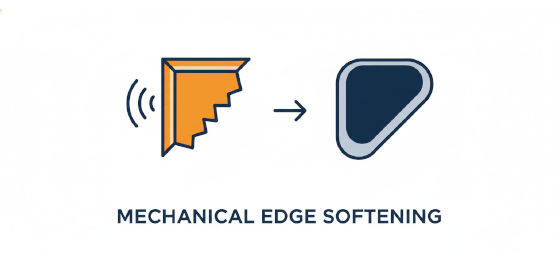
No. Tumbling is strictly designed to round off sharp corners and remove minor flash. Deep structural cracks require either aggressive manual belt sanding or must be completely rejected as scrap.
Will the heavy ceramic stones damage delicate, paper-thin heatsink fins?
If processed incorrectly, yes. We utilize much softer plastic media and turn the machine vibration frequency down significantly to protect ultra-thin features from breaking under impact.
Does tumbling replace the need for high-pressure sandblasting?
Not entirely. While tumbling handles bulk edge removal efficiently, we still deploy bead blasting die casting techniques when a client demands a perfectly uniform, dry matte aesthetic finish.
How do you dry the metal parts after they sit in the wet chemical compound?
Finished batches are immediately dumped onto heated, vibrating conveyor belts covered in moisture-absorbing crushed corn cob media to dry the metal instantly and prevent flash rust.

