


Procurement engineers constantly misalign surface treatment specifications when shifting from aluminum prototyping to high-carbon steel production. Mixing up substrate chemistries guarantees catastrophic field failures. Applying the wrong protective barrier immediately destroys micron-level machining tolerances.
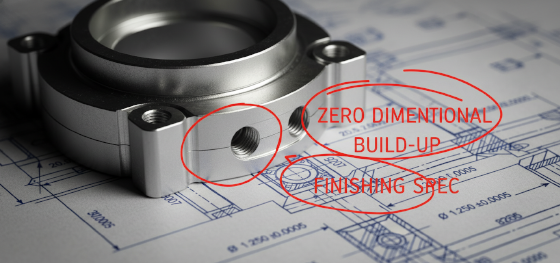
Choosing between a Black Oxide Finish and sulfuric Anodizing dictates the entire mechanical survival rate of your custom components. These two processes operate on entirely different metallurgical principles. One relies on caustic oxidation of iron, while the other utilizes electrolytic passivation of aluminum.
Understanding the harsh limits of environmental exposure prevents massive financial hemorrhage during the assembly phase. Engineers must brutally evaluate dimensional build-up, galvanic corrosion risks, and raw batch pricing. Hardware success demands matching the precise chemical conversion to the exact physical environment.
What Defines the Black Oxide Chemical Conversion Process?
Why Specify Black Oxide for Precision Indoor CNC Parts?
Why Does Black Oxide Fail in Marine Salt Spray Environments?
How Does Black Oxide Compare to Anodizing and Zinc Plating?
What Are the True Cost Dynamics and Lifespan of Black Oxide?
How Does Jucheng Optimize Coating Workflows for Steel and Aluminum?
What Are the Most Critical Coating Selection FAQs?
What Defines the Black Oxide Chemical Conversion Process?
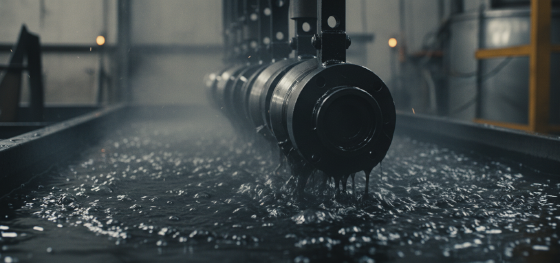
Black oxide is a true chemical conversion process that penetrates the steel substrate to form a protective magnetite layer without adding physical thickness.
Submerging carbon steel components into a boiling 285°F bath of sodium hydroxide and oxidizing salts triggers a violent molecular reaction. The native iron atoms on the surface actively convert into Fe3O4, commonly known as magnetite. This newly formed dark crystal lattice physically integrates with the base metal.
Unlike paint or electroplating, this caustic process deposits zero external material onto the geometry. The raw crystalline structure remains highly porous upon exiting the boiling tank. Technicians must immediately plunge the blackened parts into a water-displacing oil bath to seal the microscopic pores via capillary action.
Why Specify Black Oxide for Precision Indoor CNC Parts?
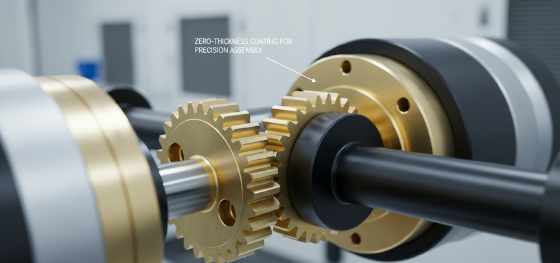
Precision mechanical assemblies demand black oxide because it prevents galling and flash rust on critical indoor components requiring absolute zero dimensional changes.
Machining tight-tolerance bearing journals and ultra-fine internal threads leaves absolutely no room for heavy protective coatings. Introducing a standard 15-micron zinc layer instantly seizes press-fit assemblies and destroys the pitch diameter of tapped blind holes. Magnetite conversion solves this engineering nightmare entirely.
Firearm manufacturers and robotic gearbox engineers rely heavily on the inherent lubricity provided by the trapped oil seal. The blackened surface significantly reduces kinetic friction between sliding steel components. This specific finish dominates indoor industrial applications where parts remain continuously lubricated away from extreme atmospheric moisture.
Why Does Black Oxide Fail in Marine Salt Spray Environments?
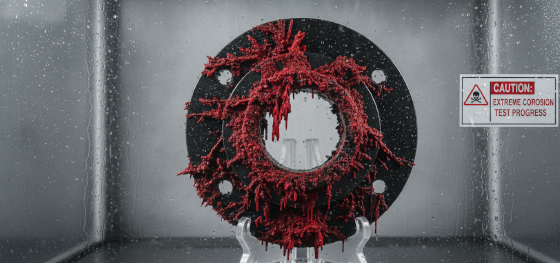
Black oxide lacks the sacrificial galvanic barrier required to protect steel substrates from rapid oxidation in outdoor, high-humidity, or corrosive salt spray environments.
Placing a magnetite-coated gear outdoors exposes it to brutal condensation cycles that quickly wash away the protective oil impregnation. Once the microscopic pores lose their hydrocarbon seal, ambient water immediately attacks the raw iron substrate underneath. Red rust erupts across the surface within hours.
Engineers must strictly forbid this finish for marine hardware, external automotive chassis brackets, and chemical processing equipment. Heavy environmental abuse demands sacrificial coatings that physically corrode before the base metal. Substituting black oxide to save costs in these caustic zones guarantees catastrophic structural failure.
How Does Black Oxide Compare to Anodizing and Zinc Plating?
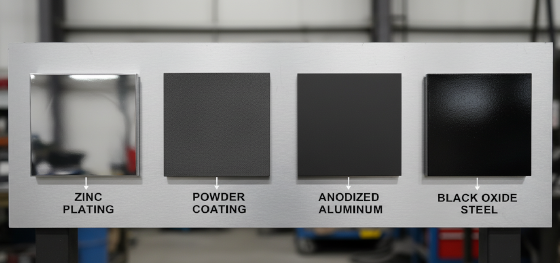
Evaluating dimensional build-up, substrate compatibility, and galvanic resistance dictates whether engineers select hot blackening, sulfuric anodizing, or heavy zinc electroplating.
Material composition establishes the first hard boundary. You cannot black oxide aluminum; it dissolves instantly in the caustic bath. You must utilize anodizing, which artificially thickens the native aluminum oxide layer using an electrical current. Anodizing provides extreme surface hardness and excellent corrosion resistance for lightweight aerospace components.
When steel components face harsh outdoor environments, Zinc Plating serves as the mandatory upgrade. The zinc layer acts as a sacrificial anode, actively absorbing the corrosive attack to protect the iron core. Conversely, heavy powder coating completely encapsulates the part in baked plastic, offering maximum barrier protection but destroying tight CNC tolerances.
| Surface Finish | Target Substrate | Dimensional Build-Up | Ideal Operating Environment |
|---|---|---|---|
| Hot Black Oxide (+ Oil) | Carbon Steel, Stainless | Zero (0.00000") | Indoor, oiled assemblies, tight gears |
| Type II Anodizing | Aluminum, Titanium | Minimal (0.0002" - 0.001") | Aerospace, harsh weather, cosmetics |
| Zinc Electroplating | Steel, Iron Alloys | Moderate (0.0005" - 0.001") | Outdoor, automotive undercarriage |
| Powder Coating | Almost all metals | Heavy (0.0020" - 0.006") | Industrial frames, heavy impact zones |
What Are the True Cost Dynamics and Lifespan of Black Oxide?
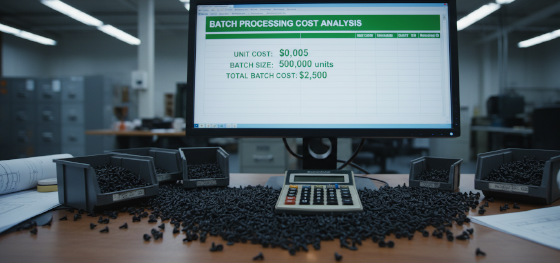
Black oxide processing costs remain exceptionally low compared to electrolytic plating due to high batch density and minimal non-recurring engineering (NRE) tooling fees.
Manufacturers can dump thousands of tiny steel set screws into a single perforated basket and immerse them in the caustic bath simultaneously. Anodizing and electroplating require technicians to physically rack every single component to ensure electrical continuity. Eliminating this manual racking labor violently slashes the per-unit price tag.
The lifespan of the finish depends entirely on ambient humidity and maintenance. In a climate-controlled server room, blackened brackets survive indefinitely without degrading. If subjected to frequent handling without re-oiling, the acidic oils from human fingerprints will eventually break down the barrier and initiate microscopic pitting.
How Does Jucheng Optimize Coating Workflows for Steel and Aluminum?

Operating deep within the Shenzhen precision manufacturing hub, Jucheng Precision executes aggressive DFM strategies to match your CNC material selection directly with the optimal finishing line.
Navigating [2026] hardware procurement requires eliminating third-party logistical delays. Shipping raw machined metal across the city for plating invites catastrophic flash rust. We centralize robust 5-axis milling and high-volume surface treatment protocols entirely under one heavily audited 8000-square-meter roof.
Our engineering teams intervene before chips fly. If your blueprint specifies outdoor use but calls for carbon steel with black oxide, we flag the galvanic risk instantly. Operating strictly under ISO9001:2015 and IATF16949 parameters, our No MOQ policy guarantees that even rapid prototypes receive aerospace-grade chemical conversion oversight.
What Are the Most Critical Coating Selection FAQs?

Resolving hardcore chemical compatibility issues prevents massive field recalls during the deployment of custom industrial hardware.
Can you perform black oxide treatment on stainless steel?
Yes, but it requires a specialized, highly aggressive hot bath running at significantly higher temperatures. The chromium content in stainless inherently resists standard caustic oxidation, demanding severe chemical intervention to break the passive layer.
Does anodizing change the dimensions of an aluminum CNC part?
Yes. Standard Type II anodizing typically adds about 0.0002 to 0.001 inches of total thickness. Unlike black oxide on steel, the aluminum oxide layer grows both into the substrate and outward. Machinists must calculate this growth mathematically when hitting tight bearing press-fits.
What is "smutting" during the steel blackening process?
Smutting is a fatal process failure where depleted chemical baths precipitate a loose, powdery soot residue instead of growing a tightly adhered magnetite crystal layer. This fragile soot rubs off instantly and offers absolutely zero corrosion resistance.

