


Structural failure is rarely a quiet event; it is the violent conclusion of an ignored physical law. When a high-stress component snaps on the assembly floor or degrades in the field, the root cause is often a misunderstanding of how the material was born. In the strategic comparison of a cnc machine vs 3d printer, the most deceptive variable is the perceived durability of the part. A 3D printed component can look identical to a machined one, yet its internal molecular "grain" may be fundamentally unsuited for the load it is intended to carry. This is the technical standoff of CNC vs 3D Printing Strength. It is a decision between the isotropic sovereignty of a solid metal billet and the layered complexity of fused additives—a choice that defines whether your project becomes a functional masterpiece or an expensive liability.
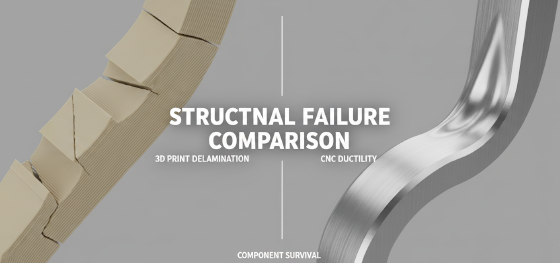
At Jucheng Precision, we operate in the fourth decimal place of material science. We recognize that for a high-performance aerospace bracket or a medical surgical robot, the "datasheet strength" of a resin or powder is a theoretical starting point, not a physical guarantee. The act of manufacturing changes the material itself. Subtractive processes preserve the refined grain structure of wrought alloys, while additive processes attempt to recreate those properties through rapid thermal cycles. This guide moves past the surface-level marketing to explore the microscopic physics of layer adhesion, the reality of material certifications, and why JUCHENG’s integrated approach to both technologies provides the only honest roadmap for your next high-load engineering challenge.
Reliability in the real world is found in the removal of hidden weak spots. You aren't just selecting a shape; you are selecting an internal architecture capable of absorbing kinetic energy and resisting fatigue. Whether you are building a high-torque drivetrain component or a lightweight satellite housing, the logic of the bond is your primary manufacturing governor. Let us examine the technical pillars of structural integrity and see how they lock the performance of your most ambitious designs into physical reality.
Isotropic Sovereignty: The Hidden Power of Solid Billet
Layer-Line Vulnerability: Navigating the Anisotropic Map
Material Simulation vs. Reality: The Certification Gap
Mechanical Benchmarks: A Comparative Strength Data Table
Functional Thresholds: When to Switch from Print to Mill
JUCHENG’s Verdict: The Integrated Reliability Standard
Isotropic Sovereignty: The Hidden Power of Solid Billet
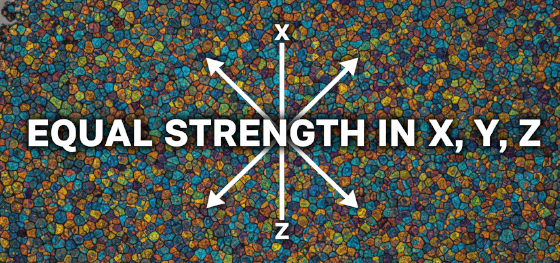
To understand the gold standard of CNC vs 3D Printing Strength, one must first respect the metallurgical history of a wrought metal bar. When JUCHENG sources a billet of Aluminum 6061-T6 or Stainless Steel 316L, that material has been forged, rolled, and heat-treated under massive industrial pressures. This results in an Isotropic material—a solid where the mechanical properties (tensile strength, hardness, elongation) are identical in the X, Y, and Z directions. There are no "seams" and no hidden interfaces.
The CNC machining process is a subtractive one that respects this structural purity. Because the tool carves the part from a single, unified crystal matrix, the finished component inherits the absolute mechanical predictability of the raw stock. For an engineer designing a rotating turbine or a high-pressure valve, this Isotropic Sovereignty is vital. You can run your FEA (Finite Element Analysis) simulations with 100% confidence because the part's response to stress is linear and uniform. There is zero risk of the part "unzipping" under load. This raw, consolidated strength is the primary reason why CNC remains the mandatory choice for load-bearing aerospace hardware and subsea equipment where the physics of the environment leave no room for interfacial weakness.
Layer-Line Vulnerability: Navigating the Anisotropic Map
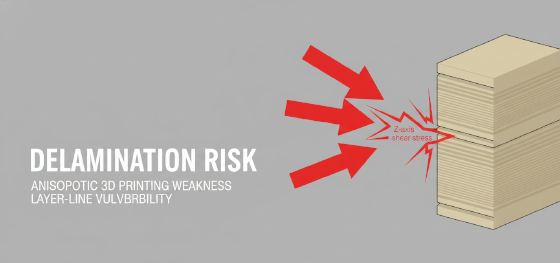
3D printing attempts to create solids through a series of additive micro-welds. Whether it is the melting of a plastic filament in FDM or the sintering of metal powder in DMLS, the part is composed of layers. This introduces the fundamental challenge of Anisotropy. In the CNC vs 3D Printing Strength battle, the additive part is always a "stack." Its strength is governed by the quality of the bond between those layers. If you pull on a 3D printed part along its X or Y axis (parallel to the layers), it can be quite strong. But if you pull along the Z-axis (perpendicular to the layers), the strength often drops by 20% to 50%.
This "Layer-Line Vulnerability" creates a hidden failure mode. Under high-frequency vibration or impact, a 3D printed part can experience delamination—where the layers physically peel apart. At Jucheng Precision, we mitigate this through advanced thermal control, utilizing heated build chambers for plastics and high-power lasers to maximize "melt-pool penetration" for metals. However, the technical reality remains: an additive part is a series of interconnected interfaces. If your design subjects the part to multi-axial stress or high torsion, the anisotropic nature of 3D printing requires a massive safety factor that often negates the weight-saving benefits of the technology. We don't just "print a shape"; we orient the build to ensure the strongest axis of the material aligns with the highest load path of your design, a level of technical foresight that distinguishes industrial production from rapid mockups.
Material Simulation vs. Reality: The Certification Gap

In the medical and aerospace sectors, "strength" is not a word—it is a documented audit trail. This is the "Certification Gap" in the CNC vs 3D Printing Strength debate. When you choose CNC machining, you are using "Production-Grade" materials. We provide Mill Test Reports (MTRs) for every block of metal we cut, certifying its exact chemical composition and mechanical modulus. This material is the "Real Deal"—the same alloy that has been flight-certified for decades.
Many 3D printing resins and filaments are designed to "Simulate" properties. You might use an "ABS-Like" resin or a "Tough" photopolymer. While these materials are brilliant for ergonomic checks and visual prototypes, they rarely possess the long-term creep resistance or UV stability of the real injection-molded or machined polymer. Even in metal 3D printing, the resulting part is essentially a "cast-equivalent" structure, which may require HIP (Hot Isostatic Pressing) to reach the fatigue strength of a wrought CNC part. JUCHENG helps you navigate this gap by acting as a material consultant. If your part requires a certified 17-4 PH stainless steel performance to withstand corrosive high-pressure fluids, we will steer you toward the CNC mill. We don't just give you a part that looks strong; we give you the verified data to prove it is strong, providing the technical insurance policy your brand's reputation depends on.
Mechanical Benchmarks: A Comparative Strength Data Table
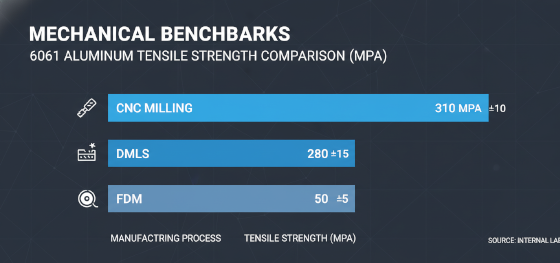
Data is the only cure for manufacturing ambiguity. To simplify your selection between a cnc machine vs 3d printer, Jucheng Precision provides the following mechanical baseline for common industrial materials. These values represent the typical performance of parts produced in our facility under optimized conditions.
| Material & Technology | Tensile Strength (MPa) | Ductility (Elongation %) | Integrity |
|---|---|---|---|
| Aluminum 6061-T6 (CNC) | ~310 MPa | ~12-17% | Isotropic (Solid) |
| Aluminum AlSi10Mg (DMLS) | ~300-400 MPa | ~5-10% | Quasi-Isotropic (Fine grain) |
| Nylon 12 (CNC Machined) | ~70-80 MPa | ~15-60% | Isotropic (Homogeneous) |
| Nylon 12 (MJF 3D Printed) | ~48-50 MPa | ~15-20% | High Isotropic (Fused) |
| ABS (FDM 3D Printed) | ~30-35 MPa | ~3-6% | Anisotropic (Layered) |
Functional Thresholds: When to Switch from Print to Mill
Knowing when to transition from a 3D printed prototype to a machined part is the mark of an experienced design engineer. At JUCHENG, we use a simple "Functional Threshold" to guide our clients. If your part is intended for a Form and Fit check—where you just need to see if the part fits in the assembly—3D printing is the most agile and cost-effective path. It provides the visual confirmation needed for rapid R&D iterations.
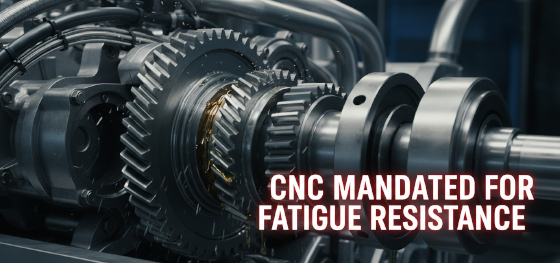
However, the moment your design enters the "Functional Testing" phase, the logic shifts to CNC machining. If the part must undergo a drop test, survive a 10,000-cycle vibration audit, or hold a static load for months (creep resistance), the layered structure of a print is a liability. A 3D printed gear might work for a few minutes, but a CNC machined Delrin or Steel gear will work for a lifetime. We help our clients move across this threshold seamlessly. Because we understand both technologies, we can advise you on the exact moment when the "Anisotropic Weakness" of a print will compromise your testing data. We bridge the gap between "concept" and "compliance," ensuring your functional prototypes are as robust as the production parts they represent.
JUCHENG’s Verdict: The Integrated Reliability Standard
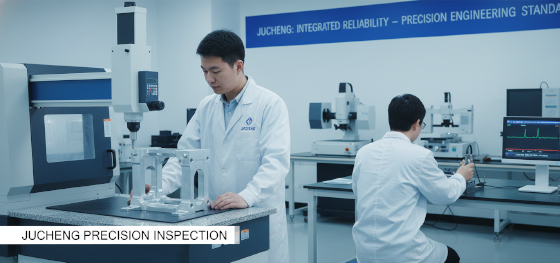
The final hallmark of a professional manufacturing partner is the refusal to accept material uncertainty. At Jucheng Precision, we have integrated our additive and subtractive floors under a single unified quality framework. We treat every CNC vs 3D Printing Strength challenge with the technical reverence it deserves. We don't just "hit go" on a machine; we validate the metallurgy of the part.
Our facility is equipped with in-house XRF spectrometers to verify alloy purity and CMM centers to verify that the part's geometry hasn't warped during the cooling phase. For mission-critical metal prints, we utilize our 5-axis CNC centers to perform a secondary precision finish on the most highly stressed surfaces, removing the "near-net" porosity of the additive process and replacing it with the mirror-smooth stability of a machined fit. This "Integrated Reliability" is the reason why JUCHENG is the preferred partner for global innovators in the robotics and aerospace sectors. We provide the technical clarity needed to choose between the speed of the print and the raw strength of the mill. Contact our engineering team today for a comprehensive DFM review and see how our dual-technology protocols can clarify and armor your next high-load breakthrough.

