


Savannah heavily relies on massive aerospace and maritime manufacturing hubs that demand uncompromised structural integrity from thick metal components. Heat distortion destroys critical aerospace tolerances before assembly even begins. Procurement engineers must mathematically evaluate which cutting technology secures the structural blueprint without obliterating the production budget.
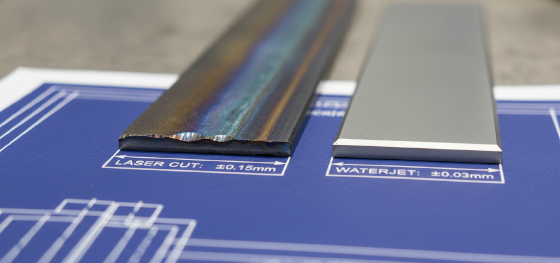
Choosing between abrasive water jets and fiber lasers dictates the absolute metallurgical survival of your custom hardware. Lasers slice thin sheet metal with blazing kinetic speed but violently warp thicker plates by pumping massive thermal energy directly into the cut zone. Conversely, water jets execute cold-cutting mechanics, relying entirely on extreme hydrostatic pressure rather than thermal melting.
Misaligning the manufacturing process with the raw material creates catastrophic non-recurring engineering (NRE) losses. Running thin aluminum through a water jet wastes expensive machine hours, while hitting titanium with a plasma torch permanently ruins the alloy structure. Elite fabrication demands precise operational boundaries.
Why Choose Water Jet Over Laser for Thick Metals?
When Does CNC Water Jet Fail in Production Runs?
Water Jet vs Plasma vs Laser: Which Fits Your Budget?
How Do Abrasive Garnet Costs Impact Machine Rates?
Can Shenzhen Precision Hub Serve Savannah Projects?
What Are the Most Critical Water Jet Cutting FAQs?
Why Choose Water Jet Over Laser for Thick Metals?
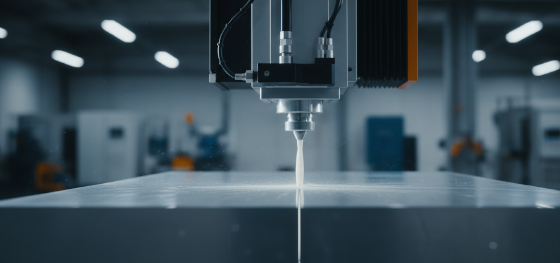
Water jet cutting completely eliminates the Heat-Affected Zone (HAZ), making it mandatory for processing aerospace-grade titanium and thick Inconel plates that shatter under thermal stress.
Fiber lasers violently melt the metallic kerf, permanently altering the localized crystalline structure of the metal edge. This hardened, burned edge ruins subsequent secondary CNC milling operations by instantly destroying carbide end mills. Water jets avoid this metallurgical nightmare entirely.
Shooting 60,000 PSI water mixed with sharp abrasive sand physically erodes the material at a microscopic level. It slices through 100mm thick stainless steel blanks without generating any residual slag or burrs on the bottom edge. Zero thermal distortion means parts remain perfectly flat during heavy processing.
When Does CNC Water Jet Fail in Production Runs?
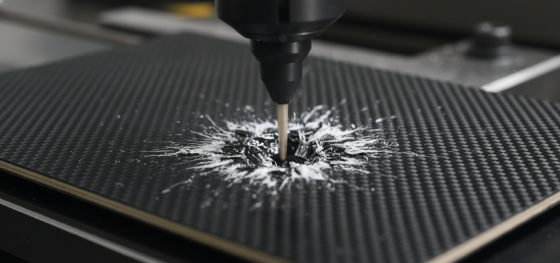
Water jets cause catastrophic structural delamination when piercing untreated carbon fiber composites, and they destroy unsealed MDF or wood materials instantly through liquid absorption.
The initial pierce point acts like a microscopic kinetic bomb. When 60,000 PSI hits a laminated composite sheet, the water forcibly separates the layers before it can blast completely through the bottom surface. Engineers must drill pilot holes mechanically before engaging the water nozzle to prevent total material ruin.
You must absolutely avoid water jetting for ultra-thin sheet metal high-volume runs. The process operates significantly slower than a 10kW fiber laser. Utilizing expensive abrasive machine hours on 1mm aluminum brackets destroys the economic viability of the entire assembly line.
Water Jet vs Plasma vs Laser: Which Fits Your Budget?
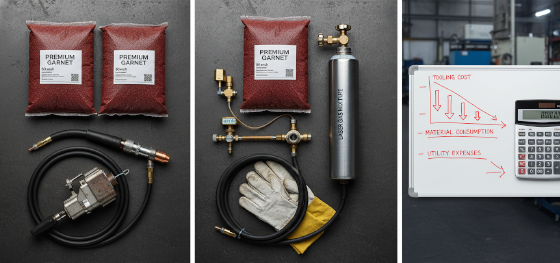
Evaluating raw machine feed rates against secondary deburring labor costs precisely determines the true economic winner among heavy plate cutting technologies.
Plasma cutting wins the pure speed battle for massive structural steel plates, but it leaves a horrific, heavily tapered edge covered in thick hardened dross. Machinists must spend hours manually grinding these edges clean, destroying the initial cost savings. Plasma severely lacks precision.
Fiber lasers dominate the middle ground, offering blazing speeds on metals under 20mm thick with excellent tolerances. However, lasers cannot cut reflective brass effectively and struggle immensely with thick plates. The water jet remains the ultimate problem solver for massive thicknesses, albeit at a higher hourly premium.
| Cutting Technology | Max Steel Thickness | Heat Affected Zone (HAZ) | Ideal Savannah Application |
|---|---|---|---|
| Abrasive Water Jet | 150mm+ | Zero | Aerospace titanium, thick tool steel, composites |
| Fiber Laser (10kW) | ~25mm | Moderate | High-volume sheet metal, precise enclosures |
| High-Def Plasma | ~40mm | Severe | Rough structural steel, shipyard components |
How Do Abrasive Garnet Costs Impact Machine Rates?
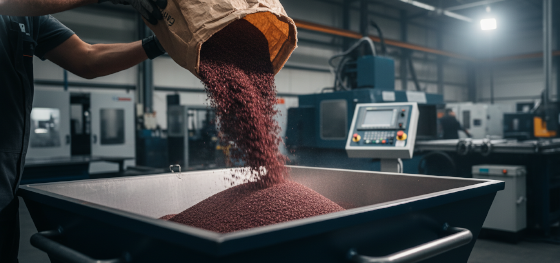
Consuming heavy volumes of 80-mesh garnet sand under extreme pressure drives the operational hourly rate of water jets significantly higher than laser gas consumption.
Pure water cannot cut thick steel. The machine actively injects aggressive garnet abrasives into the high-pressure stream within the cutting nozzle. An industrial machine operating continuously consumes over one pound of this expensive abrasive sand every single minute. This raw material burn rate dictates the final invoice.
Furthermore, disposing of the spent garnet sludge requires hazardous waste protocols, adding hidden overhead. Engineers must strategically utilize water jets only when the zero-HAZ requirement outweighs the heavy consumable cost. Blanking out simple carbon steel brackets with a water jet destroys procurement budgets.
Can Shenzhen Precision Hub Serve Savannah Projects?
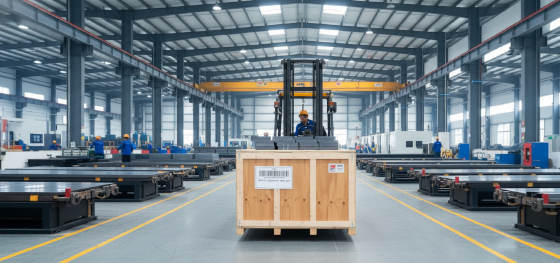
Jucheng Precision operates massive 8000-square-meter facilities in Shenzhen, offering scalable, distortion-free thick plate fabrication that eliminates the local Savannah bottleneck.
Navigating [2026] localized manufacturing constraints forces Savannah procurement teams to suffer extended lead times for custom heavy plate cutting. We centralize robust 5-axis CNC water jets alongside 150+ high-end milling centers to provide instant global capacity. You upload the CAD, we handle the heavy logistics.
Our engineering teams aggressively review your blueprints prior to cutting. If a specific geometry triggers dangerous edge taper limits on 50mm steel, our free DFM review instantly pivots the strategy to combine rough water jetting with secondary precision CNC milling. We guarantee absolute dimensional survival.
What Are the Most Critical Water Jet Cutting FAQs?
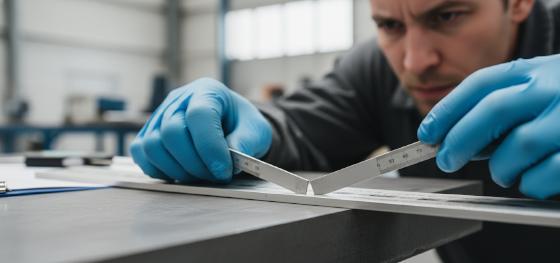
Addressing hardcore kinetic variables prevents devastating assembly failures when designing thick metal profiles for industrial fabrication.
What causes severe edge taper on thick water jet parts?
As the high-velocity water stream penetrates deeply into materials exceeding 50mm, the kinetic energy rapidly dissipates. The bottom of the cut trails behind the top, creating a V-shaped edge taper. Advanced 5-axis cutting heads automatically tilt dynamically to mathematically compensate for this kerf angle.
Can water jets cut tempered glass without shattering it?
Absolutely not. Tempered glass stores massive internal compressive stress. The instant the abrasive stream pierces the hardened outer skin, the entire glass panel violently explodes into thousands of fragments. Only standard annealed glass survives the cutting process.
Does the process cause flash rust on raw carbon steel?
Yes. Exposing bare steel to highly oxygenated water triggers immediate flash oxidation within hours of cutting. Operators must actively treat the cutting tank with specialized rust inhibitors or plunge the finished parts immediately into water-displacing oil to preserve the surface.

