


Walking alongside a collaborative robot in a [2026] consumer electronics assembly line reveals the invisible barrier of human-robot interaction (HRI): the hardware is designed for intimacy. Unlike traditional industrial robot parts that are caged behind light curtains and interlocks, collaborative bots share a workspace with humans. This proximity dictates a fundamental shift in manufacturing philosophy. Every component must prioritize safety through geometry and low-inertia materials. Mastering Cobot parts manufacturing requires a departure from standard boxy designs toward organic, rounded shapes that eliminate pinch points and minimize kinetic energy during accidental contact.
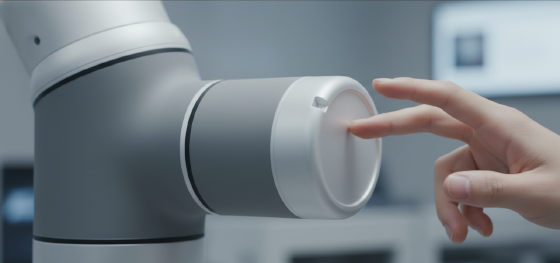
Kinetic energy is the primary enemy of collaborative safety. The power-and-force limiting (PFL) protocols of a cobot are only as effective as the mass of the arm. If the arm links are heavy, even a low-speed collision can exceed the ISO 15066 safety limits. Jucheng Precision addresses these critical mass challenges by utilizing ultra-lightweight magnesium alloys and skeletal carbon fiber reinforcements. We manufacture the high-agility components that allow cobots to respond instantly to touch, ensuring a seamless and safe partnership between man and machine.
Operating within the Shenzhen precision manufacturing hub, JUCHENG serves as the innovation partner for the next generation of HRI hardware. We combine multi-axis CNC contouring with advanced material science to deliver parts that are as aesthetically pleasing as they are functionally safe. This guide explores the essential smooth-geometry standards, lightweighting strategies, and overmolding technologies required for manufacturing collaborative robot parts that redefine the boundaries of automation.
Eliminating Pinch Points: Safety via CNC Contouring
Comparative Data: Lightweight Materials for Low-Inertia Arms
Magnesium Machining: The Quest for Absolute Low Mass
Soft-Touch Surfaces: Overmolding and Impact Sensing
JUCHENG: The Shenzhen Hub for Safety-Critical Hardware
FAQ: Engineering Safe Hardware for Human-Robot Interaction
Eliminating Pinch Points: Safety via CNC Contouring
Smooth geometry is the first line of defense in collaborative robotics. In Cobot parts manufacturing, any sharp edge or 90-degree corner is a potential "knife" that can cause injury during a joint movement. JUCHENG utilizes continuous 5-axis CNC contouring to achieve large-radius fillets and organic blend transitions on all external surfaces. By holding +/- 0.05mm tolerances on these complex curves, we ensure that the arm links have no "catch points" where a human operator’s clothing or skin could become trapped during a shared task.
Pinch-point elimination requires specialized design for joint interfaces. In traditional industrial robot parts, the gap between the J2 and J3 axis often closes completely, creating a crushing hazard. JUCHENG machines recessed "safety gaps" and rounded hinge covers that maintain a minimum distance even at full joint compression. This mechanical safety feature acts as a fail-safe to the robot’s electronic collision detection, providing a physical layer of protection that is essential for ISO 10218-1 compliance in [2026] factory environments.
Surface finish affects safety perception and sanitation. A rough or porous surface can harbor bacteria, which is a critical concern for cobots used in food preparation or medical assembly. JUCHENG utilizes high-speed diamond-milling and orbital polishing to achieve Ra 0.4 finishes on cobot arm links. This "ultra-smooth" surface not only prevents skin abrasion but also allows for rapid wipe-down sterilization, making our manufactured parts the preferred choice for collaborative healthcare and pharmaceutical applications.
Internal fastener concealment is another hallmark of JUCHENG’s cobot engineering. We machine deep counterbores and provide custom-molded plastic caps that hide all mounting bolts. This eliminates the risk of a human operator being scratched by a protruding bolt head. By integrating these "flush-mount" features directly into the CNC toolpath, we deliver a sleek, consumer-electronics-grade aesthetic that makes robots feel approachable and safe in a modern office or lab setting, rather than appearing as a piece of dangerous machinery.
Comparative Data: Lightweight Materials for Low-Inertia Arms
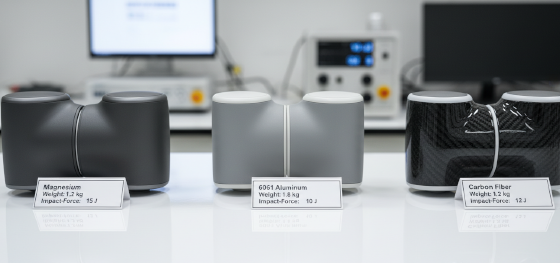
Selecting the right material for a cobot arm determines how fast it can move while staying under the safety force-threshold. Lower mass leads to lower inertia, which allows the collision detection software to stop the arm faster. Jucheng Precision provides technical consultations to help you navigate the trade-offs between weight, stiffness, and cost. The following table compares the materials most frequently used in high-performance Cobot parts manufacturing for the [2026] market.
| Material Grade | Density (g/cm³) | Elastic Modulus (GPa) | Safety Advantage |
|---|---|---|---|
| Magnesium AZ91D | 1.81 | 45 | 33% Lighter than Aluminum |
| 7075-T6 Aluminum | 2.81 | 71.7 | High Stiffness/Low Mass |
| Carbon Fiber (CFRP) | 1.60 | 150 - 230 | Ultimate Low Inertia |
| POM (Acetal) | 1.41 | 3.1 | Lightweight / Impact Absorbing |
Magnesium AZ91D is becoming the industry standard for cobot arm links because it offers the best strength-to-weight ratio of any commonly machined metal. JUCHENG utilizes specialized 5-axis CNC strategies to machine magnesium, managing the material's inherent flammability through controlled cooling and chip-evacuation protocols. This allows us to deliver ultra-lightweight housings for the J4, J5, and J6 axes, where reducing mass has the greatest impact on the robot’s dynamic safety and payload capacity.
Carbon Fiber (CFRP) is utilized for high-reach cobots that must maintain extreme rigidity without adding mass. JUCHENG provides hybrid industrial robot parts where carbon fiber tubes are bonded to precision-machined aluminum or magnesium joints. This combination provides a skeleton that is stiffer than steel but lighter than aluminum, allowing the robot to perform long-reach tasks like palletizing while remaining safely within the force-limiting envelope for human collaboration.
Magnesium Machining: The Quest for Absolute Low Mass
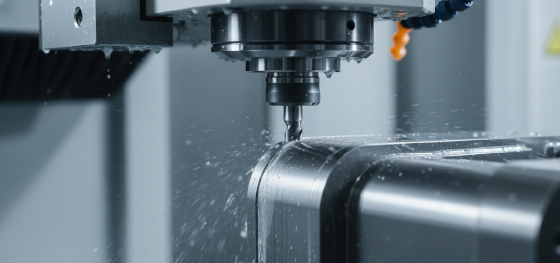
Achieving the ultra-low mass targets for next-generation cobots requires a move toward magnesium alloys. In Cobot parts manufacturing, magnesium is prized for being 75% lighter than steel and 33% lighter than aluminum. However, machining this material is an expert-level task. JUCHENG utilizes high-speed spindles and specialized diamond-coated tooling to machine magnesium components with wall thicknesses as low as 1.5mm. This extreme lightweighting allows cobot motors to operate at higher duty cycles without overheating, as they are not constantly fighting the dead weight of a heavy arm.
Dampening characteristics of magnesium are another safety benefit. Magnesium has the highest vibration-dampening capacity of any structural metal. When a cobot detects a collision and stops abruptly, the magnesium arm links absorb the shock energy rather than vibrating like a spring. JUCHENG’s precision machining ensures that this dampening effect is maximized by maintaining consistent wall thickness throughout the part. This mechanical stability prevents the "jitter" that can sometimes trigger false-positive collision detections in more flexible robotic systems.
Surface integrity is managed through JUCHENG’s specialized chemical conversion coatings (like MAO or Alodine). Magnesium is naturally prone to corrosion; left untreated, it can degrade and lose its structural properties. We apply these coatings in-house to ensure the internal and external surfaces of the cobot part are permanently protected. These treatments also provide an excellent substrate for the pearlescent automotive-grade paints often used to give collaborative robots their "friendly" and high-tech appearance in the field.
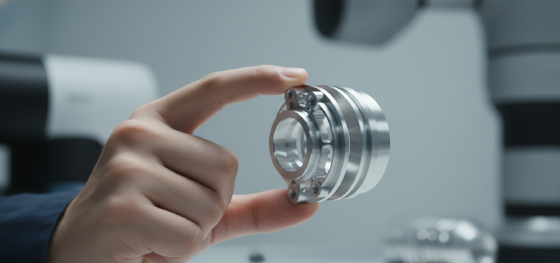
Thermal stability of magnesium allows cobots to maintain accuracy in varying factory temperatures. Unlike some plastics that "creep" or expand significantly when warm, magnesium remains dimensionally stable. JUCHENG machines the bearing seats and motor mounts in magnesium housings to +/- 0.005mm tolerances, ensuring that the critical alignment of the joint gearbox is maintained from the first minute of the shift to the last. This commitment to precision is what allows JUCHENG to support global leaders in the industrial robot parts market.
Soft-Touch Surfaces: Overmolding and Impact Sensing
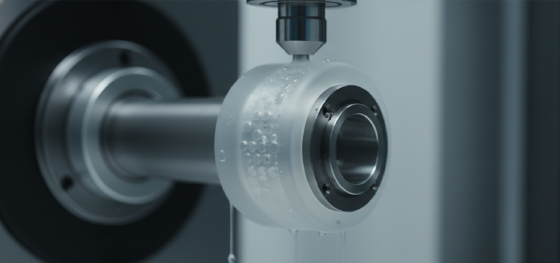
The next frontier in collaborative safety is the "Soft-Skin." Even a rounded metal part can be uncomfortable or intimidating to a human operator. Jucheng Precision addresses this by utilizing multi-material overmolding and vacuum casting. We take the rigid 5-axis machined core and overmold it with a soft-touch TPU (Thermoplastic Polyurethane) or silicone layer. This creates a "monolithic" part with a hard skeleton for force transmission and a soft exterior for human comfort. This dual-layer architecture is a core competency of our Cobot parts manufacturing service.
Integrated capacitive sensing is the smart evolution of robotic skins. JUCHENG machines internal cavities within the rigid core to house flexible electrode arrays. When we overmold the soft skin, these electrodes are encapsulated, creating an arm that can detect a human presence *before* contact occurs. This "pre-collision" sensing allows the cobot to slow down or pivot away, drastically reducing the risk of a high-energy impact. JUCHENG manages the complexity of these hybrid assemblies, ensuring that the electronic "nerves" are not damaged during the high-pressure molding cycle.
Texture and grip are also optimized during the molding process. For cobots used in human-assisted lifting, JUCHENG provides custom-textured skins that offer high friction against gloves or skin. These textures are integrated into the mold via VDI graining, ensuring they do not wear off over time. By providing a secure, non-slip interface, we enhance the operator's confidence when interacting with the robot, leading to higher productivity and lower fatigue in shared-task environments like logistics and fulfillment centers.
Impact absorption through "air-cushion" designs is a specialty JUCHENG provides for the [2026] market. We can machine and mold internal voids within the soft skin that act like airbags during a collision. These pockets compress to dissipate energy, providing a second stage of mechanical protection if the electronic sensors fail to respond. This holistic approach to hardware safety—combining rigid CNC cores with smart, shock-absorbing skins—is what makes JUCHENG a leading provider of industrial robot parts for the collaborative era.
JUCHENG: The Shenzhen Hub for Safety-Critical Hardware
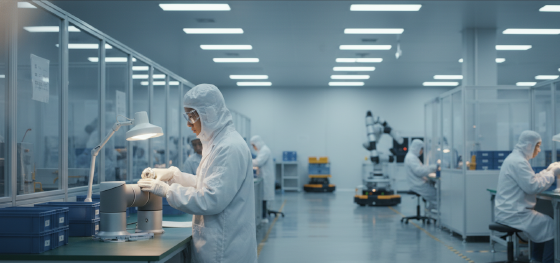
Dominating the collaborative robotics market requires a partner that can scale from a single prototype to a commercial fleet without losing the "human touch." Jucheng Precision operates with a 24/7 manufacturing mindset in our Shenzhen precision manufacturing hub, delivering high-tolerance cobot arm links and overmolded structural components with lead times as fast as 15 business days. We provide a "Bridge to Production" that allows you to move from a 3D-printed aesthetic model to a commercial deployment of 1,000 safety-certified units with consistent metallurgical and tactile quality.
Integrating your safety-first design with JUCHENG’s expertise ensures that your robot survives the "First-Contact" test and moves into mass adoption. We offer comprehensive DFM reviews within 24 hours, identifying potential pinch points or weight-saving opportunities in your cobot design before they become field liabilities. Whether you are building a collaborative assistant for surgery or a tabletop bot for electronics assembly, Jucheng Precision provides the rounded, precise hardware that keeps your innovation safe for human touch.
Our facility is equipped with 150+ CNC machines and dedicated multi-material molding cells, allowing us to manage the entire cobot part lifecycle in one location. We manage the complexity of magnesium machining and soft-material bonding so your engineering team can focus on the safety algorithms and the HRI. By combining Shenzhen's speed with industrial-grade material verification, JUCHENG remains the preferred partner for the world's most innovative industrial robot parts challenges. Contact us today to start your next collaborative project.
FAQ: Engineering Safe Hardware for Human-Robot Interaction
Why is magnesium better than aluminum for cobot arms?
Magnesium is 33% lighter, which significantly reduces the kinetic energy of the arm, making it safer for human interaction.
How do you ensure cobot joints have no pinch points?
We utilize 5-axis CNC machining to create large-radius fillets and safety-gaps that prevent skin entrapment.
What is the typical tolerance for a cobot motor housing?
We hold bearing seats and motor mounts to +/- 0.005mm to ensure zero-vibration and silent operation.
What are lead times for safety-certified cobot prototypes?
Fully machined and overmolded cobot assemblies are typically delivered in 15 to 20 business days.
Safety failures in collaborative robotics are absolute mission killers. Partnering with Jucheng Precision ensures that your hardware is built with the low-inertia magnesium and specialized "soft-touch" overmolding techniques the industry demands. Reach out to our Shenzhen manufacturing hub today for a complete DFM review and build the safe foundation your autonomous fleet requires.

