


Designing highly durable hardware systems for harsh outdoor environments, HVAC ductworks, or agricultural equipment requires a robust balance between raw material pricing and anti-corrosion performance. Evaluating the total cost of galvanized sheet metal represents the most economical path to secure active rust prevention without paying the high premiums of stainless alloys. This unique zinc-coated steel provides outstanding structural rigidity, excellent paint adhesion, and self-healing galvanic protection for your assemblies, making it highly preferred for industrial enclosures.
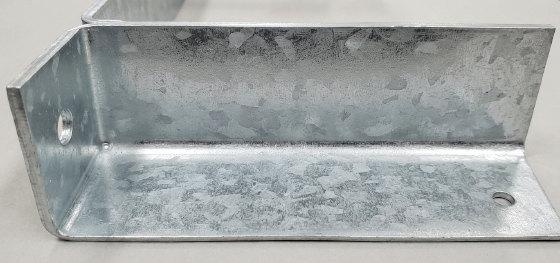
Suffer from unexpected corrosion leaks and bloated finishing bills on your raw carbon steel cabinet runs? Standard untreated plates require extensive post-processing wet paint or powder coatings to survive humidity, which drives up manual labor costs. Specifying pre-plated steel completely eliminates these post-processing costs, delivering a highly competitive per-part price straight out of the press brake.
Let's explore how the price of zinc-coated steel compares to premium stainless steel, analyze the cost differences between hot-dip and electro-deposited zinc layers, and review the hidden costs of welding galvanized parts.
Galvanized Steel vs. Stainless Steel: A Cost Comparison
Is galvanized steel more cost-effective than standard stainless steel?
Yes, galvanized steel is typically half to one-third the cost of stainless steel SUS304, making it highly economical for large industrial structures.
To optimize your manufacturing budget, understanding the raw cost-to-performance ratio between protective metals is vital. While stainless steel provides unmatched lifetime corrosion resistance, its raw material cost is exceptionally high due to nickel and chromium alloying elements. Additionally, stainless steel work-hardens rapidly during forming, requiring higher bending forces and driving up processing rates.
Galvanized carbon steel is a highly popular, budget-friendly alternative. It utilizes its sacrificial zinc coating to actively block oxygen from oxidizing the bare steel core. This sacrificial action keeps the raw steel protected even if the surface is scratched or cut. For large-format cabinets or heavy structural brackets where extreme acid resistance is secondary to raw outdoor durability, specifying galvanized plates is the most practical engineering decision.
Hot-Dipped vs. Electro-Galvanized Cost Differences

What is the price difference between hot-dipped and electro-galvanized steel sheets?
Hot-dipped galvanized steel is cheaper and has a thicker protective zinc layer, while electro-galvanized steel is more expensive but offers an exceptionally smooth surface.
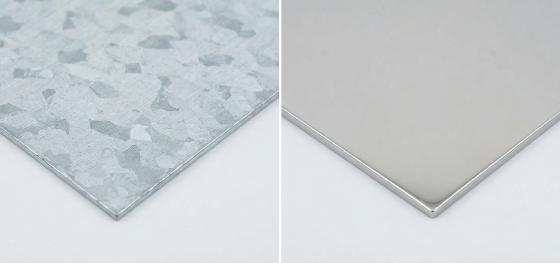
Evaluating the raw cost of galvanized sheet metal requires analyzing the zinc application method. Hot-dipped galvanized steel (such as SGCC or DX51D) is submerged in molten zinc, producing a thick, highly durable layer of 10 to 30 microns with a visible crystallized spangle pattern. It is highly cost-effective for outdoor structural parts but has a rough surface texture.
Conversely, electro-galvanized steel (such as SECC or EG) is electro-chemically coated in a cold bath, building an ultra-thin, highly uniform zinc layer of 1 to 3 microns. While electro-galvanized steel carries a higher material premium, its exceptionally smooth, matte-grey surface is free of spangles. This clean surface provides an outstanding foundation for high-end cosmetic powder coatings, making it ideal for precision computer chassis and indoor server cabinets.
| Finishing Variable | Hot-Dipped Galvanized (SGCC / HDG) | Electro-Galvanized (SECC / EG) |
|---|---|---|
| Zinc Layer Thickness | 10 to 30 microns (Thick barrier) | 1 to 3 microns (Ultra-thin uniform coat) |
| Surface Aesthetics | Rough, visible crystallized spangle pattern | Exceptionally smooth, matte-grey, zero spangles |
| Paint Adhesion (Pre-treatment) | Moderate (Requires chemical profiling/etching) | Outstanding (Ready for immediate powder coating) |
| Raw Material Cost (Premium) | Low (Highly economical) | Moderate (Premium chemical processing fee) |
The Extra Cost of Welding Galvanized Parts

How does welding zinc-coated steel drive up your actual manufacturing costs?
Welding galvanized parts requires localized zinc removal to prevent weld porosity, demands high-capacity exhaust ventilation, and requires post-weld zinc-rich sprays to restore protection.
While the raw material is highly economical, welding zinc-coated plates introduces unique manufacturing challenges. Zinc possesses a low vaporization temperature of 907 degrees Celsius. When the electric arc ignites, the zinc coating instantly vaporizes, creating high weld porosity, cracking risks, and releasing toxic white zinc oxide smoke that can cause metal fume fever.
To ensure a structurally solid weld seam, our operators must physically grind away the zinc coating from the weld zone before joining, which increases manual labor. After welding, we must apply specialized, zinc-rich zinc-rich paint sprays to rebuild the corrosion barrier over the cooled joints. These extra manual steps and safety exhaust requirements represent a significant percentage of your processing bills, making mechanical riveting or spot welding highly preferred for low-cost assemblies.
Industrial Galvanized Enclosures at Jucheng Precision

How does Jucheng Precision minimize fabrication expenses on custom galvanized enclosures?
We operate high-power fiber lasers, automated press brakes, and integrated assembly lines under one roof, utilizing our standard tooling to bypass mold fees.
Why pay premium prices for scattered processing? At Jucheng Precision, we manage cutting, bending, and finishing under one roof, keeping your overall sheet metal fabrication cost remarkably low. Our advanced press brakes and high-speed lasers execute complex, multi-bend sequences in a single setup, ensuring that your parts are cut, formed, and finished with extreme consistency.
We process a wide range of materials, including lightweight aluminum, high-yield stainless steel, and easily formable carbon steel during high-precision sheet metal fabrication cycles. Our technical department provides a 24-hour free DFM analysis to check your CAD models, checking tolerances and hinge clearances before production. Supported by our no MOQ policy and rapid delivery guarantee, we manage your project from initial flat pattern cutting to final, high-durability packaging and assembly.
FAQ: Critical Questions About Cost of Galvanized Sheet Metal

Our engineering team has compiled professional solutions to the most common budgeting challenges faced during galvanized fabrication runs:
Is galvanized sheet metal cheaper than mild steel?
Raw galvanized steel is slightly more expensive than bare mild steel due to the zinc coating premium. However, because galvanization completely eliminates the need for secondary post-treatments like electrostatic powder coating, the final finished part price is often significantly lower, making it highly cost-effective for large-volume industrial brackets.Does Jucheng Precision charge extra tooling fees for standard galvanized bending?
Absolutely not. Jucheng Precision maintains an extensive in-house library of standard, high-grade punches and V-die sets for various thicknesses and radii. If your designs utilize standard industrial dimensions, we can fold your custom brackets and enclosures immediately, allowing you to bypass any custom tooling or NRE mold expenses completely.Why does laser cutting galvanized steel require high-pressure nitrogen instead of oxygen?
Oxygen assist gas reacts with the zinc coating, causing extreme edge burning and a thick, dark oxide scale. Utilizing high-pressure nitrogen assist gas cools the cut edge and completely blows away the molten zinc, delivering a clean, bright edge that is free from burning and ready for immediate secondary assembly.How does Jucheng Precision prevent surface defects from affecting the cost of galvanized sheet metal?
We protect the soft zinc coating of galvanized sheets by executing CNC bending with specialized urethane die inserts or applying high-density protective vinyl masking films. This prevents direct metal-on-metal friction between the steel tooling and the sheet, delivering clean, scratch-free panels ready for immediate final assembly.

