


Wasting money on expensive chrome electroplating only to watch it bubble and peel off your product a month later is a hardware engineering nightmare. Procurement teams often scramble to blame the finishing shop, completely unaware that the catastrophic failure actually started deep inside the raw metal. Selecting baseline die casting materials directly dictates your surface quality. If you pour a porous, gassy metal into your mold, aggressive plating chemicals will seep into those microscopic surface holes and eventually bleed out, destroying the cosmetic finish. Specifying die cast zamak 3 permanently eliminates this chemical trap, providing an incredibly dense, tightly packed molecular canvas.

Navigating the complexities of luxury consumer goods requires absolute aesthetic perfection. When buyers handle a premium smart lock or a high-end camera lens, they subconsciously judge the product by its heavy, unyielding tactile feel and flawless surface reflection. Cheap, lightweight metals simply feel hollow and require massive amounts of manual polishing to look presentable.
Securing high-volume contracts means you must balance this premium physical heft against brutal unit cost economics. Let's explore exactly why this specific alloy dominates over seventy percent of the global zinc market, how it saves you a fortune in CNC machining, and why tight factory integration guarantees stunning retail aesthetics.
content:
The De Facto Standard: Why Does It Dominate the Market?
Electroplating Aesthetics: Defeating the Blister Defect
Technical Data: When Should You Upgrade Your Alloy?
JUCHENG Hub: Shenzhen's Advanced Finishing Arsenal
FAQ: Honest Answers About Weight and Tooling Limits
The De Facto Standard: Why Does It Dominate the Market?
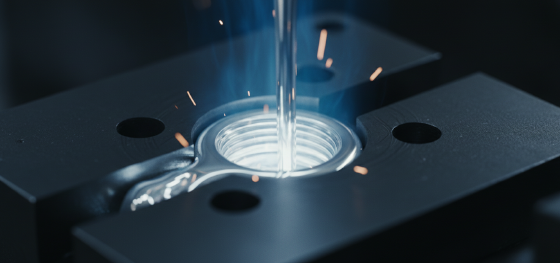
Why is this specific chemical grade the undisputed baseline for heavy hardware?
Because it provides the ultimate compromise; it offers excellent physical strength, incredible dimensional stability over time, and flows so smoothly that it copies the microscopic details of the steel tool perfectly.
Hardware engineers desperately want to avoid the CNC milling bay. Every time you have to drill a tiny mounting hole into a raw casting, your assembly costs skyrocket. This specific alloy possesses such low molten viscosity that it behaves exactly like water under high hydraulic pressure.
Striking this perfect fluidity allows factories to cast complex internal threads and ultra-thin walls directly into the part. You achieve true net-shape manufacturing, meaning the component drops out of the automated press completely finished, slashing your labor costs drastically.
Electroplating Aesthetics: Defeating the Blister Defect
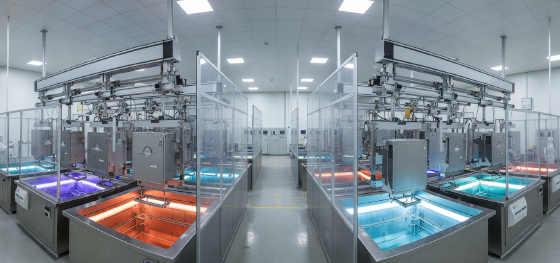
How does this material physically prevent expensive chrome plating from failing?
It cures rapidly with a remarkably tight, non-porous outer skin, sealing out the acidic chemicals used during the electroplating baths and preventing the delayed outgassing that causes surface blisters.
Dropping a raw, porous metal into a copper or nickel plating bath is a recipe for disaster. The corrosive fluids hide deep inside the microscopic surface craters. Weeks after the product is shipped to your warehouse, those trapped chemicals react, violently pushing the shiny chrome layer upward and ruining the aesthetic.
Deploying this dense alloy provides an absolutely pristine canvas. It requires minimal manual polishing to achieve a flawless mirror reflection. Whether your design requires a sinister black chrome finish or bright 24k gold plating, this baseline metal ensures the chemical bond remains indestructible.
Technical Data: When Should You Upgrade Your Alloy?
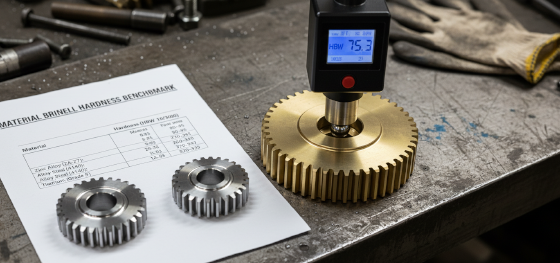
When is the industry baseline simply not strong enough for your product?
If your component faces severe, repeated mechanical impacts or acts as a heavy-duty locking mechanism, upgrading the copper content significantly boosts the overall surface hardness.
Evaluating the mechanical limits of your hardware prevents catastrophic field failures. The technical matrix below clearly illustrates exactly when engineers must abandon the standard grade to secure better impact resistance.
| Mechanical Metric | JUCHENG Premium Zamak 3 | Upgraded Zamak 5 Alloy |
|---|---|---|
| Tensile Strength (MPa) | 283 (Excellent baseline strength) | 331 (Superior pulling resistance) |
| Brinell Hardness (HB) | 82 (Standard wear resistance) | 91 (Highly resistant to physical denting) |
| Dimensional Stability | Ultimate long-term stability | Slightly less stable over decades |
| Plating and Finishing | Flawless mirror-finish capability | Very Good (Slightly harder to polish) |
Standardizing on the baseline grade is universally recommended for ninety percent of consumer goods. However, if your CAD file involves heavy-duty automotive gears or industrial latches, pivoting to zamak 5 die casting provides the mandatory structural hardness required to survive brutal daily abuse.
JUCHENG Hub: Shenzhen's Advanced Finishing Arsenal
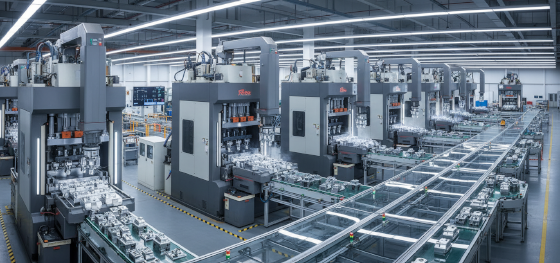
Why must you keep your casting and your electroplating inside the exact same factory?
Shipping raw, untreated metal across town exposes it to oxidation and physical scratching; keeping both processes under one roof guarantees flawless aesthetic quality control.
Operating our massive Shenzhen precision manufacturing hub removes the massive liability gap between the molder and the finisher. If a raw part has a microscopic surface defect, our finishing team instantly alerts the injection team to adjust the hydraulic pressure.
Stop risking your premium cosmetic hardware on disjointed supply chains. Send your complex CAD files to our engineering team today for a complete DFM analysis. We will maximize your net-shape geometries and deliver stunning, fully plated assemblies ready for retail.
FAQ: Honest Answers About Weight and Tooling Limits

Does the incredible density of this metal make it unsuitable for portable devices?
If absolute lightweighting is your goal (like a drone), this metal is far too heavy. It is strictly meant for applications where a solid, heavy, premium tactile feel is a commercial advantage.
How long will my expensive steel mold last running this specific alloy?
Because it melts at a very low temperature, it causes virtually no thermal shock to the H13 tool steel. A well-maintained mold easily surpasses one million injection cycles without replacement.
Can I apply standard powder coating instead of expensive electroplating?
Absolutely. The non-porous outer skin provides a fantastic mechanical grip for industrial powder coats, ensuring maximum outdoor weather resistance for heavy brackets and housings.
Is this alloy safe to use for components subjected to high heat?
No. Because its melting point is incredibly low, the structural integrity of the metal begins to severely degrade if operating continuously in environments above 200 degrees Fahrenheit.

