


Pushing a baseline metal past its mechanical limit guarantees catastrophic failures in the field. Procurement teams constantly try to save pennies by standardizing their entire product line on one basic alloy, completely ignoring the massive mechanical loads placed on specific moving parts. When internal gears strip and heavy door latches shear off after a few thousand impacts, the resulting warranty claims destroy your profit margins instantly. Evaluating specialized die casting materials becomes absolutely mandatory when your hardware faces daily physical abuse. Upgrading to zamak 5 die casting actively protects your brand by deploying a hardened molecular structure designed specifically to survive continuous, brutal impacts.
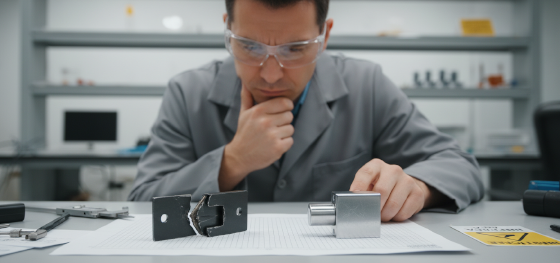
Sourcing this specific high-strength alloy requires a factory that understands exact chemical dosing. If a low-tier broker messes up the trace elements, you end up paying a premium for metal that acts just as brittle as cheap plastic. Operating out of our Shenzhen precision manufacturing hub, Jucheng Precision tightly controls these exact metallurgical ratios to deliver unyielding hardware.
Securing high-load commercial contracts means you must balance aesthetic plating capabilities against raw tensile power. Let's dissect exactly how a tiny chemical tweak creates this industrial armor, when you must upgrade your baseline orders, and how fast our internal rapid tooling bay can deliver your new high-impact prototypes.
content:
The Copper Upgrade: Modifying the Molecular Structure
Baseline Limits: When Exactly Do You Upgrade?
Heavy-Duty Survival: Gears, Locks, and Auto Parts
JUCHENG Hub: Rapid Tooling for High-Impact Hardware
FAQ: Honest Answers About Plating and Tool Wear
The Copper Upgrade: Modifying the Molecular Structure
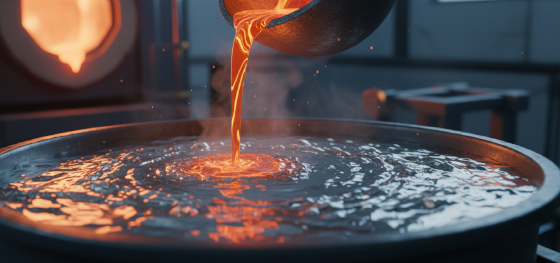
How does a factory physically increase the impact resistance of this liquid metal?
By meticulously alloying an exact one percent addition of copper into the molten zinc mixture, which drastically tightens the molecular lattice to boost both overall hardness and tensile strength.
Adding this specific trace metal entirely rewrites the physical limits of the final component. Pure base metals are often too soft for aggressive mechanical wear, acting gummy when subjected to heavy sliding friction. The copper infusion acts like a structural scaffold, stiffening the alloy from the inside out.
Stripping internal teeth off a specialized motor gear becomes virtually impossible with this chemistry. Engineers highly value this specific formulation because it dramatically improves creep resistance, meaning the metal refuses to stretch or deform slowly when held under a constant, heavy mechanical load.
Baseline Limits: When Exactly Do You Upgrade?
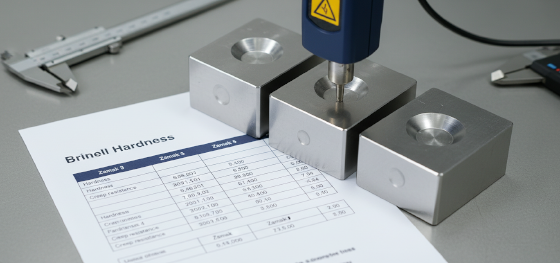
Why shouldn't you just use this stronger metal for every single part you manufacture?
Because the added copper slightly reduces the metal's ductility, making it marginally harder to bend or crimp during final assembly, and it requires slightly more manual polishing to achieve a flawless cosmetic chrome plate.
Defaulting to die cast zamak 3 remains the smartest financial choice for general cosmetic enclosures and luxury bathroom fixtures. It plates beautifully and flows easily. However, the moment your CAD file involves a component that slams, clicks, locks, or rotates under tension, the standard baseline grade becomes a massive liability.
| Mechanical Benchmark | Standard Zinc Alloy | JUCHENG Zamak 5 Upgrade |
|---|---|---|
| Tensile Strength (MPa) | 283 (Good baseline) | 331 (Superior pulling resistance) |
| Brinell Hardness (HB) | 82 (Standard wear resistance) | 91 (Highly resistant to dents and friction) |
| Creep Resistance | Moderate (Can stretch over time) | Excellent (Maintains shape under load) |
| Ductility & Crimping | Excellent (Bends without snapping) | Lower (Can fracture if bent forcefully) |
Upgrading your material choice requires paying attention to these specific numbers. If your factory assembly line relies on staking, crimping, or riveting the cast metal post-production, the increased hardness of the upgraded alloy will actually work against you.
Heavy-Duty Survival: Gears, Locks, and Auto Parts
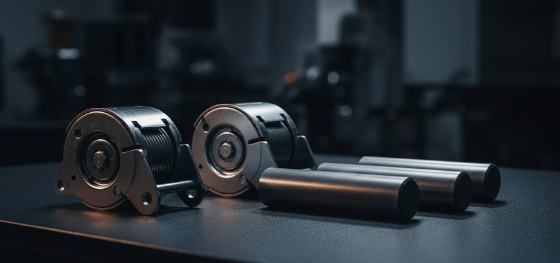
Where does this specific hardened alloy absolutely dominate the commercial market?
Inside critical automotive safety restraints, heavy commercial vault locking mechanisms, and complex internal pulley systems that face brutal, repetitive mechanical shock daily.
Automotive engineers specifying seatbelt retractors cannot tolerate metal fatigue. When a massive impact occurs, those internal gears must lock instantly without shearing a single tooth. This specialized alloy provides the exact unyielding tensile strength needed to pass strict global vehicular safety regulations.
Industrial lock manufacturers face similar mechanical abuse. The internal tumblers and heavy deadbolts must survive millions of key turns and violent door slams. Utilizing this hardened metal guarantees the latch will not warp or wear down, ensuring the commercial building remains secure for decades.
JUCHENG Hub: Rapid Tooling for High-Impact Hardware

Why trust Jucheng Precision to execute your high-strength production rollout?
Because we operate an advanced in-house rapid tooling facility capable of machining hardened steel molds in record time, perfectly matched to the thermodynamic flow of this specific alloy.
Outsourcing your tooling to a separate shop creates massive delays. If the mold requires tiny gate adjustments to accommodate the slightly lower fluidity of this upgraded metal, a disconnected supply chain takes weeks to fix it. We execute those critical CNC mold adjustments internally within hours.
Stop risking your brand reputation on weak, brittle components. Send your heavy-duty CAD files to our engineering team today. We provide a completely free DFM analysis, design the perfect rapid tooling strategy, and deliver unyielding impact-resistant hardware at unbeatable speeds.
FAQ: Honest Answers About Plating and Tool Wear

Does the extra copper content make electroplating impossible?
No, you can absolutely chrome or gold plate these parts. It simply requires a slightly more aggressive polishing phase before the chemical baths to achieve the exact same mirror-like aesthetic as standard grades.
Can I run this specific material through a cold chamber machine?
Technically yes, but it is a massive waste of money. Because it melts at a very low temperature, it is perfectly suited for ultra-fast, submerged hot chamber presses that double your production output.
Is this alloy heavy enough to replace forged steel brackets?
Depending on the specific load requirements, yes. It provides incredible density and strength, often allowing engineers to replace expensive steel assemblies with a single, net-shape cast component.
Will the increased hardness cause the steel mold to wear out faster?
No. The tool wear is determined primarily by the melting temperature, not the final solid hardness. Because the melting point remains incredibly low, your steel mold will still comfortably exceed one million shots.

