


Throwing 700-degree liquid aluminum into a massive steel box creates a violent thermodynamic event. Hardware engineers often focus entirely on the shape of their part, completely ignoring how that molten metal will actually freeze inside the factory machine. If you leave heat extraction to chance, the outer skin of your metal housing will solidify instantly while the thick internal core remains a boiling liquid. Executing the die casting process without a ruthless thermal strategy guarantees catastrophic failures. As that trapped liquid center finally cools, it aggressively pulls the outer walls inward, ripping the metal apart from the inside out and ruining your expensive CNC tools later down the line.

Mastering die casting process cooling separates low-tier broker shops from actual tier-one manufacturers. We constantly receive desperate calls from procurement teams whose previous suppliers delivered warped, twisted enclosures that refused to fit onto their assembly line. These defects almost always stem from cheap, poorly designed water lines inside the tooling. Operating from our Shenzhen precision manufacturing hub, Jucheng Precision engineers the internal plumbing of your mold before we ever cut a single block of steel.
Current [2026] pricing structures demand ultimate machine efficiency. Every extra second a part spends cooling inside the press directly drives up your unit cost. Let's break down how aggressive thermal management literally saves you money, prevents hidden internal voids, and guarantees your metal hardware survives the brutal realities of commercial deployment.
content:
Cycle Time Economics: How Does Cooling Dictate Part Cost?
Mold Plumbing: Designing High-Efficiency Water Channels
Defect Prevention: Stopping Warpage and Internal Porosity
JUCHENG Hub: Shenzhen's Masters of Thermal Extraction
FAQ: Honest Answers About Water Lines and Shrinkage
Cycle Time Economics: How Does Cooling Dictate Part Cost?

Why does waiting for a metal part to freeze increase your manufacturing bill?
Machine time is incredibly expensive; if poor thermal extraction forces the hydraulic press to stay locked for 40 seconds instead of 15 seconds, your daily production volume drops by half, doubling your per-unit overhead.
Factory machines charge by the hour, regardless of whether they are injecting metal or just sitting there waiting for a part to cool down. If your supplier built a cheap steel tool with zero internal water lines, the machine literally has to sit idle while the ambient air slowly absorbs the heat.
Aggressive die casting process cooling changes this financial math completely. Pumping chilled water directly through the steel block drops the temperature violently and safely. This allows the robotic ejectors to push the solid part out immediately, resetting the machine for the next shot in seconds and drastically lowering your final invoice.
Mold Plumbing: Designing High-Efficiency Water Channels

How do you remove intense heat from the thickest sections of a complex part?
By engineering conformal cooling channels that closely hug the intricate 3D geometry of the part cavity, ensuring chilled fluid flows directly next to the heaviest masses of liquid metal.
Lazy mold makers simply drill straight, intersecting holes through the outside of a steel block and run tap water through them. This basic approach completely ignores the actual shape of your product. If your design has a massive, thick mounting boss in the center, that specific area will hold onto heat like a furnace long after the thin walls have frozen.
Jucheng Precision utilizes advanced thermal simulation software before cutting any metal. We map exactly where the heat will pool and design localized cooling baffles and bubblers that target those exact hotspots. This balanced extraction ensures the entire 2-meter panel shrinks at the exact same rate, locking in perfectly flat dimensional tolerances.
Defect Prevention: Stopping Warpage and Internal Porosity

Understanding exactly how parts fail gives procurement teams the power to demand better tooling. The data table below highlights how uneven freezing ruins premium hardware assemblies.
| Thermal Defect Type | Root Cause in Factory | JUCHENG Engineering Solution |
|---|---|---|
| Severe Warpage / Bowing | Thin walls freeze instantly while thick cores remain hot, causing uneven contraction. | Targeted water bubblers routed directly behind the thickest part sections. |
| Shrinkage Porosity (Holes) | Trapped liquid pockets tear apart internally as they lack additional feed metal while cooling. | Strategic chill vents and pressurized squeeze casting phases. |
| Soldering (Metal sticking) | Tool steel overheats past 600°F, allowing liquid aluminum to weld chemically to the die. | High-volume chilled fluid circuits maintaining strict 400°F tool limits. |
| Heat Checking (Tool cracks) | Brutal thermal shock from fluctuating hot/cold cycles shattering the steel surface. | Pre-heating the die with hot oil before production begins to soften the shock. |
Combining strict die casting process cooling with atmospheric control is the ultimate solution for structural components. When we extract all the oxygen from the mold cavity using the vacuum die casting process, and pair it with perfectly balanced water lines, we eliminate both gas porosity and shrinkage porosity simultaneously. This guarantees your metal chassis won't crack when your team taps a threaded screw into it.
JUCHENG Hub: Shenzhen's Masters of Thermal Extraction
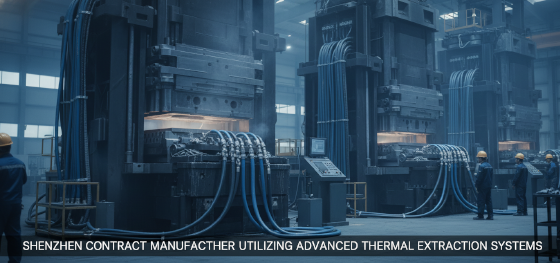
Why should you trust Jucheng Precision to build your expensive production molds?
Because we never cut corners on the internal plumbing; our tooling engineers invest the extra CNC hours to machine highly complex thermal circuits that guarantee your parts eject perfectly flat every single time.
Buying a cheap mold from a low-tier broker usually means buying a mold with terrible thermal dynamics. You end up paying for their laziness through high scrap rates and insanely long cycle times. We operate our massive Shenzhen factory with absolute transparency, showing you exactly how we map the thermodynamics of your specific component.
Stop accepting twisted, porous metal parts that wreck your assembly line. Send your 3D CAD files to our engineering team today. We will run a complete thermal DFM analysis within 24 hours, identify exactly where the heat traps are hiding in your design, and build you a tooling strategy that survives million-shot production runs.
FAQ: Honest Answers About Water Lines and Shrinkage

Do you use regular tap water to cool the heavy steel molds?
No. We use dedicated industrial chillers that pump treated, chemically balanced coolant fluids to prevent mineral scale from clogging the internal mold channels over time.
How do you fix a part that has a massive thick chunk of metal in the center?
During the DFM phase, we will request permission to hollow out or "core" that thick section, creating thinner, uniform walls that freeze evenly and quickly.
Can poor cooling cause the metal part to break while inside the machine?
Yes. If the part shrinks and grips the internal steel cores too tightly before the ejector pins fire, the mechanical force can actually snap the aluminum part in half.
Is thermal simulation software really necessary for simple parts?
For small, basic geometries, standard cooling rules apply. But for large, multi-faceted automotive and medical housings, flow simulation is absolutely mandatory to prevent warpage.

