


Designing heavy-duty structural components forces hardware engineers into a frustrating financial compromise. Standard injection methods produce wonderfully complex shapes but trap internal air bubbles that shatter under extreme physical stress. Switching to traditional mechanical forging provides military-grade strength but severely restricts your geometric design freedom, forcing your procurement team to pay for hundreds of hours of massive secondary CNC machining. Bridging this brutal gap requires a hybrid manufacturing approach commonly known as liquid metal forging. Deploying the squeeze die casting process allows hardware teams to achieve the flawless internal density of a forged billet while maintaining the intricate net-shape capabilities of a poured mold.
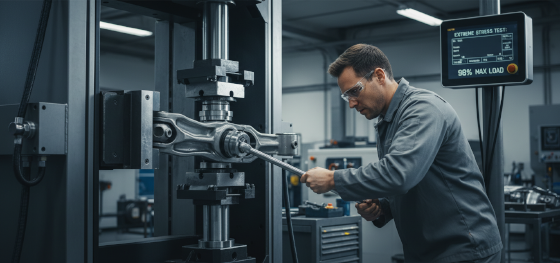
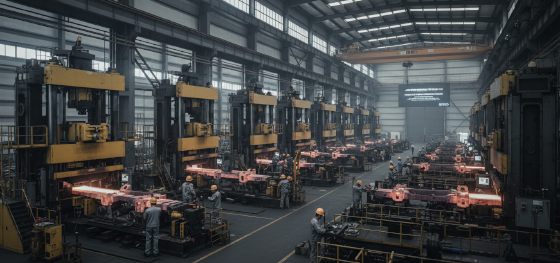
Watching this aggressive metallurgy in action reveals incredible brute force. Instead of just shooting liquid aluminum into a cavity and waiting for it to freeze, the machine applies thousands of tons of continuous hydraulic pressure directly onto the semi-solid metal, physically crushing any microscopic gas bubbles out of existence. Operating within our Shenzhen precision manufacturing hub, Jucheng Precision leverages this extreme pressure to deliver automotive suspension arms and aerospace brackets that confidently pass the most rigorous safety inspections.
Compromising on yield strength is a massive liability for load-bearing hardware. Executing the die casting process with this localized squeezing technique fundamentally alters the grain structure of the alloy. Let's break down exactly how this hybrid technology crushes porosity, why it beats traditional forging in design flexibility, and when you should immediately upgrade your factory strategy.
content:
The Forging Hybrid: How Does Squeeze Casting Actually Work?
Geometric Freedom: Why Not Just Forge the Part?
Eliminating Porosity: Crushing the Metal as it Freezes
Technical Data: Squeeze Casting vs. Traditional Forging
JUCHENG Hub: Shenzhen's Advanced Heavy Metallurgy Center
FAQ: Honest Answers About T6 Tempering and Wall Thickness
The Forging Hybrid: How Does Squeeze Casting Actually Work?
How do you force liquid metal to behave like a solid forged block?
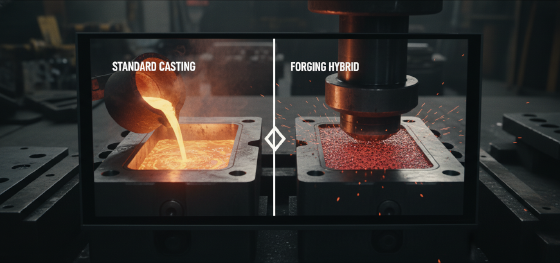
By pouring the molten alloy into the bottom half of an open steel die, and then slamming a massive hydraulic punch down into the liquid, maintaining extreme crushing pressure until the metal completely solidifies.
Standard machines inject metal through tiny gates, which creates violent turbulence and traps atmospheric oxygen. This hybrid methodology eliminates the injection gate entirely. The metal is poured gently into a wide-open cavity, keeping the liquid perfectly calm and free of turbulence.
Once the hydraulic punch descends, it creates a high-pressure sealed environment. As the metal naturally shrinks during the cooling phase, the punch physically continues to push downward, forcing fresh liquid alloy into any microscopic voids that attempt to form. You receive a dense, unyielding component with an incredibly refined, tightly packed molecular grain structure.
Geometric Freedom: Why Not Just Forge the Part?
Why would engineers choose this method over traditional mechanical forging?
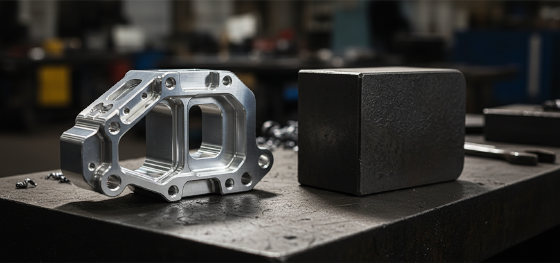
Traditional forging hammers solid metal blocks, making it physically impossible to create complex internal hollows, deep pockets, or delicate cooling fins without paying for thousands of dollars in secondary CNC milling.
Forging is brilliant for simple shapes like a solid wrench or a flat gear. However, modern aerospace brackets and electric vehicle battery housings require highly complex, weight-saving organic geometries. Hammering a solid piece of heated aluminum simply cannot force the metal into intricate crevices.
Liquid metal forging solves this bottleneck entirely. Because the material starts in a molten state, it flows perfectly into highly detailed mold features before the hydraulic punch applies the final crushing force. Procurement teams secure the extreme mechanical strength of a forged part while completely bypassing the massive CNC machining invoices.
Eliminating Porosity: Crushing the Metal as it Freezes

What makes this metal suitable for military and aerospace load-bearing applications?
The extreme compaction completely annihilates internal gas porosity, allowing the final hardware to be safely welded or subjected to aggressive T6 heat treatments without ever blistering or warping.
Hardware startups often learn the hard way that porous metal cannot be upgraded. If you put a standard casting into a thousand-degree tempering oven, the trapped air bubbles violently expand, destroying the part's surface. Similar to the highly effective vacuum die casting process, this squeezing technique guarantees zero internal air pockets.
Applying T6 heat treatments to these dense components skyrockets their tensile and yield strength. When a massive industrial robotic arm is lifting heavy payloads, engineers rely on this specific metallurgy to ensure the structural knuckles do not sheer or fracture under dynamic, twisting forces.
Technical Data: Squeeze Casting vs. Traditional Forging
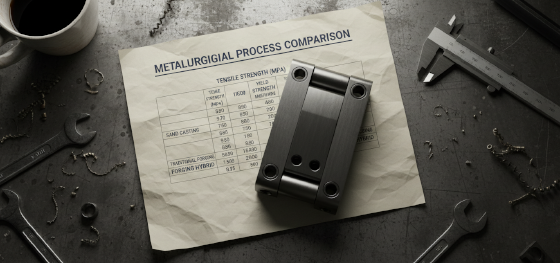
Determining your exact manufacturing pathway requires balancing mechanical yield limits against secondary machining budgets. The data matrix below clearly illustrates why liquid forging dominates complex structural designs.
| Manufacturing Metric | JUCHENG Liquid Metal Forging | Traditional Mechanical Forging |
|---|---|---|
| Geometric Complexity | Very High (Near-net shape features) | Very Low (Requires simple, blocky shapes) |
| Tensile & Yield Strength | Excellent (Equal to forged billets) | Maximum possible strength |
| Secondary CNC Machining | Minimal (Ready for final assembly) | Extremely High (Intense material removal) |
| Material Waste / Scrap | Low (Almost all metal is utilized) | High (Excess metal must be milled away) |
Procurement directors easily justify the heavy tooling investment required for this specialized machinery because it actively removes the CNC machine shop from their supply chain. You secure aerospace-grade strength while paying standard casting assembly prices.
JUCHENG Hub: Shenzhen's Advanced Heavy Metallurgy Center
Why partner with Jucheng Precision for critical structural hardware?
Because we maintain the massive hydraulic tonnage required to properly crush freezing metal, paired directly with advanced internal X-ray laboratories to guarantee your parts are void-free before global shipping.
Brokers who outsource heavy components constantly struggle with quality fade. If a third-party factory lowers the hydraulic pressure to save electricity, your parts will silently develop internal voids. Operating our own massive equipment in Shenzhen gives us absolute control over the compaction metrics.
Stop paying exorbitant CNC milling costs just to achieve high-strength geometries. Send your heavy-duty CAD models to our engineering team today for a complete DFM analysis. We will map the hydraulic pressure requirements and deliver unyielding structural hardware that defies the limits of traditional metalworking.
FAQ: Honest Answers About T6 Tempering and Wall Thickness
Is this process suitable for making paper-thin heatsink fins?
No. Because the punch must physically crush the metal, extremely thin walls are difficult to press accurately. This technique is reserved strictly for thick, heavy-duty load-bearing structural designs.
Are the steel molds more expensive for this specific technology?
Yes. The tooling must be machined from premium H13 steel and heavily reinforced to withstand the brutal, continuous crushing force of the hydraulic punch without cracking or deforming over time.
Can these high-density parts be welded safely to other components?
Absolutely. Because the extreme pressure completely eradicates internal air pockets, you can confidently TIG or MIG weld these components without any risk of the weld seam blowing out.
Does this method work with softer metals like zinc or brass?
While technically possible, it is extremely rare. This expensive heavy-tonnage process is almost exclusively reserved for high-performance aluminum and magnesium alloys used in aerospace and automotive applications.

